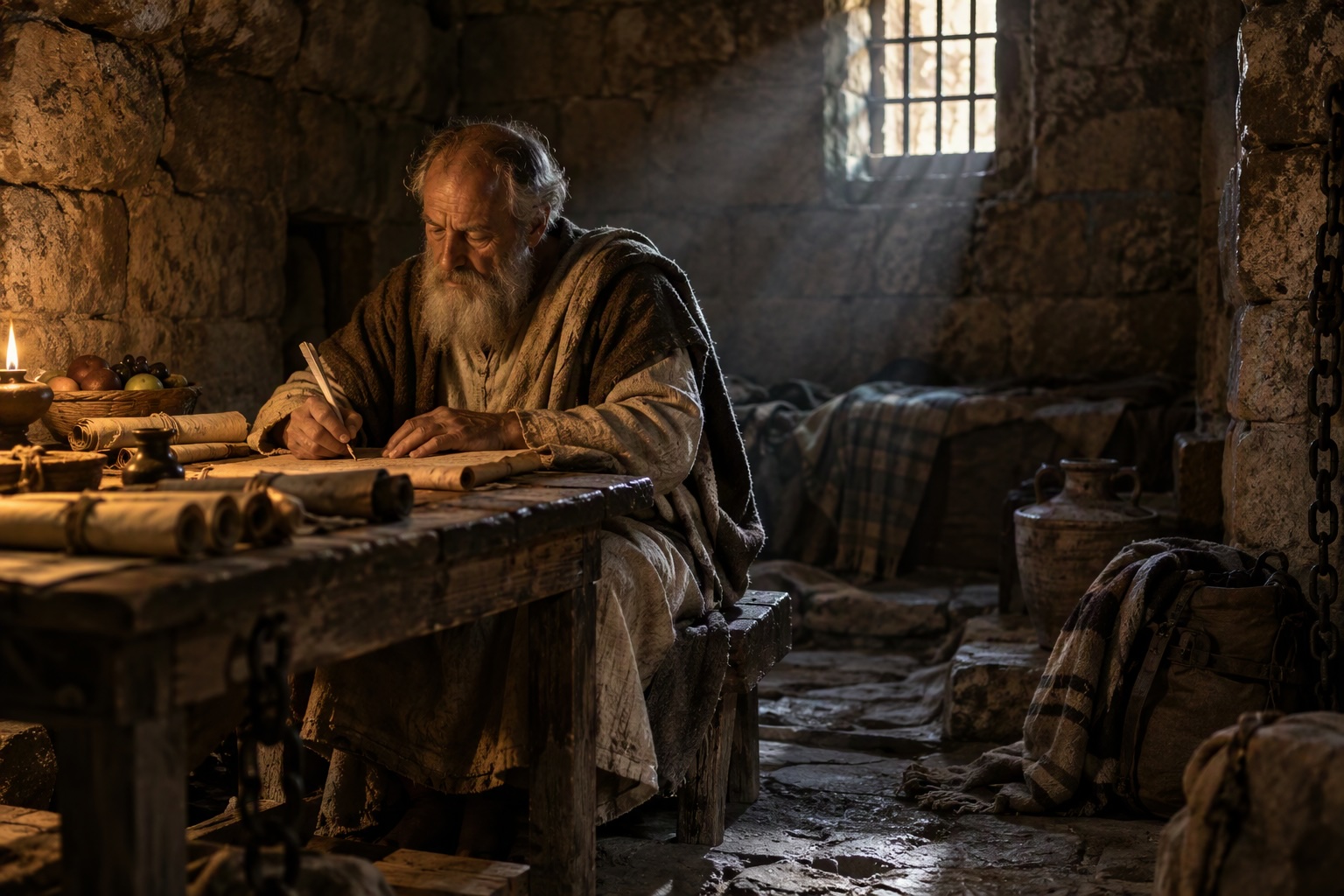
Psalm 16:6 NKJV
The lines have fallen to me in pleasant places;
Yes, I have a good inheritance.
The Pleasant Places of God’s Will

My Notes
If we’re honest, contentment is not something that comes naturally to most of us.
We live in a world that constantly whispers, “You need more.” More money. More recognition. More excitement. More opportunities. We are surrounded by advertisements, social media, and endless comparisons that make us feel as if what we have is never enough. Yet David looked at his life and declared something remarkable:
The lines have fallen to me in pleasant places; Yes, I have a good inheritance.—Psalm 16:6 (NKJV)
David was saying, in effect, “I am satisfied with what God has assigned to me. The boundaries He has drawn for my life are good.” This was not blind optimism. David experienced hardship, betrayal, loneliness, and disappointment. Yet his confidence was not rooted in his circumstances but in the God who determined them. Because God was his portion, David could view his inheritance as pleasant even when life was difficult.
That’s a hard word for most of us. We live in a culture that trains us to feel restless. There’s always something better, something more, something we don’t have yet. Short attention spans and constant entertainment only make the ache louder. David’s contentment feels almost foreign.
Humanly speaking, His life was marked by suffering. He was misunderstood, rejected, mocked, betrayed, beaten, and crucified. Yet He never complained that the Father’s will had been unfair.
Instead, He wrote:
“Then I said, ‘Behold, I come; In the scroll of the book it is written of me. I delight to do Your will, O my God, And Your law is within my heart.’”— Psalm 40:7-8 NKJV
Jesus found joy in obedience because He trusted His Father’s plan completely.
The writer of Hebrews gives us a glimpse into what sustained Him during His darkest hours:
“Looking unto Jesus, the author and finisher of our faith, who for the joy that was set before Him endured the cross, despising the shame, and has sat down at the right hand of the throne of God.”— Hebrews 12:2 NKJV
The joy set before Him sent light down into the dark places. He saw the people the Father had given Him—the inheritance marked out by electing love—and He was satisfied. That was the portion He treasured. He asks for nothing better than that His own beloved would be with Him and see His glory.
Many people assume contentment comes from having enough. Scripture teaches something different. Contentment comes from knowing that God is enough. David’s joy was not rooted in possessions but in God’s presence.
Earlier in this psalm, he writes:
“O God, You are my God; Early will I seek You.”
And then:
“O LORD, You are the portion of my inheritance and my cup; You maintain my lot.”— Psalm 16:5 NKJV
Notice the order. Before David thanked God for his inheritance, he celebrated God Himself as his inheritance. The believer who has God possesses more than the wealthiest person who lacks Him.
The apostle Paul learned this lesson through personal experience:
“Not that I speak in regard to need, for I have learned in whatever state I am, to be content.”— Philippians 4:11 NKJV
Paul did not say contentment came naturally. He said he learned it. It was cultivated through years of walking with Christ through abundance and scarcity, success and suffering.
If Jesus could find pleasant places on the way of the cross, then the places God has drawn for us are not accidents. They are inheritance. Even when the boundaries feel tight, or the ground feels rough, the One who measured the lines is good, and what He gives is good.
Maybe you’re walking through a difficult season right now. Perhaps life hasn’t unfolded the way you expected, and instead of “pleasant places,” the path feels rocky and uncertain. You may be carrying burdens you’re tired of bearing, facing disappointments you can’t make sense of, or waiting on prayers that seem to go unanswered. If that’s where you are, don’t forget this: God’s goodness isn’t measured by how easy your circumstances are. It’s measured by His unwavering presence and faithfulness in the middle of them.
The same Jesus who walked the lonely road to the cross walks with His people today. The Savior who endured suffering for the joy set before Him has not left you to navigate your struggles alone. Even now, He is working behind the scenes, weaving every detail of your life together for your good and for His glory.
There may be things you don’t understand today, and questions that remain unanswered. But a day is coming when you’ll look back and see the wisdom of God’s hand in ways you never could before. One day you’ll stand in His presence, and what seems confusing now will finally make sense. You’ll discover that He was faithful every step of the journey, and that not one part of the inheritance He promised His children was missing. Every promise will have been fulfilled. Every hope will have found its answer in Him.
Until then, faith learns to say with David:
“The lines have fallen to me in pleasant places; Yes, I have a good inheritance.”—Psalm 16:6 NKJV
May that confession become the song of our hearts, not because life is always easy, but because the God who gives Himself to us is infinitely good.
Prayer
Abba, thank You that the lines You have drawn for me are not random. Help me to see my life the way David saw his—as a good inheritance. Quiet the restless places in me. Teach me the contentment Jesus knew as He delighted to do Your will. Let gratitude take deeper root than complaint. In Jesus’ name, Amen.
Key Takeaways
- Contentment begins with God, not circumstances. David’s joy flowed from having the Lord as his portion rather than from earthly possessions or achievements.
- Jesus perfectly embodied Psalm 16:6. Though acquainted with grief, He delighted in doing the Father’s will and found joy in the redemption of His people.
- Believers are part of Christ’s treasured inheritance. The Lord delights in those He has redeemed and purchased with His own blood.
- Discontentment blinds us to God’s goodness. A grateful heart sees God’s faithfulness even in difficult seasons.
- Our eternal inheritance is secure. Because of Christ, we possess blessings that can never fade, perish, or be taken away.
- God’s presence makes even hard places pleasant. The greatest gift God gives His children is not merely what He provides, but Himself

Proverb for Today
He who has knowledge spares his words, And a man of understanding is of a calm spirit. Even a fool is counted wise when he holds his peace; When he shuts his lips, he is considered perceptive. Proverbs 17:27-28 NKJV
Daily Scripture
For since the beginning of the world Men have not heard nor perceived by the ear, Nor has the eye seen any God besides You, Who acts for the one who waits for Him. You meet him who rejoices and does righteousness, Who remembers You in Your ways. You are indeed angry, for we have sinned— In these ways we continue; And we need to be saved. Isaiah 64:4-5 NKJV
Closing

“The Lord bless you and keep you; The Lord make His face shine upon you, And be gracious to you; The Lord lift up His countenance upon you, And give you peace.” Numbers 6:24-26 NKJV
Grace be with you. Amen.
Please enter your email and click subscribe to be notified whenever I submit a new post.

Commentaries:
Charles Spurgeon
Jesus found the way of obedience to lead into “pleasant places.” Notwithstanding all the sorrows which marred his countenance, he exclaimed, “Lo, I come; in the volume of the book it is written of me, I delight to do thy will, O my God: yea, thy law is within my heart.” It may seem strange, but while no other man was ever so thoroughly acquainted with grief, it is our belief that no other man ever experienced so much joy and delight in service, for no other served so faithfully and with such great results in view as his recompense of reward. The joy which was set before him must have sent some of its beams of splendor down the rugged places where he endured the cross, despising the shame, and must have made them in some respects pleasant places to the generous heart of the Redeemer. At any rate, we know that Jesus was well content with the blood-bought portion which the lines of electing love marked off as his spoil with the strong and his portion with the great. Therein he solaced himself on earth, and delights himself in heaven; and he asks no more “GOODLY HERITAGE” than that his own beloved may be with him where he is and behold his glory. All the saints can use the language of this verse, and the more thoroughly they can enter into its contented, grateful, joyful spirit the better for themselves, and the more glorious to their God. Our Lord was poorer than we are, for he had not where to lay his head, and yet when he mentioned his poverty he never used a word of murmuring; discontented spirits are as unlike Jesus as the croaking raven is unlike the cooing dove. Martyrs have been happy in dungeons. “From the delectable orchard of the Leonine prison the Italian martyr dated his letter, and the presence of God made the gridiron of Laurence pleasant to him.” Mr. Greenham was bold enough to say, “They never felt God’s love, or tasted forgiveness of sin, who are discontented.” Some divines think that discontent was the first sin, the rock which wrecked our race in paradise; certainly there can be no paradise where this evil spirit has power, its slime will poison all the flowers of the garden.
______________________________________________________
Enduring Word
You maintain my lot: This described the portion of David’s inheritance. David was confident that God would maintain what He had first given to him. (Guzik)
This attitude did not come easily or always to David. He complained to Saul in 1 Samuel 26:19: for they have driven me out this day from sharing in the inheritance of the LORD, saying, “Go, serve other gods.” Yet here in this psalm, he comes back to the conclusion that the LORD is his inheritance and will maintain his lot. (Guzik)
David’s words here speak of contentment. He is content with what God has given him. A mark of our age – especially with the Baby Boom generation and perhaps even more with those following – is discontentment, boredom, and restlessness. The generation with short attention spans, the constant need for excitement and adrenaline rushes, and 24-hour-a-day entertainment needs to know by experience what David knew. (Guzik)
______________________________________________________
Albert Barnes
The lines — The word used here refers to the “lines” employed in measuring and dividing land, Amos 7:17; 2 Samuel 8:2. Hence, the word comes to denote a portion of land that is “measured out” (or that is “surveyed off”) to anyone – his possession or property; and hence, the word refers to the condition in life. The meaning here is, that in running out such a survey, “his” inheritance had been fixed in a pleasant and desirable part of the land.
Are fallen unto me — Referring to the appropriation of the different parts of the land by lot. The idea is, that the land was surveyed into distinct portions, and then that the part which fell to anyone was determined by lot. This was actually the case in distributing the land of Canaan, Numbers 26:55; Numbers 33:54; Numbers 36:2; Josh. 15–19.
In pleasant places — In a pleasant or desirable part of the land.
Yea, I have a goodly heritage — A good, a desirable inheritance. The meaning is, that he regarded it as a desirable heritage that he lived where the true God was known; where he enjoyed his favor and friendship.
______________________________________________________
John Gill
The lines are fallen unto me in pleasant [places],…. The allusion is to the measuring of land by lines, and appropriating each part to the proper owners; and lines design the land that is measured out by them, and here the church and people of God, the chosen ones who are given to Christ, as his portion and inheritance; and the sense is, that Christ’s portion lies among or in pleasant persons; such as were so to him, as he saw them in his Father’s purposes and decrees; and as they are clothed in his righteousness, and washed in his blood; and as they are adorned with the graces of his Spirit; and as they will be as a bride adorned for him in the New Jerusalem state, for rather persons than places are here meant: though as the bounds of the saints’ habitations are set, and they are known to Christ, so they were pleasant to him, and he took delight and rejoiced in the very spots of ground where he knew they would dwell, Proverbs 8:31; and the word “places” is supplied by Aben Ezra and Kimchi: but the former sense seems best, and agrees with what follows;
yea, I have a goodly heritage: so the Lord’s people are called, 1 Peter 5:3; these are Christ’s heritage, his peculiar treasure, his jewels, with whom he is greatly delighted and well pleased; more than men are with their gold and silver, houses and land, and their greatest wealth and substance: these persons are the inheritance with which he is contented and fully satisfied.
______________________________________________________
Matthew Henry
Rejoicing in this portion, and taking a complacency in it (v. 6): The lines have fallen to me in pleasant places. Those have reason to say so that have God for their portion; they have a worthy portion, a goodly heritage. What can they have better? What can they desire more? Return unto thy rest, O my soul! and look no further. Note, Gracious persons, though they still covet more of God, never covet more than God; but, being satisfied of his loving-kindness, they are abundantly satisfied with it, and envy not any their carnal mirth and sensual pleasures and delights, but account themselves truly happy in what they have, and doubt not but to be completely happy in what they hope for. Those whose lot is cast, as David’s was, in a land of light, in a valley of vision, where God is known and worshipped, have, upon that account, reason to say, The lines have fallen to me in pleasant places; much more those who have not only the means, but the end, not only Immanuel’s land, but Immanuel’s love.
______________________________________________________
Calvin’s Commentary
The lines have fallen to me. The Psalmist confirms more fully what he had already said in the preceding verse with respect to his resting, with a composed and tranquil mind, in God alone; or rather, he so glories in God as nobly to despise all that the world imagines to be excellent and desirable without him. By magnifying God in such honorable and exalted strains, he gives us to understand that he does not desire anything more as his portion and felicity. This doctrine may be profitable to us in many ways. It ought to draw us away not only from all the perverse inventions of superstition, but also from all the allurements of the flesh and of the world. Whenever, therefore, those things present themselves to us which would lead us away from resting in God alone, let us make use of this sentiment as an antidote against them, that we have sufficient cause for being contented, since he who has in himself an absolute fullness of all good has given himself to be enjoyed by us. In this way we will experience our condition to be always pleasant and comfortable; for he who has God as his portion is destitute of nothing which is requisite to constitute a happy life.

- Exploring the Beauty of Psalms: Insights and Commentaries
- Monthly Breakdown of Our Blog Content
- Psalms Commentary: Faith and Inspiration
Leave a Reply