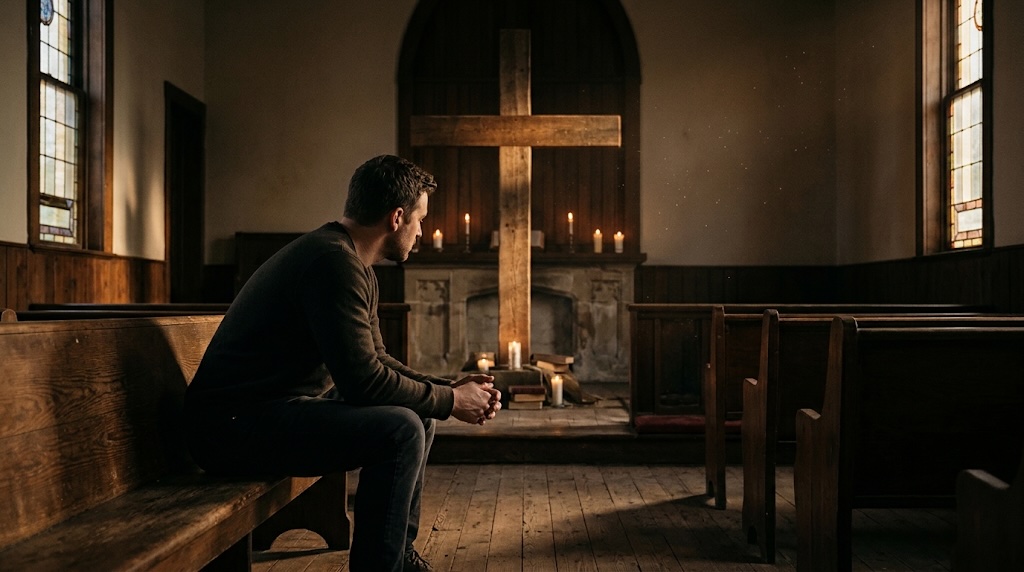
Isaiah 53:12 NKJV
Therefore I will divide Him a portion with the great,
And He shall divide the spoil with the strong,
Because He poured out His soul unto death,
And He was numbered with the transgressors,
And He bore the sin of many,
And made intercession for the transgressors.
Christ’s Victory

This chapter gives us a warm look ahead at the Messiah’s journey—why he chose to give his life and the wonderful blessings that come to all of us from that moment. It’s a summary of the ideas that make Christianity so special. Today, we’re in the final post of a 12-part series exploring Isaiah 53!
Two wonderful truths were shared by the Spirit of Christ through the Old Testament prophets: the suffering of Christ and the glory that would follow (1 Peter 1:11). When Jesus explained Moses and the prophets, he showed that the main point was that Christ had to suffer and then enter his glory (Luke 24:26–27). Yet nowhere in the Old Testament are these two themes expressed so clearly and fully as in this chapter, which the New Testament often quotes and applies to Christ. This chapter overflows with the amazing riches of Christ—so much so that we might call it Isaiah’s gospel rather than just his prophecy. By blending faith with this chapter, we can grow closer to Jesus Christ—both crucified and glorified—dying for our sins and rising again to bring us right with God.
My Notes
“Therefore I will divide Him a portion with the great, And He shall divide the spoil with the strong, Because He poured out His soul unto death, And He was numbered with the transgressors, And He bore the sin of many, And made intercession for the transgressors.”—Isaiah 53:12 (NKJV)
Isaiah 53 is one of the most remarkable chapters in all of Scripture. It takes us to the foot of the cross centuries before Jesus was born and shows us both the depth of His suffering and the greatness of His victory. By the time we reach verse 12, the suffering is over, the sacrifice has been made, and God reveals the glorious outcome of everything Christ accomplished.
Charles Spurgeon once put it this way: “The dying Christ has risen again, and He is a great conqueror now, and He has divided the spoil. Those spoils are human hearts—the love and devotion of the people He redeemed. Nothing was held back. He poured out His soul unto death the way wine is poured out in a drink offering. Every faculty, every drop, the very center of who He was, was given. He made no reserve.”
What strikes me about this verse is that it reminds us that the cross was never the end of the story. Jesus did not suffer and die only to be remembered as a tragic figure in history. He suffered, died, rose again, and now reigns in complete victory. The One who was rejected by men has been exalted by the Father. The One who wore a crown of thorns now wears the crown of glory.
The verse begins with a promise from God:
“Therefore I will divide Him a portion with the great, And He shall divide the spoil with the strong.”
The word therefore is important. It tells us that Christ’s exaltation is directly connected to His sacrifice. Because He willingly obeyed the Father’s will, even to the point of death, the Father highly exalted Him.
Paul writes:
“And being found in appearance as a man, He humbled Himself and became obedient to the point of death, even the death of the cross. Therefore God also has highly exalted Him and given Him the name which is above every name.”—Philippians 2:8-9 (NKJV)
Jesus earned no glory by pursuing His own interests. His glory came through humble obedience. He laid everything down, and the Father raised Him to the highest place.
Isaiah uses the image of a victorious king returning from battle and dividing the spoils of war. That picture helps us understand what happened at Calvary. To human eyes, the cross looked like defeat. Jesus was mocked, beaten, condemned, and crucified. Yet in reality, He was winning the greatest victory the world would ever see. Through His death and resurrection, Christ defeated sin, Satan, death, and hell.
Paul describes it this way:
“Having disarmed principalities and powers, He made a public spectacle of them, triumphing over them in it.”—Colossians 2:15 (NKJV)
The cross was not Satan’s victory over Christ. It was Christ’s victory over Satan. Isaiah then explains why Christ received this reward:
“Because He poured out His soul unto death.”
Those words reveal the completeness of Jesus’ sacrifice. He did not give part of Himself. He gave everything. Sometimes we can become so familiar with the cross that we lose sight of its magnitude. Jesus withheld nothing. Every step toward Calvary was taken willingly. Every wound was endured for our salvation. Every drop of blood was shed for our redemption.
Jesus Himself said:
“No one takes it from Me, but I lay it down of Myself.”—John 10:18 (NKJV)
His life was not taken from Him against His will. He freely offered Himself as the sacrifice for sinners. The cross was the ultimate expression of His love and obedience.
Isaiah continues:
“And He was numbered with the transgressors.”
This may be one of the most humbling truths in the entire chapter. Jesus was completely sinless.
“Who committed no sin, Nor was deceit found in His mouth.”—1 Peter 2:22 (NKJV)
Yet He was treated like a criminal. He was arrested like a criminal, condemned like a criminal, and crucified between criminals. Though innocent, He willingly stepped into the place of the guilty. This prophecy was fulfilled exactly as Jesus said:
“For I say to you that this which is written must still be accomplished in Me: ‘And He was numbered with the transgressors.’”—Luke 22:37 (NKJV)
The sinless One stood where sinners belonged so that sinners could stand where the righteous One belongs. Isaiah then says:
“And He bore the sin of many.”
Here we find the heart of the gospel.
Jesus did not merely sympathize with sinners. He bore our sins upon Himself. He took our guilt, our shame, and our judgment. The punishment that should have fallen on us fell upon Him instead. Peter writes:
“Who Himself bore our sins in His own body on the tree, that we, having died to sins, might live for righteousness; by whose stripes you were healed.”—1 Peter 2:24 (NKJV)
Every believer can look at the cross and know that Christ carried what we could never carry ourselves. Our debt was paid in full. God’s justice was satisfied, and His mercy was freely extended. Yet Isaiah saves one final truth for the end:
“And made intercession for the transgressors.”
Even while dying, Jesus was praying for sinners.
“Father, forgive them, for they do not know what they do.”—Luke 23:34 (NKJV)
What is even more encouraging is that His ministry of intercession did not end at the cross. Today, our risen Savior still represents His people before the Father.
“Who is he who condemns? It is Christ who died, and furthermore is also risen, who is even at the right hand of God, who also makes intercession for us.”—Romans 8:34 (NKJV)
Think about that for a moment. The One who died for you is also praying for you. The One who carried your sins is now your lawyer. The Savior who redeemed you has not forgotten you. He continues to sustain, preserve, and intercede for His people every day.
And here is one of the best parts of Isaiah’s prophecy: Christ does not keep the spoils of victory to Himself. He shares them with those He has redeemed. Paul writes:
“And if children, then heirs-heirs of God and joint heirs with Christ, if indeed we suffer with Him, that we may also be glorified together.”—Romans 8:17 (NKJV)
Because of Christ’s victory, we are heirs with Him. Because He conquered, we share in the blessings of His triumph. His righteousness becomes ours. His inheritance becomes ours. His victory becomes ours. What an incredible Savior. He poured out His soul unto death for us. He was counted among sinners for us. He bore our sins for us. He intercedes for us.
He conquered, and through Him we are more than conquerors. The portion the Father gives Him includes a people. The spoil He divides includes the hearts of those who trust Him.
Prayer
Abba, thank You that Jesus did not hold anything back. Thank You that He was willing to be numbered with people like me so that I could be numbered with Him. Help me to rest in the fact that the same Savior who poured out His soul still intercedes, and that the spoils of His victory include my life. Let that confidence quiet my heart today. In Jesus’ name, Amen.
Key Takeaways
- Jesus’ suffering was not a defeat but the pathway to ultimate victory.
- Christ willingly poured out His life completely for our salvation.
- Though sinless, He was numbered among transgressors so that sinners could be forgiven.
- Jesus bore the full weight of our sins on the cross.
- The risen Christ continues to intercede for His people today.
- Believers share in the spoils of Christ’s victory as heirs of God and joint heirs with Him.

Proverb for Today
In mercy and truth Atonement is provided for iniquity; And by the fear of the Lord one departs from evil. Proverbs 16:6 NKJV
Mercy = Hesed: kindness, favor, goodness, lovingkindness, mercy, pity
Daily Scripture
For we ourselves were also once foolish, disobedient, deceived, serving various lusts and pleasures, living in malice and envy, hateful and hating one another. But when the kindness and the love of God our Savior toward man appeared, not by works of righteousness which we have done, but according to His mercy He saved us, through the washing of regeneration and renewing of the Holy Spirit, whom He poured out on us abundantly through Jesus Christ our Savior, that having been justified by His grace we should become heirs according to the hope of eternal life. Titus 3:3-Titus 3:7 NKJV
Closing

“The Lord bless you and keep you; The Lord make His face shine upon you, And be gracious to you; The Lord lift up His countenance upon you, And give you peace.” Numbers 6:24-26 NKJV
Grace be with you. Amen.
Please enter your email and click subscribe to be notified whenever I submit a new post.

Commentaries:
Charles Spurgeon
“We may regard this verse as a kind of covenant made between the everlasting God, the infinite Jehovah on the one part, and our great Representative, Mediator and Redeemer, the Lord Jesus Christ, on the other part. The incarnate God is to be bruised and wounded. He is to pour out His soul unto death, and by travail of soul He is to bear the sin of many. And then His ultimate reward is to be that God will divide Him a portion with the great, and He Himself shall divide the spoil with the strong.”
“Note the double recompense and joyfully distinguish between the two divisions—that which Jehovah makes for Him and that which He makes Himself.”
“And why these honors?… The answer is that He has done these four things—‘He has poured out His soul unto death; He was numbered with the transgressors; He bore the sin of many, and made intercession for the transgressors.’”
“…if Christ did really bear his people’s sins, and did bear them away—and since a thing cannot be in two places at one time, there is now no sin abiding upon those for whom Jesus died… Any man whatsoever, the wide world over, who shall ever trust Christ, may know that no sin can be with him because his sin was laid on Christ.”
“How clearly you have here before you our blessed Redeemer, and how strong are the expressions Isaiah used to set forth his substitution. If he did intend to teach us the doctrine that Christ suffered in the place and stead of his people, he could not have used more expressive words… Yes, we believe and hold it fast: that Christ did indeed and truly take the sins of his people upon himself… In this we find our hearts’ best confidence:
‘Our soul can on this doctrine live,
Can on this doctrine die.’”
“He not only died, but he poured out his very soul to death.”
“The dying Christ has risen again, and he is a great conqueror now, and divided the spoil. Those spoils are human hearts, and the true love and deep devotion of those he has redeemed.”
“And he is doing it now; pleading this very night that old prayer of his, ‘Father, forgive them, for they know not what they do.’”
“Blessed Intercessor, let your almighty intercession avail for each one of us, for your own name’s sake!”
______________________________________________________
Enduring Word
Therefore I will divide Him a portion with the great, and He shall divide the spoil with the strong: The Messiah’s glorious work will be rewarded. With the image of dividing the spoil after a victorious battle, we see that the Messiah ultimately triumphs. (Guzik)
i. Paul described this ultimate triumph in Philippians 2:10-11: That at the name of Jesus every knee should bow, of those in heaven, and of those on earth, and of those under the earth, and that every tongue should confess that Jesus Christ is Lord, to the glory of God the Father. That is a glorious reward. (Guzik)
ii. “It is a strange fact that I am going to declare, but it is not less true than strange: according to our text the extraordinary glories of Christ, as Savior, have all been earned by his connection with human sin. He has gotten his most illustrious splendor, his brightest jewels, his divinest crowns, out of coming into contact with this poor fallen race.” (Spurgeon)
iii. In the end, the sufferings and humiliation of Jesus only bring Him more glory and majesty! “I do see that out of this dunghill of sin Christ has brought this diamond of his glory by our salvation. If there had been no sinners, there could not have been a Savior. If no sin, no pouring out of the soul unto death; and if no pouring out of the soul unto death, no dividing a portion with the great. If there had been no guilt, there had been no act of expiation. In the wondrous act of expiation by our great Substitute, the Godhead is more gloriously revealed than in all the creations and providences of the divine power and wisdom.” (Spurgeon)
iv. Who does the Messiah divide the spoil with? With the strong; those strong in Him. We can share in the spoil of Jesus’ victory! If children, then heirs; heirs of God and joint heirs with Christ, if indeed we suffer with Him, that we may also be glorified together. (Romans 8:17) (Guzik)
Because He poured out His soul unto death: This speaks of the totality of Jesus’ sacrifice on the cross. Poured out means that it was all gone. There was nothing left, nothing more He could give. (Guzik)
i. “‘He hath poured out his soul unto death.’ I will say no more about it, except that you see how complete it was. Jesus gave poor sinners everything. His every faculty was laid out for them. To his last rag he was stripped upon the cross. No part of his body or of his soul was kept back from being made a sacrifice. The last drop, as I said before, was poured out till the cup was drained. He made no reserve: he kept not back even his innermost self: ‘He hath poured out his soul unto death.’” (Spurgeon)
He was numbered with the transgressors: Jesus could never become a sinner; He could never be a transgressor Himself. Yet willingly, loving, He was numbered with the transgressors. Is there a roll call taken for transgressors? Jesus says, “Put My name down with them.” We would be shocked if a godly woman looked at a list of prostitutes and said, “Put my name down among them.” Or what if a godly man looked at a list of murderers and said, “Number me among them.” But that is what Jesus did for us, only to an even greater degree. (Guzik)
He bore the sin of many: Over and over again, the prophet emphasizes the point. The Servant of the LORD, the Messiah, suffers on behalf of and in the place of guilty sinners. (Guzik)
And made intercession for the transgressors: We know that presently, Jesus has a ministry of intercession (Hebrews 7:25). But Hebrews 7:25 speaks of intercession for the saints. This passage probably refers to Jesus’ prayers on the cross itself. (Guzik)
i. This means the work of the Messiah is made available to transgressors. It is when we see ourselves as transgressors that we can reach out and receive His salvation. (Guzik)
______________________________________________________
Albert Barnes
Therefore will I divide him — I will divide for him (לו lô). This verse is designed to predict the triumphs of the Messiah. It is language appropriate to him as a prince, and designed to celebrate his glorious victories on earth. The words here used are taken from the custom of distributing the spoils of victory after a battle, and the idea is, that as a conqueror takes valuable spoils, so the Messiah would go forth to the spiritual conquest of the world, and subdue it to himself. Rosenmuller renders this, Dispertsam ei multos – ‘I will divide to him the many;’ that is, he shall have many as his portion. Hengstenberg, ‘I will give him the mighty for a portion.’ So the Septuagint, ‘Therefore he shall inherit (κληρονομήσει klēronomēsei) many.’ So Lowth, ‘Therefore will I distribute to him the many for his portion.’ But it seems to me that the sense is, that his portion would be with the mighty or the many (ברבים bârabbı̂ym) and that this interpretation is demanded by the use of the preposition ב (b) in this case, and by the corresponding word את ‘êth, prefixed to the word ‘mighty.’ The sense, according to this, is, that the spoils of his conquests would be among the mighty or the many; that is, that his victories would not be confined to a few in number, or to the feeble, but the triumphs of his conquests would extend afar, and be found among the potentates and mighty people of the earth.
It would not be merely his feeble foes that would be subdued, but it would be the mighty, and there would be no power, however formidable, that would be able to resist the triumphs of his truth. The history of the gospel since the coming of the Redeemer shows how accurately this has been fulfilled. Already he has overcome the mighty, and the spoils of the conquerors of the world have been among the trophies of his victories. The Roman empire was subdued; and his conquests were among these conquerors, and his were victories over the subduers of nations. It will be still more signally fulfilled in coming times, when the kingdoms of this world shall become the kingdom of our Lord and of his Christ, and he shall reign forever and ever Revelation 11:15.
Because he hath poured out his soul unto death — His triumphs would be an appropriate reward for his sufferings, his death, and his intercession. The expression ‘he poured out his soul,’ or his life (נפשׁו napeshô; see the notes at Isaiah 53:10), is derived from the fact that the life was supposed to reside in the blood (see the notes at Romans 3:25); and that when the blood was poured out, the life was supposed to flow forth with it. As a reward for his having thus laid down his life, he would extend his triumphs over the whole world, and subdue the most mighty to himself.
______________________________________________________
John Gill
Therefore will I divide him a portion with the great,…. The great ones of the earth, the kings and princes of the earth: these are the words of God the Father, promising Christ that he shall have as great a part or portion assigned him as any of the mighty monarchs of the world, nay, one much more large and ample; that he would make him higher than the kings of the earth, and give him a name above every name in this world, or that to come; and all this in consequence of his sufferings, and as a reward of them; see Philippians 2:8 and whereas the Lord’s people are his portion, and with which Christ is well pleased, and greatly delighted, Deuteronomy 32:9, they may be intended here, at least as a part of the portion which Christ has assigned him. For the words may be rendered , “therefore will I divide, assign, or give many to him”: so the Vulgate Latin version; and which is favored by the Targum, “therefore will I divide to him the prey of many people;” and by the Septuagint version, therefore he shall inherit many, or possess many as his inheritance; so the Arabic version. The elect of God were given to Christ, previous to his sufferings and death, in the everlasting council of peace and covenant of grace, to be redeemed and saved by him; and they are given to him, in consequence of them, to believe in him, to be subject to him, and serve him; and so it denotes a great multitude of persons, both among Jews and Gentiles, that should be converted to Christ, embrace him, profess his Gospel, and submit to his ordinances; and which has been true in fact, and took place quickly after his resurrection and ascension.
And he shall divide the spoil with the strong; or “the strong as a spoil”; that is, he shall spoil principalities and powers, destroy Satan and his angels, and make an entire conquest of all his mighty and powerful enemies. The Septuagint, Vulgate Latin, and Arabic versions, render the words, “he shall divide the spoil of the strong”; of Satan and his principalities; those they make a spoil of he shall take out of their hands, and possess them as his own. The best comment on this version is Luke 11:22. Or rather the words may be rendered, “he shall have or possess for a spoil or prey very many”; for the word for “strong” has the signification of a multitude; and so the sense is the same as before, that a great multitude of souls should be taken by Christ, as a prey out of the hands of the mighty, and become his subjects; and so his kingdom would be very large, and he have great honor and glory, which is the thing promised as a reward of his sufferings. Some understand, by the “great” and “strong,” the apostles of Christ, to whom he divided the gifts he received when he led captivity captive; to some apostles, some prophets, &c. Ephesians 4:10, and others the soldiers, among whom his garments were parted; but they are senses foreign from the text.
Because he hath poured out his soul unto death; as water is poured out, Psalm 22:14 or rather as the wine was poured out in the libations or drink offerings; for Christ’s soul was made an offering for sin, as before; and it may be said with respect to his blood, in which is the life, that was shed or poured out for the remission of sin; of which he was emptied,
and made bare, as the word signifies, when his hands, feet, and side, were pierced. The phrase denotes the voluntariness of Christ’s death, that he freely and willingly laid down his life for his people.
And he was numbered with the transgressors; he never was guilty of any one transgression of the law; he indeed appeared in the likeness of sinful flesh, and was calumniated and traduced as a sinner, and a friend of the worst of them; he was ranked among them, and charged as one of them, yet falsely; though, having all the sins of his people upon him, he was treated, even by the justice and law of God, as if he had been the transgressor, and suffered as if he had been one; of which his being crucified between two thieves was a symbolical representation, and whereby this Scripture was fulfilled, Mr 15:28.
and he bore the sin on many; everyone of their sins, even the sins of all those whose iniquity was laid on him, of the many chosen in him, and justified by him; See Gill on “Isa 53:11” where this is given as the reason for their justification; and here repeated as if done, to show the certainty of it; to raise the attention of it, as being a matter of great importance; see 1 Peter 2:24.
And made intercession for the transgressors; as he did upon the cross, even for those that were the instruments of his death, Luke 23:34 and as he now does, in heaven, for all those sinners for whom he died; not merely in a petitionary way, but by presenting himself, blood, righteousness, and sacrifice; pleading the merits of these, and calling for, in a way of justice and legal demand, all those blessings which were stipulated in an everlasting covenant between him and his Father, to be given to his people, in consequence of his sufferings and death; see Romans 8:33.
______________________________________________________
Matthew Henry
He shall have the glory of obtaining an incontestable victory and universal dominion, v. 12. Because he has done all these good services, therefore will I divide him a portion with the great, and, according to the will of the Father, he shall divide the spoil with the strong, as a great general, when he has driven the enemy out of the field, takes the plunder of it for himself and his army, which is both an unquestionable evidence of the victory and a recompense for all the toils and perils of the battle. Note,
(1.) God the Father has engaged to reward the services and sufferings of Christ with great glory: “I will set him among the great, highly exalt him, and give him a name above every name.” Great riches are also assigned to him: He shall divide the spoil, shall have abundance of graces and comforts to bestow upon all his faithful soldiers.
(2.) Christ comes at his glory by conquest. He has set upon the strong man armed, dispossessed him, and divided the spoil. He has vanquished principalities and powers, sin and Satan, death and hell, the world and the flesh; these are the strong that he has disarmed and taken the spoil of.
(3.) Much of the glory with which Christ is recompensed, and the spoil which he has divided, consists in the vast multitudes of willing, faithful, loyal subjects, that shall be brought in to him; for so some read it: I will give many to him, and he shall obtain many for a spoil. God will give him the heathen for his inheritance and the uttermost parts of the earth for his possession, Ps. 2:8. His dominion shall be from sea to sea. Many shall be wrought upon by the grace of God to give up themselves to him to be ruled, and taught, and saved by him, and hereby he shall reckon himself honored, and enriched, and abundantly recompensed for all he did and all he suffered.
(4.) What God designed for the Redeemer he shall certainly gain the possession of: “I will divide it to him,” and immediately it follows, He shall divide it, notwithstanding the opposition that is given to him; for, as Christ finished the work that was given him to do, so God completed the recompense that was promised him for it; for he is both able and faithful.
(5.) The spoil which God divided to Christ he divides (it is the same word), he distributes, among his followers; for, when he led captivity captive, he received gifts for men, that he might give gifts to men; for as he has told us (Acts 20:35) he did himself reckon it more blessed and honorable to give than to receive. Christ conquered for us, and through him we are more than conquerors. He has divided the spoils, the fruits of his conquest, to all that are his: let us therefore cast in our lot among them.

- Exploring the Beauty of Psalms: Insights and Commentaries
- Monthly Breakdown of Our Blog Content
- Psalms Commentary: Faith and Inspiration
Leave a Reply