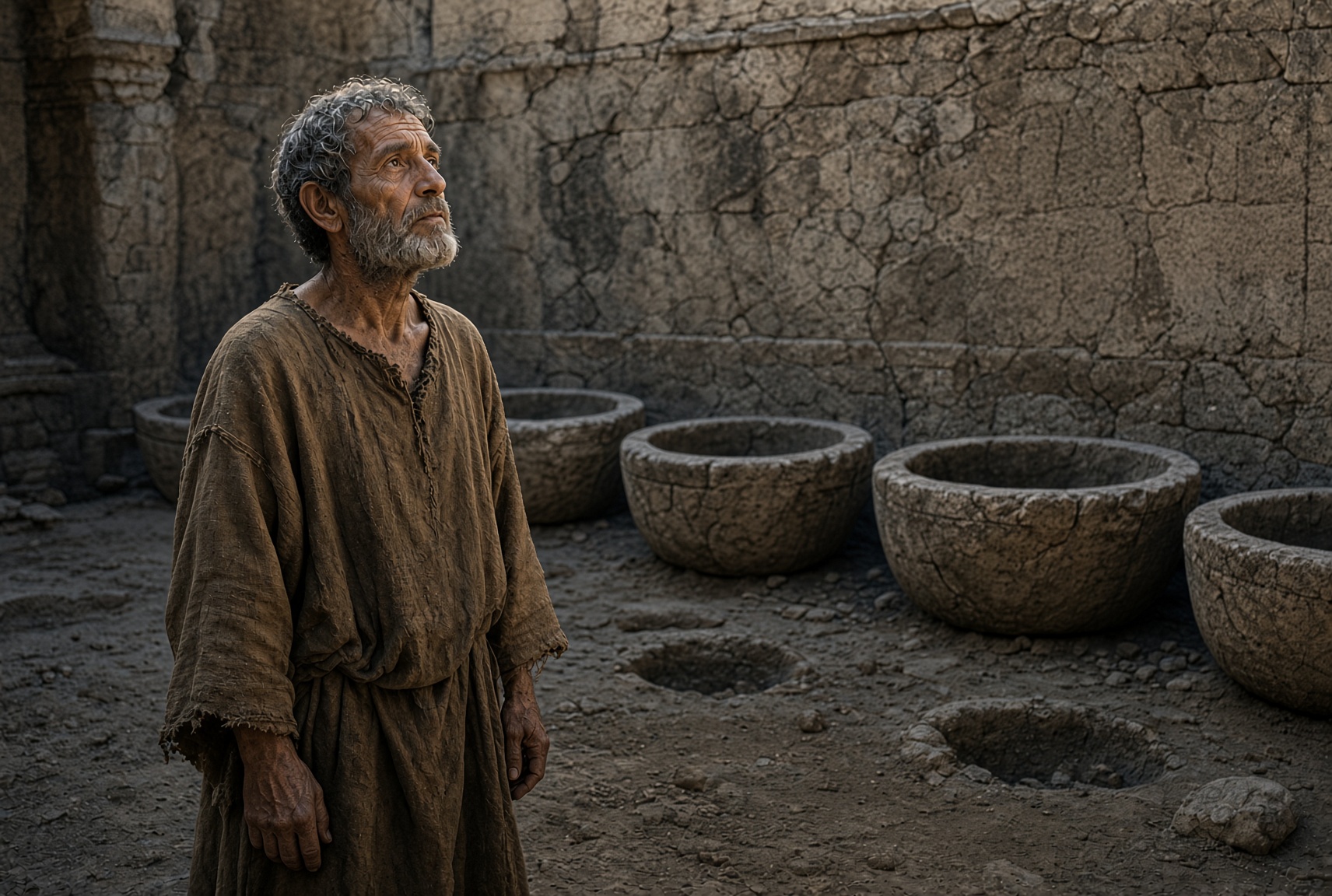
Isaiah 26:8 NKJV
Yes, in the way of Your judgments, O Lord, we have waited for You; The desire of our soul is for Your name And for the remembrance of You.
Waiting on God in the Fire

MY NOTES
“Yes, in the way of Your judgments, O Lord, we have waited for You; The desire of our soul is for Your name And for the remembrance of You.”
— Isaiah 26:8 (NKJV)
Most of us are willing to wait on God when the road is open, and the weather is fair. The real test comes when the path turns hard. Isaiah is not talking about a smooth highway here. “The way of Your judgments” means the rough stretch—affliction, correction, the long seasons when God seems to be dealing with us more by discipline than by comfort. And still the people of God say, we have waited for You.
That is the difference between real trust and fair-weather religion. Hypocrites can praise God when things are going well. When the road gets steep, and the answers stay delayed, they start to murmur and look for another way out. The godly do the opposite. Trouble does not drive them from God; it presses them closer. They keep looking to the same hand that has corrected them, because they know no other hand can truly relieve them (Psalm 123:2). Job put it in the starkest terms: “Though He slay me, yet will I trust Him.” David could walk through the valley of the shadow of death and still say he would fear no evil, because God was with him.
Job 13:15
“Though He slay me, yet will I trust Him. Even so, I will defend my own ways before Him.”
Psalm 23:4
Yea, though I walk through the valley of the shadow of death, I will fear no evil; For You are with me; Your rod and Your staff, they comfort me.
In Isaiah 26:8, the prophet speaks for a mature, battle-tested remnant. He doesn’t say, “We waited for You in the quiet meadow” or “We praised You because everything was easy.” He says, “Yes, in the way of Your judgments, O Lord, we have waited for You.”
The phrase “the way of Your judgments” refers to the hard paths of life—seasons of affliction, divine correction, loss, and prolonged trial. Isaiah’s message is clear: true love for God does not evaporate when the path gets steep and dark.
The Contrast Between Fairness and Fidelity
When trouble hits, the human heart usually responds in one of two ways:
- The Conditional Heart: Evaluates God based on immediate circumstances. When life goes well, God is good; when life gets hard, it murmurs, questions His love bitterly, or abandons the faith altogether.
- The Covenant Heart: Looks beyond immediate hardship to who God is. It recognizes that even in chastisement or sorrow, God’s hand is guided by wisdom and justice. Like Job, it declares, “Though He slay me, yet will I trust Him…” (Job 13:15).
Waiting on God during a smooth season requires patience; waiting on Him in a “road of judgments” requires deep, unwavering trust. It means refusing to run to broken cisterns or quick human fixes when the trial drags on. It means fixing your eyes on the Master’s hand until He shows mercy.
Psalm 123:2
“Behold, as the eyes of servants look to the hand of their masters, As the eyes of a maiden to the hand of her mistress, So our eyes look to the Lord our God, Until He has mercy on us.”
The Anchor of His Name
What keeps a soul from sinking when life feels like an endless series of heavy blows? Isaiah gives us the secret: “The desire of our soul is for Your name and for the remembrance of You.”
When everything visible around you is shaking, your hope has to rest on something invisible and unchangeable. In Scripture, God’s “name” represents His character, His covenant faithfulness, His holiness, and His revealed truth.
Exodus 3:15
Moreover God said to Moses, “Thus you shall say to the children of Israel: ‘The Lord God of your fathers, the God of Abraham, the God of Isaac, and the God of Jacob, has sent me to you. This is My name forever, and this is My memorial to all generations.’”
When you can’t trace God’s hand in your circumstances, you anchor your soul to His name:
- He is Yahweh-Jireh: The Lord who provides, even in famine.
- He is Yahweh-Nissi: The Lord our banner, even when the battle rages.
- He is the Everlasting God: Unmoved by the rise and fall of human trouble.
To cherish His “remembrance” means intentionally meditating on His past goodness and His written Word. A fleeting thought of God isn’t enough to sustain you in a dark hour. It takes continual, deliberate meditation on His character to keep your heart steady when the winds blow.
Even when the night of affliction feels long, the soul’s desire can still turn toward His name. That desire is both our duty and, in time, our comfort.
No matter how dark the night of affliction gets, let the deepest ache of your heart remain fixed on Him. He is worth waiting for—even in the hard places.
Prayer for Waiting in the Dark
Abba, You are just, holy, and faithful in all Your ways. Forgive me for the times I have looked at Your love by my circumstances, praising You in prosperity but complaining when the road turns rough. Give me a heart that trusts You in the middle of Your judgments. When trials linger, and the path is hard, keep my eyes fixed on You alone. Let my deepest desire be for Your name, Your glory, and Your truth. Remind me of who You are when my strength begins to fail, and grant me the endurance to wait for Your deliverance. In Jesus’ name, Amen.
Key Takeaways
- Waiting on God is proven in the hard way of His judgments, not only in easy seasons.
- True faith does not murmur and turn away under affliction; it presses closer and keeps looking to Him.
- The desire that sustains us is for God’s name and the continual remembrance of who He is, not merely for the end of the trouble.
- One glimpse of His character is not enough; ongoing meditation on His Word keeps desire alive.
- Long roads of correction do not cancel dependence; they become the place where dependence is practiced.

Proverb for Today
He who earnestly seeks good finds favor, But trouble will come to him who seeks evil. He who trusts in his riches will fall, But the righteous will flourish like foliage. Proverbs 11:27-28 NKJV.
Daily Scripture
In that day the Lord of hosts will be For a crown of glory and a diadem of beauty To the remnant of His people, For a spirit of justice to him who sits in judgment, And for strength to those who turn back the battle at the gate. Isaiah 28:5-6 NKJV
Closing

“The Lord bless you and keep you; The Lord make His face shine upon you, And be gracious to you; The Lord lift up His countenance upon you, And give you peace.” Numbers 6:24-26 NKJV
Grace be with you. Amen.
Please enter your email and click subscribe to be notified whenever I submit a new post.

Commentaries:
Enduring Word
The desire of our soul is for Your name: In the Kingdom of God, His just people love Him and desire Him.
i. The desire is displayed in waiting: O LORD, we have waited for You. When you desire something, or someone, you will wait for them, and do it gladly because of your desire.
(David Guzik)
______________________________________________________
Albert Barnes
Yea, in the way of thy judgements — The word ‘judgments’ often refers to the statutes or laws of God. But it may also refer to the afflictions and trials with which he visits or judges people; the punishments which they endure for their sins. In which sense the word is used here it is not easy to determine. Lowth understands it of the ‘laws’ of Yahweh. So Kimchi, who says that the sense is, that during their captivity and trials, they had not remitted anything of their love and piety toward God. I am inclined to the belief that this is the true interpretation, because in the corresponding member of the parallelism they are represented as saying that the desire of their soul was to God, and to the remembrance of him, implying that they sought by an observance of his laws to please him, and to secure his favor.
The desire of our soul is to thy name — The word ‘name’ is used here, as it is often, to denote God himself. They desired that he would come and deliver them; they earnestly wished that he would manifest himself to them as their friend.
And to the remembrance of thee — The word ‘remembrance’ (זכר zēker) is often equivalent to name, appellation, or that by which anyone is remembered, or known.
Thus Exodus 3:15 :
This is my name for ever;
And this is my memorial זכרי zikeriy unto all generations.
So Psalms 30:4 :
Sing unto Yahweh, O ye saints of his;
And give thanks at the remembrance of his holiness;
That is, at his holy memorial (Margin,) or name. In the place before us it seems to be used in the sense of name or appellation; that is, that by which God would be remembered or known.
______________________________________________________
John Gill
Yea, in the way of thy judgments, O Lord, have we waited for thee,…. Meaning by “judgments” either the ministration of the word and ordinances, called statutes and judgments, Psalm 147:19 an attendance on which is the right way of waiting upon God, and where it may be expected he will be found and manifest himself, and favor with his gracious presence; or else the corrections and chastisements, which are done in wisdom and with judgment, in measure and in mercy, and in a fatherly way, and for good; and so the sense is, that they had not only followed the Lord in a plain and even way, but even in the more rugged paths of afflictive dispensations; nor did these things at all move them from their duty to him, and worship of him:
the desire of [our] soul [is] to thy name, and to the remembrance of thee; to God himself, and to a remembrance of his nature, perfections, and works; to Christ, whose name is as ointment poured forth, and whose person is desirable, because of his glory, beauty, and fulness, because of his offices, and blessings of grace; and to his Gospel, which publishes and proclaims him, his grace, and salvation; and to his ordinances, which refresh the memory of his people concerning him, and his love to them shown in what he has done and suffered for them.
______________________________________________________
Matthew Henry
It is our duty, and will be our comfort, to wait for God, and to keep up holy desires towards him in the darkest and most discouraging times, v. 8, 9. This has always been the practice of God’s people, even when God has frowned upon them,
To keep up a constant dependence upon him: “In the way of thy judgments we have still waited for thee; when thou hast corrected us we have looked to no other hand than thine to relieve us,” as the servant looks only to the hand of his master, till he have mercy upon him, Ps. 123:2. We cannot appeal from God’s justice but to his mercy. If God’s judgments continue long, if it be a road of judgments (so the word signifies), yet we must not be weary but continue waiting.
To send up holy desires towards him. Our troubles, how pressing soever, must never put us out of conceit with our religion, nor turn us away from God; but still the desire of our soul must be to his name and to the remembrance of him; and in the night, the darkest longest night of affliction, with our souls must we desire him.
______________________________________________________
Calvin’s Commentary
Yea, in the way of thy judgments. This verse contains a very beautiful doctrine, without which it might have been thought that the former statements were without foundation. Since he said that God will be our guide during the whole of life, so that we shall neither wander nor stumble, and while, on the other hand, we are pressed by so many straits, we might conclude that those promises have not been actually fulfilled. Accordingly, when he tries our patience, we ought to strive, and yet to trust in him. Here the Prophet gives us this instruction, that, though our eyes are not gratified by an easy and delightful path, and though the road is not made smooth under our feet, but we must toil through many hard passages, still there is room for hope and patience.
By the way of judgments he means adversity, and the word judgment often has this meaning in Scripture. But here is a mark which distinguishes the godly from hypocrites; for in prosperity hypocrites bless God, and speak highly of him; but in adversity they murmur, and curse God himself, and plainly shew that they had no confidence in him, and thus judge of God according as their prosperity lasts. The godly, on the other hand, when they are tried by afflictions and calamities, are more and more excited to place confidence.
The particle אף, (ăph,) Even, is inserted for the sake of emphasis, as if the Prophet had said, that believers are earnest in the worship of God, not only so long as he treats them with gentleness, but that, if he deal harshly with them, still they do not faint, because they are supported by hope. It is therefore the true test of sincere godliness, when not only while God bestows his kindness upon us, but while he withdraws his face, and afflicts us, and gives every sign of severity and displeasure, we place our hope and confidence in him. Let us learn to apply this doctrine to our own use, whenever we are hard pressed by the calamities of the present life; and let us not cease to trust in him, even when our affairs are in the most desperate condition. “Though He slay me,” says Job, “I will trust in Him;” and David says that: “though he walk amidst the shadow of death, he will trust and not be afraid, because he knows that God is with him.” (Job 13:15; Psalms 23:4.)
To thy name. The Prophet aims at shewing what is the source of that unwearied earnestness which prevents the godly from sinking under the greatest calamities. It is because they are free from wicked desires and from excessive solicitude, and in their aspirations boldly rise to God. For, in consequence of our disorderly passions and cares holding us bound, as it were, to the earth, our hearts either wander astray, or sink into indolence, so that they do not freely rise to God; and as the essence of God is hidden from us, this makes us more sluggish in seeking him. From his hidden and incomprehensible essence, therefore, the Prophet draws our attention to the name of God, as if he enjoined us to rest satisfied with that manifestation of it which is found in the word; because there God declares to us, as far as is necessary, his justice, wisdom, and goodness, that is, himself.
And to the remembrance of thee. It is not without good reason also that he has added the word remembrance; for it means that the first perception or thought is not enough, but that continual meditation is enjoined; because without its aid all the light of doctrine would immediately vanish away. And indeed the true and sincere knowledge of God inflames us to desire him, and not only so, but also prompts us to desire to make progress, whenever the “remembrance” of it occurs to our minds. The knowledge of God, therefore, comes first; and next, we must be employed in frequent “remembrance;” for it is not enough that we have once obtained knowledge, if love and desire do not grow through constant meditation. Hence, also, we perceive that the knowledge of God is not a dead imagination.

- Exploring the Beauty of Psalms: Insights and Commentaries
- Monthly Breakdown of Our Blog Content
- Psalms Commentary: Faith and Inspiration
Leave a Reply