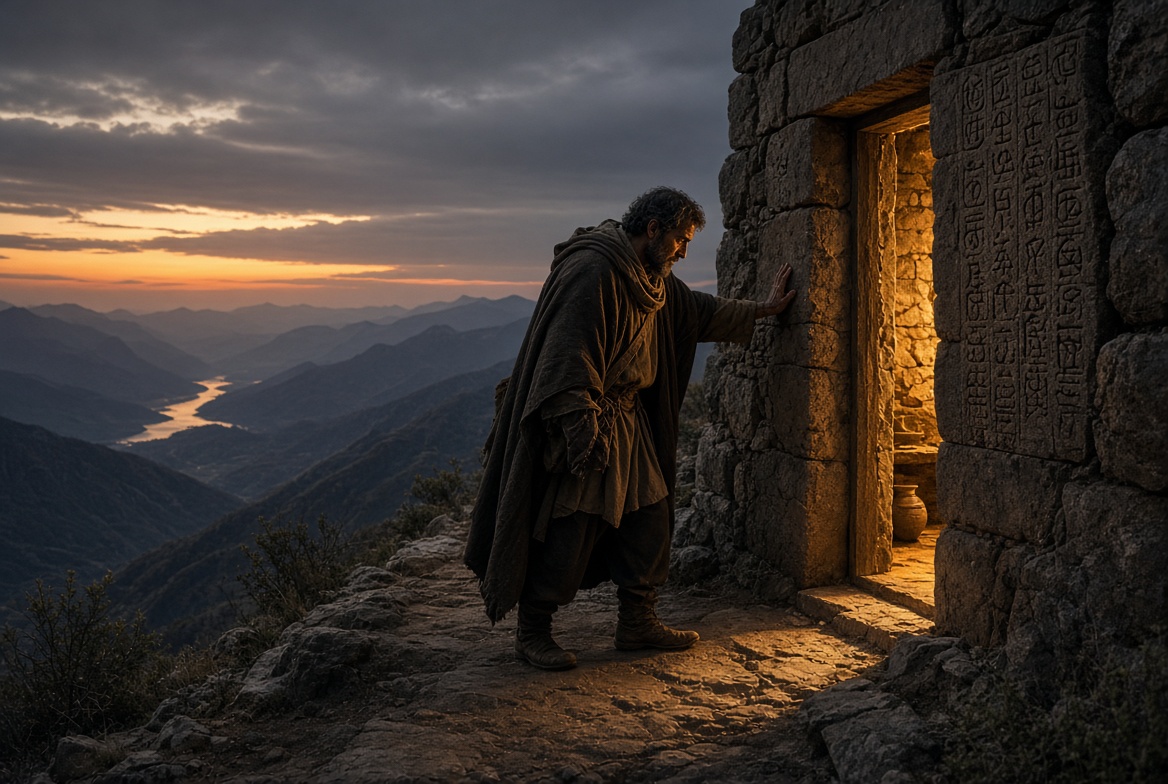
Psalm 10:1-4 NKJV
Why do You stand afar off, O Lord?
Why do You hide in times of trouble?
The wicked in his pride persecutes the poor;
Let them be caught in the plots which they have devised.
For the wicked boasts of his heart’s desire;
He blesses the greedy and renounces the Lord.
The wicked in his proud countenance does not seek God;
God is in none of his thoughts.
When God Seems Distant: Confronting the Pride of the Ungodly

MY NOTES
“Why do You stand afar off, O Lord? Why do You hide in times of trouble? The wicked in his pride persecutes the poor; Let them be caught in the plots which they have devised. For the wicked boasts of his heart’s desire; He blesses the greedy and renounces the Lord. The wicked in his proud countenance does not seek God; God is in none of his thoughts.” — Psalm 10:1–4 (NKJV)
This psalm starts where honest faith sometimes starts: with a question that hurts. Why does God look far off when trouble is close? The sufferer’s eye can make the Lord seem still, unmoved, even hidden. His presence is the joy of His people. The suspicion of absence can undo a day. Yet the Refiner is never far from the furnace when His gold is in the fire, and the Son of God still walks the flames with His own. We judge by what we can see, stand off in unbelief, and then complain that He stood off first.
There is no trial quite as disorienting to a believer as the feeling that God is standing at a distance when the storm is at its worst. It is one thing to face opposition; it is another to look up in the middle of the trial and feel as if heaven has closed its doors.
David opens Psalm 10 with a raw, honest question that has echoed through the centuries: “Why do You stand afar off, O Lord?”
When we are sharply tried by pain, our tear-filled eyes often misread God’s timing as God’s neglect. We mistake His patient forbearance for absence. Yet scripture reminds us that the Son of God walks right alongside His children in the flames. When outward help feels far off, it is rarely because God has moved—it is because our unbelief judges Him by outward appearances rather than His unchangeable word.
The Anatomy of Human Pride
Why was David so deeply distressed? Because he watched proud, arrogant men abuse the vulnerable while treating God with blatant contempt.
David traces the root of all persecuting, self-sufficient behavior straight to its source: pride. Pride isn’t just a quiet attitude of the heart; it writes itself across a person’s demeanor. It shows in “lofty looks” and a stiff neck that refuses to bow in prayer.
Notice the steps of practical atheism in verse 4:
- Self-Sufficiency: The proud man feels no need to seek God because he believes his own hands are enough.
- Arrogant Values: He boasts of his greedy desires and actually commends those who exploit others, calling covetousness “thrifty and prudent.”
- Complete Disregard: God is entirely absent from his mental world. He may think a thousand thoughts a day, but not one grain of wheat is found among the chaff—God is in none of them.
Scripture places the person who simply ignores God in the exact same category as the one who openly renounces Him. To live daily without seeking God, praying to God, or factoring His holy law into your choices is practical atheism, no matter how respectable it looks on the outside.
In verse 2, David inserts a request: “Let them be caught in the plots which they have devised.”
This is not a cry for personal revenge; it is a prayer for divine justice. David asks that the artifice and schemes manufactured by wicked men become the very traps that take them down. There is no clearer signature of God’s moral order than when a trap springs on the person who set it. David simply asks God to let the natural laws of His universe work—that those who dig pits for the innocent fall headlong into them themselves.
Psalm 9:15 (NKJV)
“The nations have sunk down in the pit which they made; In the net which they hid, their own foot is caught.”
Psalm 7:15–16 (NKJV)
“He made a pit and dug it out, And has fallen into the ditch which he made. His trouble shall return upon his own head, And his violent dealing shall come down on his own crown.”
Psalm 46:1 (NKJV)
“God is our refuge and strength, A very present help in trouble.”
Isaiah 43:2 (NKJV)
“When you pass through the waters, I will be with you; And through the rivers, they shall not overflow you. When you walk through the fire, you shall not be burned, Nor shall the flame scorch you.”
Daniel 3:25 (NKJV)
“‘Look!’ he answered, ‘I see four men loose, walking in the midst of the fire; and they are not hurt, and the form of the fourth is like the Son of God.’”
2 Timothy 3:1–2 (NKJV)
“But know this, that in the last days perilous times will come: For men will be lovers of themselves, lovers of money, boasters, proud, blasphemers, disobedient to parents, unthankful, unholy.”
Luke 18:11 (NKJV)
“The Pharisee stood and prayed thus with himself, ‘God, I thank You that I am not like other men—extortioners, unjust, adulterers, or even as this tax collector.’”
Speak of the wicked to God more than you perform about them to men. And while you wait, do not baptize greed as respectability. Jehovah abhors the covetous. Tremble lest pride make you a partner.
Psalm 10:11 (NKJV)
“He has said in his heart, ‘God has forgotten; He hides His face; He will never see.’”
That is the wicked man’s secret theology. David’s complaint is the opposite: he cannot stand the thought that God would hide.
When you feel that God is hiding in times of trouble, do not let your feelings dictate your faith. The proud man refuses to seek God because he thinks he doesn’t need Him; the believer must run to God precisely because he has nowhere else to go.
If you are carrying the weight of perceived silence today, bring your honest ache directly to the Father in prayer. Do not join the world in blessing the greedy or relying on human strength. One heart has no room for God. The other cannot breathe without Him.
Prayer
Abba, when trials press hard and You seem to stand far off, anchor my heart in the truth of Your Word. Forgive me for judging Your love by my changing circumstances or mistaking Your patience for absence. Keep my heart free from the subtle poison of pride. Guard me from ever living as if I do not need You, and let Your presence fill my thoughts, my decisions, and my daily walk. Where evil schemes against the innocent, let Your justice prevail. Lift my head today and draw me close to Your side. In the faithful name of Jesus, Amen.
Key takeaways
- Feeling God is far off is not the same as His being far off.
- Pride is the engine of persecution; it also keeps a person from prayer.
- Not seeking God and never thinking of God belong with renouncing Him.
- Blessing greed is not wisdom. It is partnership with what God hates.
- Ask God to catch the wicked in their own devices; leave the case with Him.
- Bring the evil report to the Father, not as a Pharisee, but as a son who loves His honor.

Proverb for Today
He who has knowledge spares his words, And a man of understanding is of a calm spirit. Even a fool is counted wise when he holds his peace; When he shuts his lips, he is considered perceptive. Proverbs 17:27-28 NKJV
Daily Scripture
Then he said, “Hear now, O house of David! Is it a small thing for you to weary men, but will you weary my God also? Therefore the Lord Himself will give you a sign: Behold, the virgin shall conceive and bear a Son, and shall call His name Immanuel. Curds and honey He shall eat, that He may know to refuse the evil and choose the good. For before the Child shall know to refuse the evil and choose the good, the land that you dread will be forsaken by both her kings. Isaiah 7:13-16 NKJV
Closing

“The Lord bless you and keep you; The Lord make His face shine upon you, And be gracious to you; The Lord lift up His countenance upon you, And give you peace.” Numbers 6:24-26 NKJV
Grace be with you. Amen.
Please enter your email and click subscribe to be notified whenever I submit a new post.

Commentaries:
Charles Spurgeon
To the tearful eye of the sufferer the Lord seemed to stand still, as if he calmly looked on, and did not sympathize with his afflicted one. Nay, more, the Lord appeared to be afar off, no longer “a very present help in trouble,” but an inaccessible mountain, into which no man would be able to climb. The presence of God is the joy of his people, but any suspicion of his absence is distracting beyond measure. Let us, then, ever remember that the Lord is nigh us. The refiner is never far from the mouth of the furnace when his gold is in the fire, and the Son of God is always walking in the midst of the flames when his holy children are cast into them. Yet he that knows the frailty of man will little wonder that when we are sharply exercised, we find it hard to bear the apparent neglect of the Lord when he forbears to work our deliverance.
If we need an answer to the question, “Why hidest thou thyself?” it is to be found in the fact that there is a “needs-be,” not only for trial, but for heaviness of heart under trial (1 Peter 1:6); but how could this be the case, if the Lord should shine upon us while he is afflicting us? Should the parent comfort his child while he is correcting him, where would be the use of the chastening? A smiling face and a rod are not fit companions. God bares the back that the blow may be felt; for it is only felt affliction which can become blest affliction. If we were carried in the arms of God over every stream, where would be the trial, and where the experience, which trouble is meant to teach us?
“The wicked in his pride doth persecute the poor.” The accusation divides itself into two distinct charges,—pride and tyranny; the one the root and cause of the other. The second sentence is the humble petition of the oppressed: “Let them be taken in the devices that they have imagined.” The prayer is reasonable, just, and natural. Even our enemies themselves being judges, it is but right that men should be done by as they wished to do to others. We only weigh you in your own scales, and measure your corn with your own bushel. Terrible shall be thy day, O persecuting Babylon! when thou shalt be made to drink of the winecup which thou thyself hast filled to the brim with the blood of saints. There are none who will dispute the justice of God, when he shall hang every Haman on his own gallows, and cast all the enemies of his Daniels into their own den of lions.
Pride meets covetousness, and compliments it as wise, thrifty, and prudent. We say it with sorrow, there are many professors of religion who esteem a rich man, and flatter him, even though they know that he has fattened himself upon the flesh and blood of the poor. The only sinners who are received as respectable are covetous men. If a man is a fornicator, or a drunkard, we put him out of the church; but who ever read of church discipline against that idolatrous wretch,—the covetous man? Let us tremble, lest we be found to be partakers of this atrocious sin of pride, “blessing the covetous, whom Jehovah abhorreth.”
See the effect of pride; it kept the man from seeking God. It is hard to pray with a stiff neck and an unbending knee. “God is not in all his thoughts:” he thought much, but he had no thoughts for God. Amid heaps of chaff there was not a grain of wheat. The only place where God is not is in the thoughts of the wicked. This is a damning accusation; for where the God of heaven is not, the Lord of hell is reigning and raging; and if God be not in our thoughts, our thoughts will bring us to perdition.
______________________________________________________
Enduring Word
Why do You stand afar off, O LORD? Here, the psalmist asked a question well known to those who follow God: the concern, the anxiety, over the seeming inactivity of God. The psalmist felt that God was afar off and did even hide in times of trouble. (Guzik)
i. “The presence of God is the joy of his people, but any suspicion of his absence is distracting beyond measure…. It is not the trouble, but the hiding of our Father’s face, which cuts us to the quick.” (Spurgeon)
ii. Times of trouble: According to Maclaren, this was a rare word in the ancient Hebrew vocabulary, used only here and in Psalm 9:9. “It means a cutting off, i.e., of hope of deliverance. The notion of distress intensified to despair is conveyed.”
The wicked in his pride persecutes the poor: This explains why the psalmist was so troubled by the seeming inactivity of God. He sees the wicked, proud man who not only persecutes the poor and approves other sinners (blesses the greedy), but he also sins against God (renounces the LORD…does not seek God…God is in none of his thoughts). (Guzik)
i. We immediately recognize that anyone who renounces the LORD is sinful. Yet the psalmist here puts the one who does not seek God and the one who does not think about God (God is in none of his thoughts) in the same category as the one who renounces the LORD. (Guzik)
ii. Men do not seek God; this is a great sin. Men do not think about God; this also is a great sin. Man has obligations to God as His Creator and sovereign, and it is a sin to neglect them. Man commits these sins because of his proud countenance; ignoring God is an expression of our independence and perceived equality (or superiority) to Him. (Guzik)
iii. Poole observed that pride is in the heart, “yet it is manifested in the countenance, and is therefore oft described by lofty looks.”
iv. “A brazen face and a broken heart never go together…. Honesty shines in the face, but villainy peeps out at the eyes.” (Spurgeon)
v. It can be said of the proud, wicked man in this psalm, God is in none of his thoughts. At the same time, he cannot not think of God, as he does later in Psalm 10:11 and 13 (the thoughts, God has forgotten; He hides His face; He will never see…You will not require an account). Try as he may, he can’t stop thinking about God. (Guzik)
Let them be caught in the plots which they have devised: This was the prayer of the psalmist regarding the wicked. In other psalms this is a confident expectation (such as Psalm 9:15); here it is a heartfelt prayer. (Guzik)
______________________________________________________
Albert Barnes
Why standest thou afar off, O Lord? — That is, What is the reason why thou doest this? The thought upon which this is based is that God might be expected to interpose in a time of trouble, and that His aid might then be looked for. Yet, in this case, He seemed to be an indifferent spectator of the sorrows and afflictions of the wronged and oppressed. This filled the mind of the writer with surprise, and he could not account for it, especially in view of the character of the person or persons who had wronged the author of the psalm. “To stand afar off” in such circumstances, is an attitude of indifference and unconcern – as when others do not come near us if we are sick, or are bereaved, or are in circumstances of poverty and want. That man should do this would have produced no surprise in the mind of the writer; that God should do it was something that filled him with wonder.
Let them be taken in the devices that they have imagined — The artifice, plan, or scheme, which they have formed. That is, they have formed a scheme to take advantage of, or to destroy others; and the psalmist prays that, as a just retribution, this very calamity may come upon them. No man could have a right to complain if the mischief and wrong which he had devised for others should be brought upon himself; and if it were certain that this in all eases would occur, there could be nothing that would so effectually deter men from wrongdoing. The psalmist, then, simply prays that justice might be done. Compare Psalms 5:10, Psalms 7:15-16.
God is not in all his thoughts — Margin, “Or, all his thoughts are, There is no God,” Psalms 14:1. The literal translation is: “No God (are) all his thoughts.” The margin has undoubtedly expressed the meaning better than the translation in the text, since the spirit of the passage is not that the sinner had no thought of God, but that he thought wrong. The fact that he would not seek God, and that he had said that God had forgotten Psalms 10:11, shows that he had some thoughts of God. The language here is properly expressive of belief or desire; either that all his thoughts were that there is no God, i. e, that such was the result of all his meditations and reasonings on the subject; or that he wished that it might be found to be so.
The reason or ground of these feelings is pride. Pride will prevent him from seeking God in the following ways:
- It makes him unwilling to recognize his dependence upon any being;
- it makes him unwilling to confess that he is a sinner;
- it makes him unwilling to pray;
- it makes him unwilling to seek aid of anyone, even God, in the business of life, in the prosecution of his plans, or in sickness and affliction;
- it makes him unwilling to accede to the terms of reconciliation and salvation proposed by God, unwilling to repent, to believe, to submit to His sovereignty, to acknowledge his indebtedness to mere grace for the hope of eternal life.
Pride is at the root of all the atheism, theoretical or practical, on the earth; at the root of all the reluctance which there is to seek the favor of God; at the root, therefore, of the misery and wretchedness of the world.
______________________________________________________
John Gill
Why standest thou afar off, O Lord?…. This psalm begins with a complaint which proceeds on two general heads; the one is with respect to God, his distance from his people, and desertion of them in times of trouble, in this verse; and the other is with respect to the wicked in some following ones. God by his infinite essence and power is everywhere, and is never far off from any of his creatures; and though his glorious presence is in heaven, which, with respect to us on earth, is a land afar off, yet this hinders not but that there is often great nearness between God and his people; and when he stands afar off from them in their apprehensions, it is when he withdraws his gracious presence from them, and defers help and assistance to them, and does not immediately and directly come and visit them: this they cannot bear, they complain; they wonder that, seeing they are the objects of his love, this should be his manner of conduct towards them; they expostulate with him, and inquire for what end and upon what account he should so use them, and most earnestly desire that he would haste and come unto them and help them; see Psalm 22:1.
God [is] not in all his thoughts; nor in any of them, for they are evil continually; and if he does at any time think of him, his thoughts of him are wrong; he thinks he is altogether such an one as himself: or, “all his thoughts [are, there is] no God”: though he does not choose to say so, he thinks so; at least, he wishes it may be so; and he works himself into such impiety and atheism as to deny the providence of God, and thinks that he does not govern the world, nor concern himself with what is done below; that he takes no notice of men’s actions, nor will call them to an account for them; and that there will be no future state or judgment, in which secret as well as open things will be made manifest: or, as the Chaldee paraphrase glosses it, “that all his thoughts are not manifest before the Lord.”
______________________________________________________
Matthew Henry
David, in these verses, discovers,
I. A very great affection to God and his favour; for, in the time of trouble, that which he complains of most feelingly is God’s withdrawing his gracious presence (v. 1): “Why standest thou afar off, as one unconcerned in the indignities done to thy name and the injuries done to the people?” Note, God’s withdrawings are very grievous to his people at any time, but especially in times of trouble. Outward deliverance is afar off and is hidden from us, and then we think God is afar off and we therefore want inward comfort; but that is our own fault; it is because we judge by outward appearance; we stand afar off from God by our unbelief, and then we complain that God stands afar off from us.
II. A very great indignation against sin, the sins that made the times perilous, 2 Tim. 3:1. he beholds the transgressors and is grieved, is amazed, and brings to his heavenly Father their evil report, not in a way of vain-glory, boasting before God that he was not as these publicans (Lu. 18:11), much less venting any personal resentments, piques, or passions, of his own; but as one that laid to he art that which is offensive to God and all good men, and earnestly desired a reformation of manners. passionate and satirical invectives against bad men do more hurt than good; if we will speak of their badness, let it be to God in prayer, for he alone can make them better. This long representation of the wickedness of the wicked is here summed up in the first words of it (v. 2), The wicked in his pride doth persecute the poor, where two things are laid to their charge, pride and persecution, the former the cause of the latter. Proud men will have all about them to be of their mind, of their religion, to say as they say, to submit to their dominion, and acquiesce in their dictates; and those that either eclipse them or will not yield to them they malign and hate with an inveterate hatred. Tyranny, both in state and church, owes its origin to pride. The psalmist, having begun this description, presently inserts a short prayer, a prayer in a parenthesis, which is an advantage and no prejudice to the sense: Let them be taken, as proud people often are, in the devices that they have imagined, v. 2. Let their counsels be turned headlong, and let them fall headlong by them. These two heads of the charge are here enlarged upon.
The cause of this impiety and irreligion; and that is pride. Men will not seek after God because they think they have no need of him, their own hands are sufficient for them; they think it a thing below them to be religious, because religious people are few, and mean, and despised, and the restraints of religion will be a disparagement to them.

- Exploring the Beauty of Psalms: Insights and Commentaries
- Monthly Breakdown of Our Blog Content
- Psalms Commentary: Faith and Inspiration
Leave a Reply