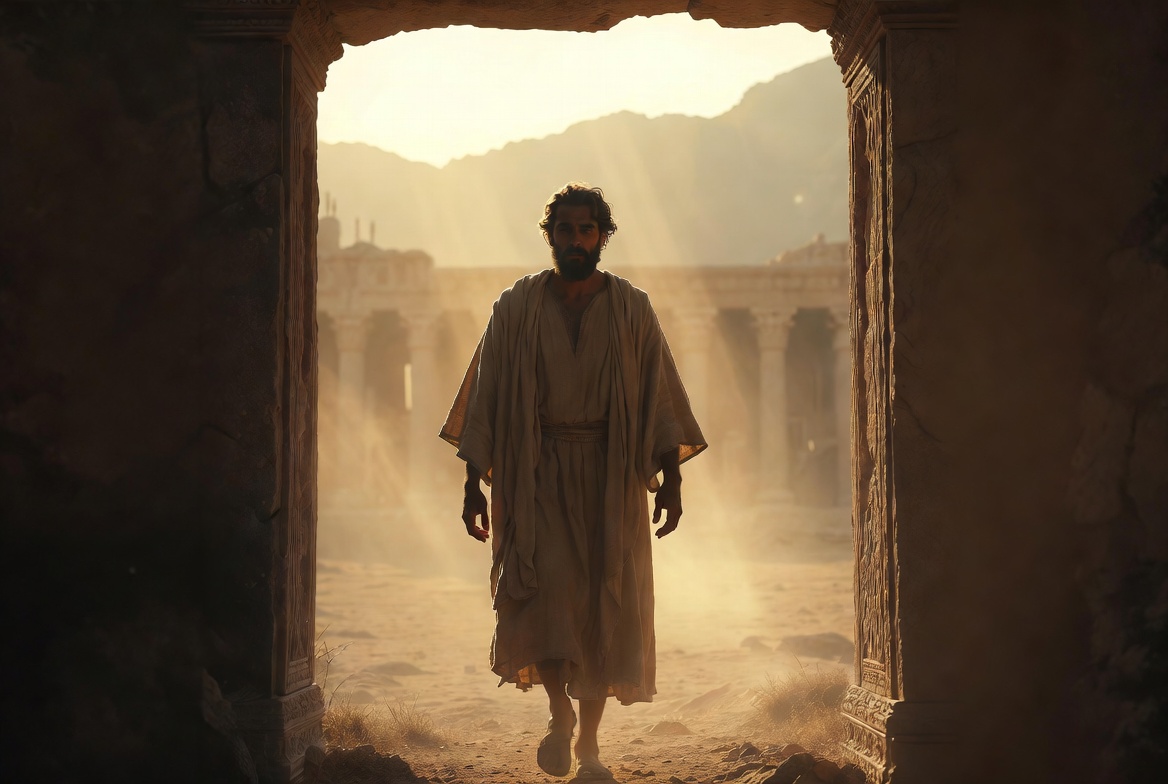
Psalm 5:7 NKJV
But as for me, I will come into Your house in the multitude of Your mercy;
In fear of You I will worship toward Your holy temple.
Approaching God with Boldness and Awe

MY NOTES
“But as for me, I will come into Your house in the multitude of Your mercy; In fear of You I will worship toward Your holy temple.”— Psalm 5:7 (NKJV)
Psalm 5:7 feels like a deep breath—a moment where David steps out of the chaos of wickedness and opposition and into the quiet confidence of worship. Others may rebel, deceive, or oppose God, but David chooses worship.
It is remarkably easy to let our circumstances, our emotional state, or our personal failures dictate how we approach God. When life feels overwhelming or when our own flaws weigh heavily on us, we often hesitate at the threshold of His presence. But David shows us a radically different posture. After describing the chaos of the world around him and the fate of the wicked, he pauses and pivots: “But as for me…”
David makes a firm choice not to stand at a distance. He resolves to enter God’s house, not as an unwelcome outsider, but with the bold familiarity of a child entering a loving father’s home.
Yet notice the ground upon which David steps: he doesn’t claim a single shred of personal merit. He recognizes that his own righteousness could never qualify him to stand before a holy God. Instead, he leans entirely on “the multitude of Your mercy.” Not a trickle. Not a small supply. A multitude.
Infinite Grace for Innumerable Sins
There is a profound comfort in the contrast between human limitation and divine abundance. Our mistakes may feel overwhelming, but while God’s judgments are measured, His mercies are immeasurable. While His righteous anger is measured, His grace is poured out without weight or limitation.
When we gather to worship—whether in private devotion or alongside other believers—we do so entirely because God is rich in mercy. From our spiritual regeneration to daily forgiveness, every single blessing stems from His generous heart. Secret, private prayer prepares us for public worship, but it never replaces it; we are invited to bring our gratitude into the courts of His house together.
Reverence Meets Expectation
Approaching God on the basis of mercy does not make us careless. David balances his confident, bold approach with deep reverence: “In fear of You I will worship toward Your holy temple.” This isn’t terror—it’s reverence. Awe. A sense of God’s holiness that steadies the heart and shapes the posture of worship. Reverence keeps worship from becoming casual or self-centered. It reminds us who He is and who we are.
A beautiful pattern emerges:
- Mercy draws us near.
- Reverence shapes our worship.
- Gratitude keeps us returning.
In ancient times, worshippers turned their faces toward the tabernacle—and later the temple—where God’s localized presence dwelt among His people. Today, our eyes turn to Jesus Christ, who is the true and ultimate Temple. In Him, the fullness of God dwells, and through His mediation, our imperfect prayers and praises are made completely acceptable to the Father.
Whether you feel worthy today or completely weighed down by your shortcomings, remember that the door to God’s house is opened not by your perfection, but by the overwhelming multitude of His mercy.
Prayer
Abba, I come before You today not trusting in my own goodness, strength, or righteousness, but entirely in the multitude of Your tender mercies. Thank You that Your grace is without weight and Your lovingkindness has no limit. Forgive me for the times I have hesitated to approach You out of fear or self-reliance. Teach me to worship You with a heart full of childlike confidence, balanced with deep, godly reverence for who You are. Keep my eyes fixed on Jesus, my Savior and Mediator; it’s in His name I pray. Amen
Key Takeaways
- Rely Exclusively on God’s Mercy: Never wait until you feel “good enough” to pray; approach God strictly on the merits of His infinite, unmerited grace.
- Balance Boldness with Reverence: Approach God with the intimate confidence of a child, while maintaining a profound, holy awe for His infinite greatness.
- Prioritize Public and Private Worship: Personal, private prayer cultivates a healthy spirit, but it is meant to lead us into joyful, shared worship with the community of believers.
- Fix Your Eyes on Christ: Just as Old Testament believers turned toward the physical temple, we direct our worship toward Jesus—our great Mediator who makes our devotion pleasing to God.
Cross References – NKJV
Ephesians 2:4–5
“But God, who is rich in mercy, because of His great love with which He loved us, even when we were dead in trespasses, made us alive together with Christ (by grace you have been saved),”
Hebrews 4:16
“Let us therefore come boldly to the throne of grace, that we may obtain mercy and find grace to help in time of need.”
Hebrews 12:28–29
“Therefore, since we are receiving a kingdom which cannot be shaken, let us have grace, by which we may serve God acceptably with reverence and godly fear. For our God is a consuming fire.”
Psalm 26:8
“Lord, I have loved the habitation of Your house, And the place where Your glory dwells.”
1 Peter 2:5
“you also, as living stones, are being built up a spiritual house, a holy priesthood, to offer up spiritual sacrifices acceptable to God through Jesus Christ.”
Things to Think About
- Do you tend to approach God based on how well you’ve performed recently, or on the multitude of His mercy? How can you shift your mindset today?
- What does “godly fear” or reverence look like in your practical, day-to-day worship and prayer life?
Proverb for Today
My son, pay attention to my wisdom; Lend your ear to my understanding, That you may preserve discretion, And your lips may keep knowledge. Proverbs 5:1-2 NKJV
Daily Scripture
“Therefore you shall lay up these words of mine in your heart and in your soul, and bind them as a sign on your hand, and they shall be as frontlets between your eyes. You shall teach them to your children, speaking of them when you sit in your house, when you walk by the way, when you lie down, and when you rise up. And you shall write them on the doorposts of your house and on your gates, that your days and the days of your children may be multiplied in the land of which the Lord swore o your fathers to give them, like the days of the heavens above the earth. Deuteronomy 11:18-21 NKJV
Closing
“The Lord bless you and keep you; The Lord make His face shine upon you, And be gracious to you; The Lord lift up His countenance upon you, And give you peace.” Numbers 6:24-26 NKJV
Grace be with you. Amen.
Please enter your email and click subscribe to be notified whenever I submit a new post.

Summary of Commentaries:
When life gets messy, David shows us how to draw near to God. Instead of relying on his own merits, he steps into worship trusting completely in God’s abundant, limitless mercy. He doesn’t let fear or hardship keep him away; instead, he comes with deep reverence and childlike confidence. Whether worshipping in private or joining with others, David keeps his heart focused on God’s grace, knowing that His mercy is always enough to anchor us.
Commentaries:
Charles Spurgeon
With this verse the first part of the Psalm ends. The Psalmist has bent his knee in prayer; he has described before God, as an argument for his deliverance, the character and the fate of the wicked; and now he contrasts this with the condition of the righteous. “But as for me, I will come into thy house.” I will not stand at a distance; I will come into thy sanctuary, just as a child comes into his father’s house. But I will not come there by my own merits; no, I have a multitude of sins, and therefore I will come in the multitude of thy mercy.I will approach thee with confidence because of thy immeasurable grace. God’s judgments are all numbered, but his mercies are innumerable; he gives his wrath by weight, but without weight his mercy.
“And in thy fear will I worship toward thy holy temple,”—towards the temple of thy holiness. The temple was not built on earth at that time; it was, but a tabernacle; but David was wont to turn his eyes spiritually to that temple of God’s holiness where between the wings of the Cherubim Jehovah dwells in light ineffable. Daniel opened his window toward Jerusalem, but we open our hearts toward heaven.
______________________________________________________
Enduring Word
I will come into Your house in the multitude of Your mercy: This was David’s confidence. It wasn’t that David thought that he was righteous, and all others were sinners. His ground of confidence was the mercy of God.
In fear of You I will worship: David’s worship wasn’t based on his feelings, but on his reverence for a righteous, merciful God.
(David Guzik)
______________________________________________________
Albert Barnes
But as for me — While it is their characteristic that they are wicked, and have no desire to serve God; and while with such characteristics they can have no hope of access to God, and no reason to suppose that he will hear their cry, I am inclined to enter his house, and I feel the assurance that he will listen to my prayer. In character and ill feelings he was wholly unlike them.
I will come into thy house — Indicating his expectation and his hope that he would yet be permitted to enter the courts of the Lord, from which he was now driven away (see the introduction to the psalm), and his purpose thus to acknowledge God. The word “house” here refers to the tabernacle, which was regarded as the house or dwelling place of God. The word was applied to the entire structure, embracing all the courts, as being sacred to God, as the word was subsequently to the whole of the temple. It was the holy of holies, however, which was regarded as the special dwelling-place of God, and that none were permitted to enter but the high priest, and he but once in the year. (See the notes at Hebrews 9:1-7.)
In the multitude of thy mercy — In thine abundant mercy. He expected to be delivered from his present troubles, and he felt assured that God would permit him again to enter his earthly courts, and to offer his vows and thanksgivings there.
And in thy fear — In profound reverence for thee. Fear, or reverence, is often employed to denote devotion or worship.
Will I worship toward thy holy temple — The worshippers were not permitted to enter the temple, but worshipped “toward” it; that is, looking toward it, or prostrating themselves toward it as the special dwelling-place of God. If they were in the courts around the temple, they worshipped with their faces toward the place where God was supposed to reside; if they were far away, even in distant lands, they still directed their faces toward Jerusalem and the temple, as the Muslims now do toward Mecca. See the notes at Daniel 6:10. It has been objected, from the use of the word “temple” here, that this psalm could not have been written by David, as the temple was not built until the time of Solomon. But in reply to this it may be observed that the word here used – היכל hêykâl – is a word of large signification, and might be applied to any place of worship. It means, properly, a large and magnificent building, a palace, Proverbs 30:28; Isaiah 39:7; Daniel 1:4; and then, the place where Yahweh was supposed to reside, or the place of his worship; and might be applied to the tabernacle as well as to the temple. In fact, it is “often” applied to the tabernacle that was in use before the building of the temple, 1Sa 1:9; 1 Samuel 3:3; 2 Samuel 22:7. Compare Gesenius’ Lexicon.
______________________________________________________
John Gill
But as for me, I will come [into] thy house,…. The tabernacle of Moses, sometimes called the house of God, 1 Chronicles 9:23; for as yet the temple was not built. Here David had been used to go in times past; and though he was now in a kind of exile from it, he was confident he should again enter into and determined so to do whenever he had an opportunity, and that in the following manner:
in the multitude of thy mercy; grace or goodness. God is rich in mercy, abundant in goodness and truth; there is a multitude of mercy, love, and grace in his heart, and which is stored up in his covenant, and displayed in his Son, and in the provision of him as a Savior of lost sinners; abundant mercy is shown in regeneration, in adoption, and in the forgiveness of sins, and in every spiritual blessing, and in the gift of eternal life. And now, not relying on his own merits, strength, and righteousness, or leaning to his own understanding, but trusting in the mercy, grace, and goodness of God in Christ, and in hope of finding more grace and mercy to help in time of need; with thankfulness for what he had received, he determines, by divine leave and assistance, to enter, into the house of the Lord: and whatever other persons did, whom he had before described, it was his resolution to serve the Lord, under a sense of his mercy and goodness to him; which laid him under an obligation so to do, and is the true principle from which all service should proceed;
[and] in thy fear will I worship toward thy holy temple; either heaven, the habitation of God’s holiness, towards which, and to God there, the psalmist would lift up his eyes, his hands, and heart; or the tabernacle, at the door of which the worship of God was performed, the sacrifices were brought, and God met his people; and therefore he says he would worship towards the temple or tabernacle, Leviticus 1:3. And it may be that David has reference to the Messiah, the medium of divine worship; whose human nature was typified by the tabernacle and temple, in which the fulness of the Godhead dwells: the psalmist therefore purposes to worship God in Christ, and to perform all acts of worship, as prayer, praise, hearing the word, offering sacrifice, &c. in the name and faith of Christ; looking towards him for the presentation of his services by him, and for the acceptance of them with God through him: and this he desired to do in the “fear” of God; not with a slavish fear, but with reverence and godly fear; with a fear influenced by the multitude of God’s mercy, grace, and goodness, in art humble modest manner, not trusting to, or depending upon, any service done by him.
______________________________________________________
Matthew Henry
He is steadfastly resolved to keep closely to God and to his worship. Sinners go away from God, and so make themselves odious to his holiness and obnoxious to his justice: “But, as for me, that shall not keep me from thee.” God’s holiness and justice are so far from being a terror to the upright in heart, to drive them from God, that they are rather by them invited to cleave to him. David resolves,
(1.) To worship God, to pay his homage to him, and give unto God the glory due unto his name.
(2.) To worship him publicly: “I will come into thy house, the courts of thy house, to worship there with other faithful worshippers.” David was much in secret worship, prayed often alone (v. 2, 3), and yet was very constant and devout in his attendance on the sanctuary. The duties of the closet are designed to prepare us for, not to excuse us from, public ordinances.
(3.) To worship him reverently and with a due sense of the infinite distance there is between God and man: “In thy fear will I worship, with a holy awe of God upon my spirit,” Heb. 12:28. God is greatly to be feared by all his worshippers.
(4.) To take his encouragement, in worship, from God himself only.
[1.] From his infinite mercy. It is in the multitude of God’s mercy (the inexhaustible treasures of mercy that are in God and the innumerable proofs and instances of it which we receive from him) that David confides, and not in any merit or righteousness of his own, in his approaches to God. The mercy of God should ever be both the foundation of our hopes and the fountain of our joy in every thing wherein we have to do with him.
[2.] From the instituted medium of worship, which was then the temple, here called the temple of his holiness, as a type of Christ, the great and only Mediator, who sanctifies the service as the temple sanctified the gold, and to whom we must have an eye in all our devotions as the worshippers then had to the temple.
______________________________________________________
Calvin’s Commentary
I will come into thy temples, says he, in the multitude of thy mercy; as if he had said, I may now seem to be in a condition almost desperate, but by the favor of God, I shall be kept in perfect safety. This passage, therefore, teaches us, that when we are afflicted by the most distressing temptations, we ought to set the grace of God before our eyes, in order thereby to be supported with the hope of the divine interposition amidst the greatest dangers. Farther, as our carnal minds either wickedly undervalue the grace of God, or put the low estimate upon it which is commonly put by the world, let us learn to extol its wonderful greatness, which is sufficient to enable us to overcome all fears. The primary object of David was to encourage himself in the assured hope of preservation from the mercy of God; but at the same time he shows that upon obtaining deliverance, he will be grateful to God for it, and keep it in remembrance.

- Exploring the Beauty of Psalms: Insights and Commentaries
- Monthly Breakdown of Our Blog Content
- Psalms Commentary: Faith and Inspiration
Leave a Reply