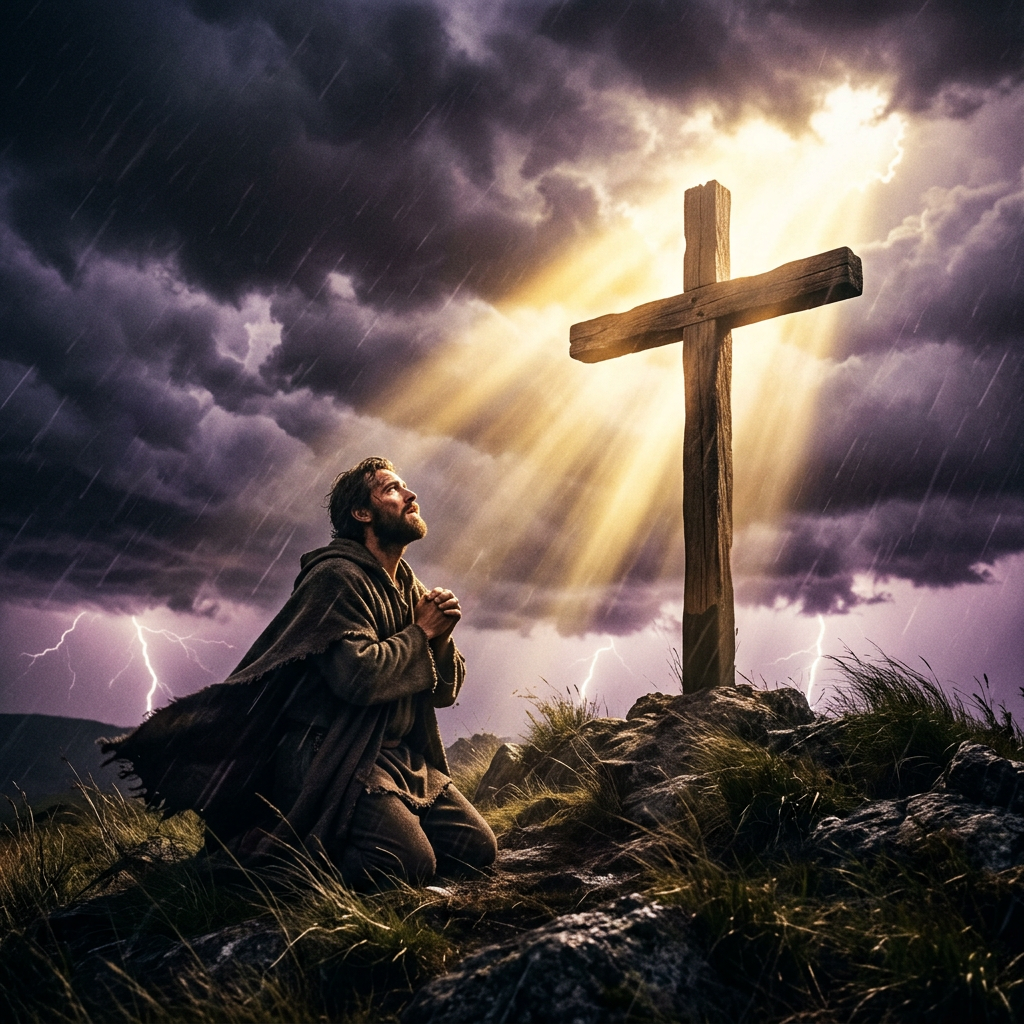
Psalm 3:7-8 NKJV
Arise, O Lord;
Save me, O my God!
For You have struck all my enemies on the cheekbone;
You have broken the teeth of the ungodly.
Salvation belongs to the Lord.
Your blessing is upon Your people. Sela
The Battle Belongs to the Lord

MY NOTES
“Arise, O Lord; Save me, O my God! For You have struck all my enemies on the cheekbone; You have broken the teeth of the ungodly. Salvation belongs to the Lord. Your blessing is upon Your people. Selah” — Psalm 3:7–8 (NKJV)
Have you ever faced a situation so ferocious that it felt like an aggressive predator snarling right in your face? Whether it’s an overwhelming personal trial, an unrelenting season of doubt, or unjust criticism from others, we all encounter moments where the enemy seems ready to devour us whole.
In Psalm 3, David finds himself in just such a crisis, surrounded by a massive rebellion led by his own son. Yet, look at how he prays: “Arise, O Lord; Save me, O my God!”
David knows something we often forget: When God rises, everything changes.
He remembers how God has acted before—how the Lord “struck” his enemies on the cheekbone and “broken the teeth of the ungodly.”
These are vivid images. They describe God stopping the enemy’s ability to devour, intimidate, or destroy. A predator with broken teeth can roar, but it cannot bite. David is saying, “Lord, You’ve done this before. Do it again.”
This is the heartbeat of faith:
Remembering past deliverance fuels present confidence.
David had seen God silence Saul’s rage, scatter the Philistines, and overturn nations that threatened Israel. So now, surrounded by enemies in Absalom’s rebellion, he draws strength from memory. If God saved him then, God can save him now.
Notice where David places the ultimate crown of victory: “Salvation belongs to the Lord.”
Not to human strength.
Not to military strategy.
Not to political power.
Not to personal ability.
Salvation—deliverance, rescue, restoration—belongs to God alone.
This is true of every kind of salvation:
- Temporal salvation — God rescues us from danger, trouble, and enemies.
- Spiritual salvation — God saves us from sin, guilt, and death through Christ.
- Eternal salvation — God keeps us forever by His power.
And then David ends with a blessing—not just for himself, but for God’s people:
“Your blessing is upon Your people.”
Even when circumstances look bleak.
Even when enemies surround.
Even when fear whispers otherwise.
God’s blessing rests on His people—not because they feel blessed, but because He has spoken it.
The Father planned it, the Son accomplished it on the cross, and the Holy Spirit applies it to our lives.
Because deliverance rests entirely in His hands, no threat is too large for Him to dismantle, and no valley is too dark for His light to penetrate. Even when human circumstances look bleak, God’s pronounced blessing rests securely over His people.
And then: Selah. Pause. Breathe. And rest in the truth that the God who saved you yesterday is fully capable of saving you today.
Prayer
Abba, arise in my circumstances today! When fears snarl around me, and threats seem ready to overwhelm my heart, remind me that You have already broken the jaw of the enemy. Thank You that salvation—my deliverance, my peace, and my eternity—belongs entirely to You and not to my weak efforts. Forgive me for trying to fight battles in my own strength. I pause right now to receive Your blessing and rest in Your unchanging love. Stand guard over my life today, and let Your victory be clearly seen. In Jesus’ mighty name I pray, Amen.
Key Takeaways
God rises when His people call — David’s prayer is bold because he knows God responds.
Remembering past deliverance strengthens present faith — What God has done before, He can do again.
God breaks the power of the enemy — The enemy may roar, but God removes its ability to destroy.
Salvation belongs to God alone — Every kind of rescue—temporal, spiritual, eternal—is His work.
God’s blessing rests on His people — Even when unseen, His blessing is real and active.
Cross References (NKJV)
1. Jonah 2:9
“But I will sacrifice to You With the voice of thanksgiving; I will pay what I have vowed. Salvation is of the Lord.”
2. Revelation 7:10
“and crying out with a loud voice, saying, ‘Salvation belongs to our God who sits on the throne, and to the Lamb!’”
3. Psalm 58:6
“Break their teeth in their mouth, O God! Break out the teeth of the young lions, O Lord!”
4. Ephesians 2:8–9
“For by grace you have been saved through faith, and that not of yourselves; it is the gift of God, not of works, lest anyone should boast.”
Things to Think About:
Where do I need God to “arise” today? What situation feels overwhelming or impossible?
Remembering God’s past help: When has God broken the “teeth” of something that once terrified me?
Salvation belongs to the Lord. What areas of my life am I trying to save myself instead of trusting God?
Living under God’s blessing: How does knowing God’s blessing rests on me change how I face today?
Selah moments: Where do I need to pause and let truth settle deeply into my heart?
Proverb for Today
The refining pot is for silver and the furnace for gold [to separate the impurities of the metal], And each is tested by the praise given to him [and his response to it, whether humble or proud]. Proverbs 27:21 AMP
Daily Scripture
“For the Lord your God has blessed you in all the work of your hand. He knows your trudging through this great wilderness. These forty years the Lord your God has been with you; you have lacked nothing.” Deuteronomy 2:7 NKJV
Closing
“The Lord bless you and keep you; The Lord make His face shine upon you, And be gracious to you; The Lord lift up His countenance upon you, And give you peace.” Numbers 6:24-26 NKJV
Grace be with you. Amen.
Please enter your email and click subscribe to be notified whenever I submit a new post.

Summary of Commentaries:
David cries, “Arise, O Lord,” trusting God to save as He had before, breaking the power of enemies like beasts with shattered teeth. The commentators emphasize that past deliverance fuels present confidence, and that salvation—temporal, spiritual, and eternal—belongs solely to God. He alone chooses, calls, sustains, and blesses His people. David’s plea becomes praise, affirming God’s protection over both himself and the whole church. “Thy blessing is upon Thy people.”
Commentaries:
Charles Spurgeon
His only hope is in his God, but that is so strong a confidence, that he feels the Lord hath but to arise and he is saved. It is enough for the Lord to stand up, and all is well. He compares his enemies to wild beasts, and he declares that God hath broken their jaws, so that they could not injure him.
“Thou hast broken the teeth of the ungodly.” Or else he alludes to the peculiar temptations to which he was then exposed. They had spoken against him; God, therefore, has smitten them upon the cheekbone. They seemed as if they would devour him with their mouths; God hath broken their teeth, and let them say what they will, their toothless jaws shall not be able to devour him. Rejoice, O believer, thou hast to do with a dragon whose head is broken, and with enemies whose teeth are dashed from their jaws!
This verse contains the sum and substance of Calvinistic doctrine. Search Scripture through, and you must, if you read it with a candid mind, be persuaded that the doctrine of salvation by grace alone is the great doctrine of the word of God:
“Salvation belongeth unto the Lord.” This is a point concerning which we are daily fighting. Our opponents say, “Salvation belongeth to the free will of man; if not to man’s merit, yet at least to man’s will;” but we hold and teach that salvation from first to last, in every iota of it, belongs to the Most High God. It is God that chooses his people. He calls them by his grace; he quickens them by his Spirit, and keeps them by his power. It is not of man, neither by man; “not of him that willeth, nor of him that runneth, but of God that showeth mercy.” May we all learn this truth experimentally, for our proud flesh and blood will never permit us to learn it in any other way. In the last sentence the peculiarity and speciality of salvation are plainly stated:
“Thy blessing is upon thy people.” Neither upon Egypt, nor upon Tyre, nor upon Ninevah; thy blessing is upon thy chosen, thy blood-bought, thine everlastingly-beloved people.
“Selah:” lift up your hearts, and pause, and meditate upon this doctrine. “Thy blessing is upon thy people.” Divine, discriminating, distinguishing, eternal, infinite, immutable love, is a subject for constant adoration. Pause, my soul, at this Selah, and consider thine own interest in the salvation of God; and if by humble faith thou art enabled to see Jesus as thine by his own free gift of himself to thee, if this greatest of all blessings be upon thee, rise up and sing—
______________________________________________________
Enduring Word
a. Arise, O LORD…. For You have struck all my enemies: David’s mind was on both what he trusted God to do (Save me, O my God) and on what God had done (struck all my enemies…broken the teeth of the ungodly). Knowing what God had done gives David confidence in what the LORD would do.
b. Arise, O LORD: This recalled the words of Numbers 10:35, where Moses used this phrase as the children of Israel broke camp in the wilderness. It was a military phrase, calling on God to go forth to both defend Israel and lead them to victory.
c. Broken the teeth of the ungodly: This vivid metaphor is also used in Psalm 58:6. It speaks of the total domination and defeat of the enemy. David looked for protection in this psalm, but more than protection – he looked for victory. It wasn’t enough for David to survive the threat to the kingdom. He had to be victorious over the threat, and he would be with the blessing of God.
d. Salvation belongs to the LORD: David understood that salvation – both in the ultimate and immediate sense – was God’s property. It isn’t the property of any one nation or sect, but of the LORD God. To be saved, one must deal with the LORD Himself.
e. Your blessing is upon Your people: This showed David’s heart in a time of personal calamity. He wasn’t only concerned for God’s hand upon himself, but upon all God’s people. He didn’t pray for preservation and victory in the trial with Absalom just for his own sake, but because it was best for the nation.
(David Guzik)
______________________________________________________
Albert Barnes
Arise, O Lord — This is a common mode of calling upon God in the Scriptures, as if he had been sitting still, or had been inactive. It is, of course, language taken from human conceptions, for in the intervals of active effort, in labor or in battle, we sit or lie down, and when we engage in toil we arise from our sitting or recumbent posture. So the mind accustoms itself to think of God. The idea is simply that David now calls upon God to interpose in his behalf and to deliver him.
Save me, O my God — He was still surrounded by numerous enemies, and he, therefore, calls earnestly upon God to help him. In accordance with a common usage in the Scriptures, and with what is right for all the people of God, he calls him “his” God: “O my God.” That is, he was the God whom he recognized as his God in distinction from all idols, and who had manifested himself as his God by the many mercies which he had conferred on him.
For thou hast smitten all mine enemies — That is, in former exigencies, or on former occasions. In his conflicts with Saul, with the Philistines, and with the surrounding nations, he had done this; and as the result of all he had established him on the throne, and placed him over the realm. In the remembrance of all this he appeals with the full confidence that what God had done for him before He would do now, and that, notwithstanding he was surrounded with numerous foes, He would again interpose. So we may derive comfort and assurance in present trouble or danger from the recollection of what God has done for us in former times. He who has saved us in former perils can still save us; we may believe that he who did not forsake us in those perils will not leave us now.
Upon the cheek-bone — This language seems to be taken from a comparison of his enemies with wild beasts; and the idea is, that God had disarmed them as one would a lion or tiger by breaking out his teeth. The cheek-bone denotes the bone in which the teeth are placed; and to smite that, is to disarm the animal. The idea here is not that of “insult,” therefore; but the meaning is simply that he had deprived them of the power of doing him wrong.
Thou hast broken the teeth of the ungodly — The same idea is here expressed under another form, “as if” the teeth of wild animals were broken out, rendering them harmless. As God had thus disarmed his enemies in times past, the psalmist hoped that he would do the same thing now, and he confidently called on him to do it.
Salvation belongeth unto the Lord — That is, it pertains to God alone to save. The psalmist had no expectation of saving himself; he had no confidence in the unaided prowess of his own arm. If he was to be saved, he felt that it was to be only by God, and the praise of this was to be given to Him. The particular reference here is to temporal deliverance, or deliverance from the dangers which surrounded him then; but the declaration is as true of spiritual deliverance – of the salvation of the soul – as it is of deliverance from temporal danger. In both cases it is true that God only saves, and that all the praise is due to him.
Thy blessing is upon thy people — Or perhaps, rather, “thy blessing be upon thy people,” regarding this as a “prayer” rather than an “affirmation.” It is true, indeed, as an affirmation (compare Psalms 2:12); but it accords better with the connection here, and is a more appropriate conclusion of the psalm to regard it as a petition, expressing an earnest desire that the blessing of God might ever rest upon his own people. Then the thoughts of the psalmist are turned away from his own perils to the condition of others; from his individual case to that of the Church at large; and he prays that all others may find the same favors from God which he had so richly enjoyed, and which he hoped still to enjoy. It is one of the characteristics of true piety thus to turn from our own condition to that of others, and to desire that what we enjoy may be partaken of by the people of God everywhere.
______________________________________________________
John Gill
Arise, O Lord; save me, O my God,…. God sometimes, in the apprehension of his people, seems to be as if he was asleep: when he does not appear to them and for them, and does not exert his power on their behalf, then they call to him to awake and arise; see Psalm 44:23; and it may be some respect is had to the words of Moses when the ark set forward, Numbers 10:35; and it may be observed, that though David enjoyed so much peace and tranquillity of mind, and was in such high spirits as not to be afraid of ten thousands of men, yet he did not neglect the right means of deliverance and safety, prayer to God, who he knew was his God; and he addresses him as such, and uses his covenant interest in him, as an argument with him to arise and save him from his enemies, who was able to do it, and to whom salvation belongs: so Christ, his antitype, prayed to God as his God to save him, and was heard by him in like manner; so the saints call upon God in a day of trouble, cry to him in their distresses, to be delivered out of them;
for thou hast smitten all mine enemies [upon] the cheekbone; to smite anyone upon the cheek is reckoned reproachful, and is casting contempt upon them; see Job 16:10 and the sense is, that God had poured contempt upon his enemies in time past, and had brought them to shame and confusion: hence he puts up the above prayer as a prayer of faith for salvation, founded on past experience of God’s goodness; he prayed that his God would arise and save him, and he believed he would because he had hitherto appeared for him, and against his enemies;
Salvation [belongeth] unto the Lord,…. As the author of it; temporal salvation is of him; all the deliverances of the saints out of their troubles are from him; and to him is owing their spiritual and eternal salvation; this belongs to Jehovah, Father, Son, and Spirit: Jehovah the Father resolved upon it, chose men to it from everlasting, contrived the scheme of it in his infinite wisdom, made a covenant with his Son, in which he secured it, and appointed him to be the author of it, and sent him in the fulness of time to effect it; and Christ the Son of God, being qualified for it, being mighty to save, came into this world for that purpose, and is become the author of eternal salvation; his own arm has brought it to him, though there were many difficulties in the way; such as fulfilling the law, satisfying justice, making an end of sin, grappling with all the powers of darkness, and undergoing an accursed death: and the Spirit of God, he makes men sensible of their need of this salvation; he brings it near to them, and works faith in them to lay hold upon it, and shows them their interest in it; and in consequence of all this the glory of salvation belongs to the Lord, Father, Son, and Spirit, and should be given to the Father as the contriver of it, to the Son as the author of it, and to the Spirit as the applier of it; see Revelation 7:10.
______________________________________________________
Calvin’s Commentary
Arise, O Lord.As in the former verses David boasted of his quiet state, it would now appear he desires of the Lord to be preserved in safety during the whole of his life; as if he had said, Lord, since thou hast overthrown my enemies, grant that this thy goodness may follow me, and be continued even to the end of my course. But because it is no uncommon thing for David, in the Psalms, to mingle together various affections, it seems more probable that, after having made mention of his confidence in God, he returns again to make the same prayers as at the beginning. He therefore asks to be preserved, because he was in eminent peril. What follows concerning the smiting of his enemies may be explained in two ways: either that in praying he calls to his remembrance his former victories, or that having experienced the assistance of God, and obtained the answer of his prayers, he now follows it up by thanksgiving: and this last meaning I am much inclined to adopt. In the first place, then, he declares that he fled to God for help in dangers, and humbly prayed for deliverance, and after salvation had been granted him, he gives thanks, by which he testifies that he acknowledged God to be the author of the deliverance which he had obtained.
Salvation belongeth unto the Lord. Because ל is sometimes used by the Hebrews for מך Min, some not improperly translate this clause, Salvation is of the Lord. I, however, consider the natural and obvious meaning to be simply this, that salvation or deliverance is only in the hands of God. By these words, David not only claims the office and praise of saving for God alone, tacitly opposing his power to all human succor; but also declares, that although a thousand deaths hang over his people, yet this cannot render God unable to save them, or prevent him from speedily sending forth without any effort, the deliverance which he is always able to impart. In the end of the psalm, David affirms that this was vouchsafed, not so much to him as an individual, as to the whole people, that the universal Church, whose welfare depended on the safety and prosperity of his kingdom, might be preserved from destruction. David, therefore, acknowledges the dispersion of this wicked conspiracy to have been owing to the care which God had about the safety of his Church. From this passage we learn, that the Church shall always be delivered from the calamities which befall her, because God, who is able to save her, will never withdraw his grace and blessing from her.
______________________________________________________
Matthew Henry
That God had often broken the power and restrained the malice of his enemies, had smitten them upon the cheek-bone (v. 7), had silenced them and spoiled their speaking, blemished them and put them to shame, smitten them on the cheek reproachfully, had disabled them to do the mischief they intended; for he had broken their teeth. Saul and the Philistines, who were sometimes ready to swallow him up, could not effect what they designed. The teeth that are gnashed or sharpened against God’s people shall be broken. When, at any time, the power of the church’s enemies seems threatening, it is good to remember how often God has broken it; and we are sure that his arm is not shortened. He can stop their mouths and tie their hands.
His faith became triumphant. He began the psalm with complaints of the strength and malice of his enemies, but concludes it with exultation in the power and grace of his God, and now sees more with him than against him, v. 8.
(1.) That salvation belongeth unto the Lord; he has power to save, be the danger ever so great; it is his prerogative to save, when all other helps and succours fail; it is his pleasure, it is his property, it is his promise to those that are his, whose salvation is not of themselves, but of the Lord. Therefore all that have the Lord for their God, according to the tenor of the new covenant, are sure of salvation; for he that is their God is the God of salvation.
(2.) That his blessing is upon his people; he not only has power to save them, but he has assured them of his kind and gracious intentions towards them. He has, in his word, pronounced a blessing upon his people; and we are bound to believe that that blessing does accordingly rest upon them, though there be not the visible effects of it. Hence we may conclude that God’s people, though they may lie under the reproaches and censures of men, are surely blessed of him, who blesses indeed, and therefore can command a blessing.

- Exploring the Beauty of Psalms: Insights and Commentaries
- Monthly Breakdown of Our Blog Content
- Psalms Commentary: Faith and Inspiration

Leave a Reply