Psalm 134 NKJV
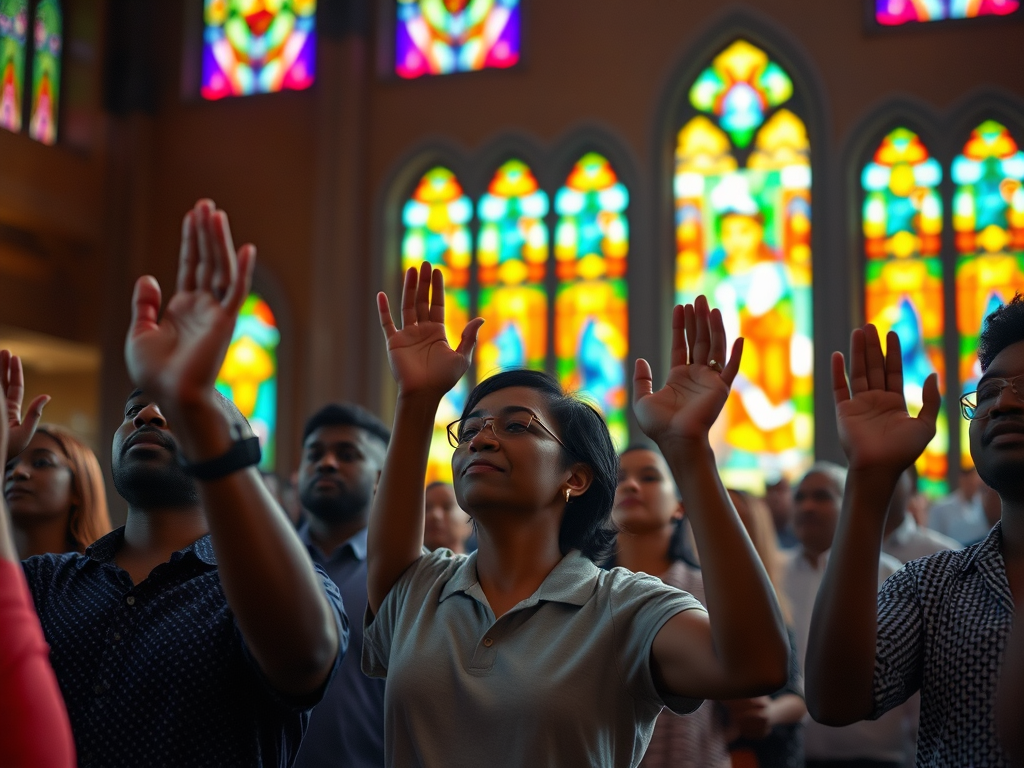
1 Behold, bless the Lord, All you servants of the Lord, Who by night stand in the house of the Lord! 2 Lift up your hands in the sanctuary, And bless the Lord. 3 The Lord who made heaven and earth Bless you from Zion!
The Night Shift of Praise

My Notes
1 Behold, bless the Lord, All you servants of the Lord, Who by night stand in the house of the Lord! 2 Lift up your hands in the sanctuary, And bless the Lord. 3 The Lord who made heaven and earth Bless you from Zion! — Psalm 134 (NKJV)
We’ve reached the end of the road. Psalm 134 is the fifteenth and final “Song of Ascents.” For days, the pilgrims have been climbing toward Jerusalem, singing their way into the presence of God. Now, the festival is over. The suitcases are packed (or the donkeys are loaded), and the families are starting the long trek back to their villages.
Imagine the scene: It’s the “pre-dawn” hour. The air is chilly, and most of the city is asleep. As the pilgrims pass the Temple gates one last time, they look up and see the warm glow of lamps in the sanctuary windows. They see the priests and Levites—the “night shift”—moving about their duties, keeping the fire on the altar burning and the incense rising.
Before they disappear over the horizon, the travelers shout a final encouragement to the ministers: “Behold, bless the Lord!” It’s as if they are saying, “We’re heading back to our farms and our messy lives, but don’t stop the music! While we sleep, and while we walk, you keep the praise going in the dark.”
Praise in the Dark. There is something incredibly powerful about “standing by night” in the house of the Lord. It’s easy to bless God when the sun is out, the choir is full, and the crowds are cheering. It’s another thing entirely to lift your hands in the sanctuary when it’s quiet, lonely, and dark. Maybe you’re in a “night season” right now—a time of waiting, grief, or uncertainty. This Psalm reminds us that the night shift is a sacred calling. Your praise in the middle of the night is a keeper of hope for everyone else.
The Great Exchange In verses 1 and 2, the people bless the Lord. In verse 3, the priests turn around and bless the people right back: “The Lord who made heaven and earth bless you from Zion!” This is the beautiful “echo” of worship. When we pour out our hearts to God, He doesn’t just leave us empty-handed. But notice how He is described. He is the Maker of heaven and earth (the God of Nature) and the One who blesses from Zion (the God of Grace).
- Because He is the Creator, we know He can bless us. He owns the atoms, the stars, and the bank accounts.
- Because He is in Zion, we know He will bless us. He has made a covenant; He has made a home among us.
As you “go home” into your week, remember that the God who holds the universe also holds your hand.
Key Takeaways
- Praise is Perpetual: Worship doesn’t stop just because the service is over or the “sun” has gone down in your life. God is worthy of the night shift.
- The Power of Intercession: We should pray for those who minister—our pastors, leaders, and “night watchmen”—that they wouldn’t grow weary in their service.
- Capacity vs. Willingness: God’s blessing is backed by His power as Creator (He is able) and His presence in Zion (He is willing).
- A Shared Blessing: Worship is a conversation. As we bless the Lord, we position ourselves to receive the blessing He has already commanded for us.
Cross References (NKJV)
1 Chronicles 9:33
“These are the singers, heads of the fathers’ houses of the Levites, who lodged in the chambers, and were free from other duties; for they were employed in that work day and night.”
Psalm 121:2
“My help comes from the Lord, Who made heaven and earth.”
1 Timothy 2:8
“I desire therefore that the men pray everywhere, lifting up holy hands, without wrath and doubting.”
Numbers 6:22-26
“And the Lord spoke to Moses, saying: “Speak to Aaron and his sons, saying, ‘This is the way you shall bless the children of Israel. Say to them: “The Lord bless you and keep you; The Lord make His face shine upon you, And be gracious to you; The Lord lift up His countenance upon you, And give you peace.” ’
A Closing Prayer
Abba, thank You for being the God of the day and the God of the night. Thank You for the “night watchmen” in my life—those who pray when I am too tired and praise when I am too weak. Help me to lift my hands in my own sanctuary today, no matter the hour or the season. I rest in the truth that You are the Maker of heaven and earth, and You are with me right here in the ‘Zion’ of my heart. Bless my going out and my coming in, from this time forth and even forevermore. I ask for this in Jesus’ name, Amen.
Something to think about
- The Night Watch: What does “standing by night” look like in your life right now? Are you in a season where praise feels like a sacrifice?
- Lifting Hands: Verse 2 mentions “lifting up your hands.” How does your physical posture or your daily actions reflect a heart that is “blessing the Lord”?
- He Can, and He Will: Reflect on God as the “Maker of heaven and earth” and the “God of Zion.” Which of these do you need to lean on more today: His power or His presence?
- The Echo: How can you encourage a “minister” in your life (a pastor, a prayer warrior, or a mentor) to keep the fire burning in the sanctuary?
Proverb for Today
If your enemy is hungry, give him food to eat; And if he is thirsty, give him water to drink; For you will heap burning coals on his head, And the Lord will reward you. Proverbs 25:21-22 NASB1995
Daily Scripture
“Thus says the Lord, the God of Israel: ‘Like these good figs, so will I acknowledge those who are carried away captive from Judah, whom I have sent out of this place for their own good, into the land of the Chaldeans. For I will set My eyes on them for good, and I will bring them back to this land; I will build them and not pull them down, and I will plant them and not pluck them up. Then I will give them a heart to know Me, that I am the Lord; and they shall be My people, and I will be their God, for they shall return to Me with their whole heart. Jeremiah 24:5-7 NKJV
Bill
Please enter your email and click subscribe to be notified whenever I submit a new post.

Summary of Commentaries:
As the final Song of Ascents, Psalm 134 acts as a spiritual farewell between departing pilgrims and temple ministers. The people exhort the “night shift” priests to maintain perpetual sanctuary praise. In response, ministers pronounce a blessing from Zion. This dialogue reveals God’s dual nature: as Almighty Creator, He has the power to bless; as the God of Grace in Zion, He has the willingness. It highlights the beauty of continuous, nighttime devotion.
Commentaries:
Charles Spurgeon
A Song of Degrees. We have now reached the last of the Gradual Psalms. The Pilgrims are going home and are singing the last song in their psalter. They leave early in the morning, before the day has fully commenced, for the journey is long for many of them. While yet the night lingers, they are on the move. As soon as they are outside the gates, they see the guards upon the temple wall, and the lamps shining from the windows of the chambers which surround the sanctuary; therefore, moved by the sight, they chant a farewell to the perpetual attendants upon the holy shrine. Their parting exhortation arouses the priests to pronounce upon them a blessing out of the holy place: this benediction is contained in the third verse. The priests as good as say, “You have desired us to bless the Lord, and now we pray the Lord to bless you.”
The Psalm teaches us to pray for those who are continually ministering before the Lord, and it invites all ministers to pronounce benedictions upon their loving and prayerful people.
______________________________________________________
Enduring Word
This is the last of the series of fifteen psalms with the title A Song of Ascents. It is a call to the priests and Levites of the temple to continue their service of praise, with the answer of a blessing back to the people. (Guzik)
______________________________________________________
Albert Barnes
This is the last psalm of the collection or group called “Songs of Degrees,” and it is of the nature of a doxology as now sung in our places of worship. Its author is unknown. From anything that appears in the psalm itself, it may have been composed originally to occupy the very place which it does occupy here. The psalm is a summons to praise, and it would seem not improbable that it was designed to be sung by alternate choirs – the first Psalms 134:1-2 representing the people approaching the sanctuary, calling on those who habitually serve God there – the ministers of religion – to lift up their hands in the sanctuary and to praise the Lord; the second Psalms 134:3, the response of the priests or the ministers of religion, pronouncing a blessing on the people – a blessing as proceeding out of Zion.
______________________________________________________
John Gill
A Song of degrees. This is the last of the psalms called “songs of degrees”,; of which See Gill on “Ps 120:1,” title. It is thought to be written by David, either when he brought the ark to Zion, 2 Samuel 6:17; or rather when he numbered the Levites, and appointed them their service, 1 Chronicles 23:26. So the Syriac inscription, “‘a psalm’ of David, concerning the priests, whom he appointed to wait on the ministry of the Lord in the nights; but, spiritually, an instruction of life.” Aben Ezra connects it with the preceding psalm, “as the dew of Hermon ye shall be that bless; behold, therefore, ye are bound to bless the Lord?”
______________________________________________________
Matthew Henry
This is the last of the fifteen songs of degrees; and, if they were at any time sung all together in the temple-service, it is fitly made the conclusion of them, for the design of it is to stir up the ministers to go on with their work in the night, when the solemnities of the day were over. Some make this psalm to be a dialogue.
I. In the first two verses, the priests or Levites who sat up all night to keep the watch of the house of the Lord are called upon to spend their time while they were upon the guard, not in idle talk, but in the acts of devotion.
II. In the last verse, those who were thus called upon to praise God pray for him that gave them the exhortation, either the high priest or the captain of the guard. Or thus: those who did that service did mutually exhort one another and pray for one another.
In singing this psalm, we must both stir up ourselves to give glory to God and encourage ourselves to hope for mercy and grace from him.
______________________________________________________
Miscellaneous Comments
“By night.” Even by night the Lord is to be remembered, and his praises are to be rehearsed.
—Martin Geier, 1614-1681.
The LORD that made heaven and earth,” etc. The priestly benediction brings God before us in a twofold character. He is described first as the Creator of the universe. He is described, in the second place, as dwelling “in Zion.” In the first aspect, he is represented as the God of nature; in the second, as the God of grace. When I contemplate him as the Creator of the universe, there is abundant proof that he can bless me. When I contemplate him as dwelling in the Church, there is abundant proof that he will bless me. Both of these elements are essential to our faith.
—N. McMichael.

- Exploring the Beauty of Psalms: Insights and Commentaries
- Monthly Breakdown of Our Blog Content
- Psalms Commentary: Faith and Inspiration

Leave a Reply