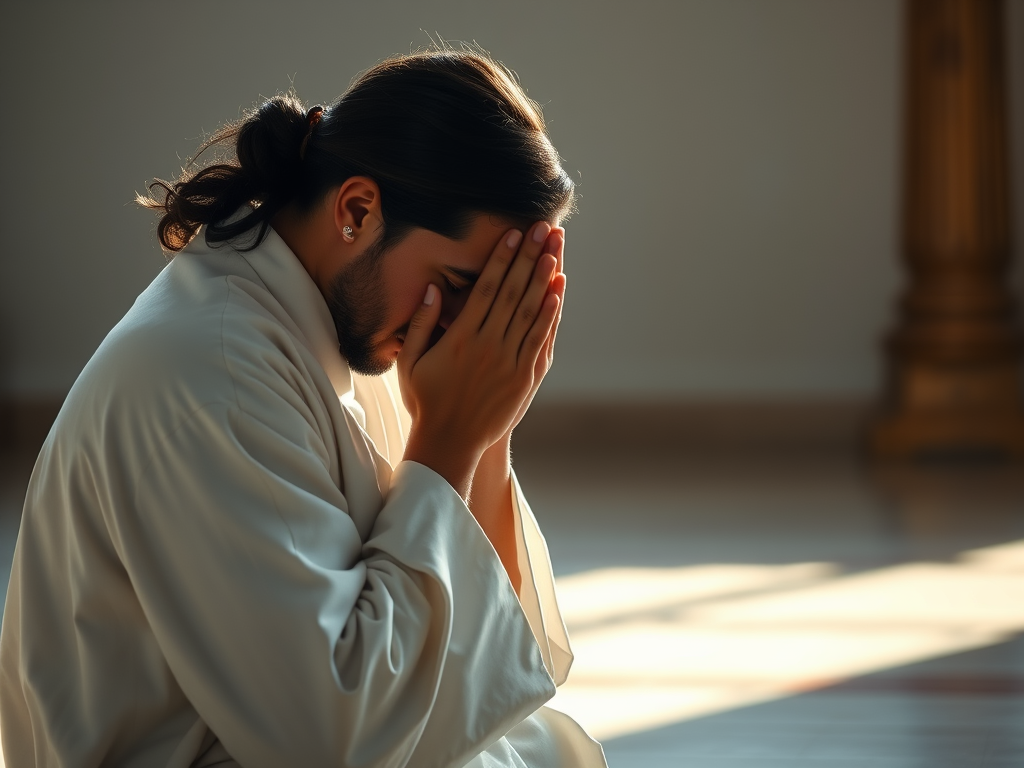
Psalm 130:3 NKJV
If You, Lord, should mark iniquities,
O Lord, who could stand?
Who Can Stand?

My Notes
Psalm 130:3 (NKJV)
“If You, Lord, should mark iniquities,
O Lord, who could stand?”
This verse brings us face‑to‑face with one of the most sobering truths in Scripture: if God were to keep a strict account of our sins—if He were to hold every thought, word, and deed against us—no one could endure His judgment. The psalmist recognizes that he is not only a sufferer crying from the depths but also a sinner standing before a holy God.
The word “mark” means to observe with the intention of holding someone accountable. God does indeed see every sin, but in His mercy, He does not immediately act upon the record. If He did, humanity would be undone. The psalmist feels the weight of this reality and confesses that no one—not even the most devout—could stand before God on the basis of personal righteousness.
This awareness is not meant to crush us but to drive us to grace.
The psalmist’s cry reveals:
- A deep awareness of guilt
- A recognition of God’s perfect holiness
- A confession that human righteousness cannot stand before divine justice
- A longing for mercy that only God can give
This verse prepares the heart for the hope that follows in Psalm 130:4:
“But there is forgiveness with You…”
Without God’s forgiveness, we would collapse under the weight of our own iniquity. But because of His mercy, we can stand—not in our righteousness, but in Christ’s.
This truth humbles us, quiets our pride, and awakens gratitude. It reminds us that every breath, every answered prayer, every moment of fellowship with God is possible only because He does not deal with us according to our sins.
Prayer
Abba, if You were to mark my sins, I could not stand before You. My heart, my thoughts, and my actions fall short of Your perfect holiness. Thank You for Your mercy, for Your patience, and for the forgiveness You offer through Christ. Teach me to walk humbly, to confess honestly, and to rest in Your grace. I ask for this in Jesus’ name, Amen.
Key Takeaways
- If God judged us strictly according to our sins, no one could stand before Him.
- The psalmist acknowledges both his suffering and his sin, approaching God with humility.
- God sees all iniquity, yet in mercy, He does not immediately condemn His children.
- Human righteousness cannot withstand divine scrutiny; only God’s forgiveness makes us able to stand.
- This verse prepares the heart for the hope of grace revealed in the next verse.
- God’s patience and forbearance are reasons for deep gratitude and worship.
Cross‑References (NKJV)
Psalm 103:10
“He has not dealt with us according to our sins, nor punished us according to our iniquities.”
Jeremiah 2:22
“Though you wash yourself with lye, and use much soap, yet your iniquity is marked before Me,” says the Lord God.
Romans 3:10
“There is none righteous, no, not one.”
Romans 3:23–24
“For all have sinned and fall short of the glory of God, being justified freely by His grace…”
Micah 7:19
“You will cast all our sins into the depths of the sea.”
Meditation Questions
- What sins or failures weigh most heavily on my heart today?
- How does remembering God’s holiness shape the way I approach Him?
- Where have I seen God’s mercy instead of judgment in my life?
Proverb for Today
Incline your ear and hear the words of the wise, And apply your heart to my knowledge; For it is a pleasant thing if you keep them within you; Let them all be fixed upon your lips, So that your trust may be in the Lord; I have instructed you today, even you. Have I not written to you excellent things Of counsels and knowledge, That I may make you know the certainty of the words of truth, That you may answer words of truth To those who send to you? Proverbs 22:17-21 NKJV
Daily Scripture
I am the Lord, and there is no other; There is no God besides Me. I will gird you, though you have not known Me, That they may know from the rising of the sun to its setting That there is none besides Me. I am the Lord, and there is no other; Isaiah 45:5-6 NKJV
Please enter your email and click subscribe to be notified whenever I submit a new post.

Summary of Commentaries:
Psalm 130:3 confronts the reality that if God kept a strict record of our sins, no one could endure His judgment. The psalmist feels the weight of guilt and recognizes God’s perfect holiness, confessing that human righteousness cannot stand before divine justice. This awareness drives him toward God’s mercy rather than despair. God sees every iniquity, yet in patience, He does not immediately condemn. His forbearance becomes our hope, preparing the way for the forgiveness described in the next verse.
Commentaries:
Charles Spurgeon
If thou, LORD, shouldest mark iniquities, O Lord, who shall stand?” If JAH, the all-seeing, should in strict justice call every man to account for every want of conformity to righteousness, where would any one of us be? Truly, he does record all our transgressions, but as yet he does not act upon the record, but lays it aside till another day. If men were to be judged upon no system but that of works, who among us could answer for himself at the Lord’s bar, and hope to stand clear and accepted? This verse shows that the Psalmist was under a sense of sin, and felt it imperative upon him not only to cry as a suppliant but to confess as a sinner. Here he owns that he cannot stand before the great King in his own righteousness, and he is so struck with a sense of the holiness of God, and the rectitude of the law that he is convinced that no man of mortal race can answer for himself before a Judge so perfect, concerning a law so divine. Well does he cry, “O Lord, who shall stand?” None can do so: there is none that doeth good; no, not one. Iniquities are matters which are not according to equity: what a multitude we have of these! Jehovah, who sees all, and is also our Adonai, or Lord, will assuredly bring us into judgment concerning those thoughts, and words, and works which are not in exact conformity to his law. Were it not for the Lord Jesus, could we hope to stand? Dare we meet him in the dread day of account on the footing of law and equity? What a mercy it is that we need not do so, for the next verse sets forth another way of acceptance to which we flee.
______________________________________________________
Enduring Word
If You, LORD, should mark iniquities: In asking for God to help, the psalmist also understood that he had no confident reason to ask or to be heard by God apart from His great forgiveness. Without this graciousness, no one could stand before Yahweh Adonai (You, LORD…O Lord). (Guzik)
i. Should mark iniquities: “The word rendered above ‘mark’ is literally keep or watch, as in Psalm 130:6, and here seems to mean to take account of, or retain in remembrance, in order to punish.” (Maclaren)
ii. “Tis true, the Lord marks all iniquity to know it, but he doth not mark any iniquity in his children to condemn them for it: so the meaning of the Psalm is, that if the Lord should mark sin with a strict and severe eye, as a judge, to charge it upon the person sinning, no man could bear it.” (Caryl, cited in Spurgeon)
iii. “If thou shouldst set down every deviation in thought, word, and deed from thy holy law; and if thou shouldst call us into judgment for all our infidelities, both of heart and life; O Lord, who could stand? Who could stand such a trial, and who could stand acquitted in the judgment?” (Clarke)
iv. Who could stand? “To stand is a judicial phrase, and notes a man’s being absolved or justified, upon an equal trial, as Psalm 1:5, Romans 14:4, where it is opposed to falling.” (Poole)
______________________________________________________
Albert Barnes
If thou, Lord, shouldest mark iniquities – If thou shouldst observe, note, attend to, regard all the evil that I have done. The Hebrew word means properly to keep, to watch, to guard. The word, as used here, refers to that kind of vigilance or watchfulness which one is expected to manifest who is on guard; who keeps watch in a city or camp by night. The idea is, if God should thus look with a scrutinizing eye; if he should try to see all that he could see; if he should suffer nothing to escape his observation; if he should deal with us exactly as we are; if he should overlook nothing, forgive nothing, we could have no hope.
Who shall stand? – Who shall stand upright? Who could stand before thee? Who could hope to be acquitted? This implies
(1) that the petitioner was conscious of guilt, or knew that he was a sinner;
(2) that he felt there was a depth of depravity in his heart which God could see, but which he did not, as every man must be certain that there is in his own soul;
(3) that God had the power of bringing that to light if he chose to do it, so that the guilty man would be entirely overwhelmed;
(4) that he who urged the prayer rested his only hope on the fact that God would not mark iniquity; would not develop what was in him; would not judge him by what he saw in his heart; but would deal with him otherwise, and show him mercy and compassion.
Every man must feel that if God should “mark iniquity” as it is – if he should judge us as we are – we could have no hope. It is only on the ground that we may be forgiven that we have hope to come before him.
______________________________________________________
John Gill
If thou, Lord, shouldest mark iniquities,…. Or “observe” them. Not but that God does observe the sins of men: he sees all the evil actions of bad men done in the dark, which cannot hide them from him; and all the iniquities of good men, so as to correct and chastise for them, but not with his eye of vindictive justice. Or “keep” them; should he keep a watchful eye over them, make strict inspection into them, enter into a critical examination of them, and of all their aggravated circumstances; should he keep them in mind and memory, retain them in the book of his remembrance; should he lay them up, and keep them sealed among his stores, in order to be brought to light, and brought out as charges another day, and to the condemnation of men; should he set them before him in the light of his countenance, and not cast them behind his back and into the depths of the sea; should he visit for them in a way of wrath, or enter into judgment on account of them, with men in their own persons; demanding satisfaction for them at their own hands, without any regard to the sacrifice and satisfaction of his Son; all a man’s righteousness, repentance, humiliation and tears, would stand him in no stead, would not answer for him, or atone for his sins; still his iniquities would remain marked before God; the consequence of which would be eternal damnation, Jeremiah 2:22;
O Lord, who shall stand? Not one, since all are sinners. The Arabic version adds, “before thee”; in his presence; in the house and courts of God, there to minister before him; to pray and praise, to preach and hear: or at his bar hereafter, with any boldness and confidence; so as to litigate the point with him in his court of judicature, before angels and men, and so as to carry the cause; the wicked shall not stand in judgment, Psalm 1:5. Or who can stand before his vindictive justice, or bear his wrath and vengeance? No one can. See Nahum 1:6 Malachi 3:2.
______________________________________________________
Matthew Henry
We are taught to humble ourselves before the justice of God as guilty in his sight, and unable to answer him for one of a thousand of our offenses (v. 3): If thou, Lord, shouldst mark iniquities, O Lord! who shall stand? His calling God Lord twice, in so few words, Jah and Adonai, is very emphatic, and intimates a very awful sense of God’s glorious majesty and a dread of his wrath. Let us learn here,
1. To acknowledge our iniquities, that we cannot justify ourselves before God, or plead not guilty. There is that which is remarkable in our iniquities and is liable to be animadverted upon.
2. To own the power and justice of God, which are such that, if he were extreme to mark what we do amiss, there would be no hopes of coming off. His eye can discover enough in the best man to ground a condemnation upon; and, if he proceeds against us, we have no way to help ourselves, we cannot stand, but shall certainly be cast. If God deal with us in strict justice, we are undone; if he make remarks upon our iniquities, he will find them to be many and great, greatly aggravated and very provoking; and then, if he should proceed accordingly, he would shut us out from all hope of his favour and shut us up under his wrath; and what could we do to help ourselves? We could not make our escape, nor resist, nor bear up under his avenging hand.
3. Let us admire God’s patience and forbearance; we should be undone if he were to mark iniquities, and he knows it, and therefore bears with us. It is of his mercy that we are not consumed by his wrath.

- Exploring the Beauty of Psalms: Insights and Commentaries
- Monthly Breakdown of Our Blog Content
- Psalms Commentary: Faith and Inspiration
Posted on 1/22/2026 by Bill Stephens
Follow me on X – @billstephens_59
Follow me on Truth – @billstephens1959
Leave a Reply