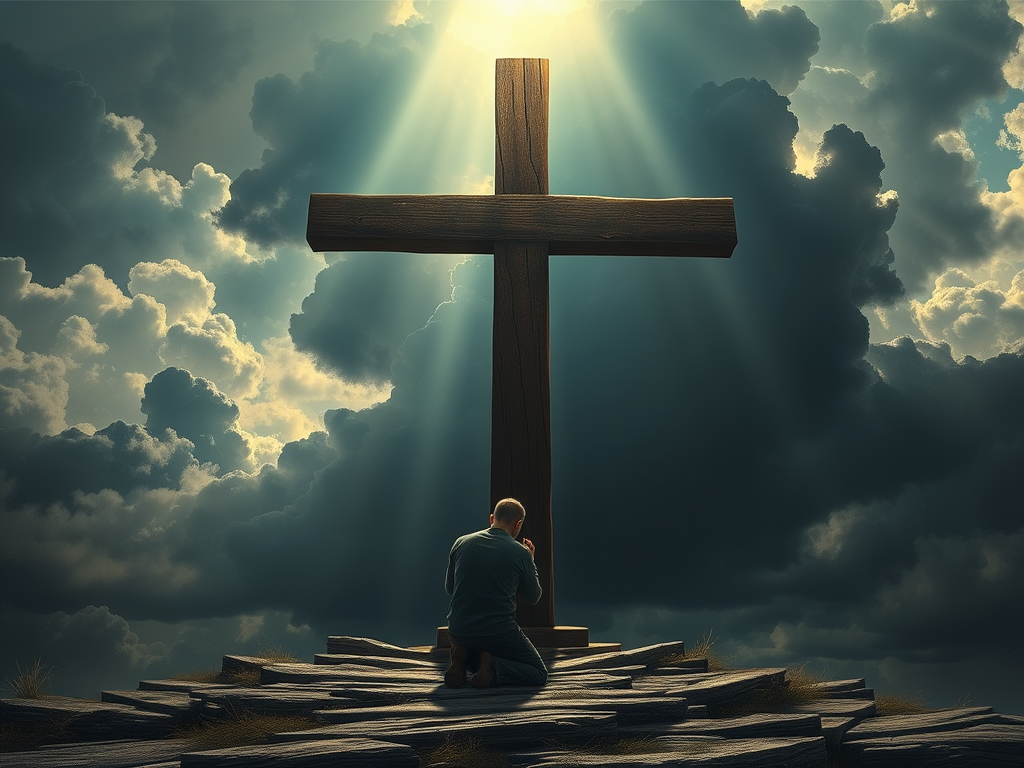
Psalm 125:3 NKJV
For the scepter of wickedness shall not rest
On the land allotted to the righteous,
Lest the righteous reach out their hands to iniquity.
God’s Wisdom in Trials

My Notes
Psalm 125:3 (NKJV)
“For the scepter of wickedness shall not rest On the land allotted to the righteous, Lest the righteous reach out their hands to iniquity.”
Psalm 125:3 acknowledges a tension every believer feels: God surrounds His people (v.2), yet they still experience pressure, persecution, and the influence of the wicked. The presence of trials does not contradict God’s protection—it reveals His wisdom.
Even in Abraham’s household, Isaac was mocked by Ishmael. God’s people are not immune to hardship, but neither will hardship rule over them. The “scepter of wickedness”—the authority, influence, and pressure of evil—may touch the righteous, but it will not rest upon them. God will not allow wickedness to have permanent dominion over His people.
Why? Because prolonged oppression can tempt even the godly to discouragement, compromise, or rebellion. God knows our frame. He knows how much pressure we can bear without breaking. Like a skilled musician tuning a lute, He will not let the strings of our lives be too slack or too tightly stretched.
The psalmist reminds us that the righteous have a “lot”—a God‑given inheritance. It includes:
- Suffering — All who live godly will face persecution (2 Timothy 3:12).
- Blessing — God gives His people pleasant places and a goodly heritage (Psalm 16:6).
- Sanctification — Faith, grace, and spiritual growth prepare us for glory.
- Heaven — The righteous inherit eternal life; the wicked inherit judgment.
God will not allow the wicked to rule indefinitely over the righteous because He guards their hearts. He shortens seasons of oppression so His people will not be provoked into sin or lose hope. He proportions trials to strength and gives strength for trials.
The wicked may flourish for a moment, but their rule is temporary. The righteous may suffer for a moment, but their inheritance is eternal. God’s people are not defined by the pressure they feel but by the favor that surrounds them.
The true prosperity of the righteous is not earthly ease but the favor of the Lord, which no wicked ruler can remove.
Prayer
Abba, my Protector and Portion, Thank You that the scepter of wickedness will not rest upon me. You know my frame, my limits, and my weaknesses. Guard my heart from discouragement, compromise, and sin. Strengthen me in seasons of pressure and shorten the days of trial according to Your wisdom. Help me trust that my inheritance is secure, my future is eternal, and Your favor surrounds me more surely than any earthly power. Keep me faithful, steadfast, and hopeful in You. I ask for this in Jesus’ name, Amen.
Key Takeaways
- God may allow the righteous to experience pressure, but He will not allow wickedness to rule over them permanently.
- Prolonged oppression can tempt even godly people to sin; God protects His people by limiting the power of the wicked.
- The righteous have a God‑given inheritance—suffering, blessing, sanctification, and eternal life.
- God proportionally measures trials and shortens them for the sake of His people.
- True prosperity is not earthly ease but the enduring favor and protection of the Lord.
Cross‑References (NKJV)
- Psalm 16:6 — The lines have fallen to me in pleasant places; Yes, I have a good inheritance.
- Isaiah 17:14 — Then behold, at eventide, trouble! And before the morning, he is no more. This is the portion of those who plunder us, And the lot of those who rob us.
- Psalm 11:6 — Upon the wicked He will rain coals; Fire and brimstone and a burning wind Shall be the portion of their cup.
- Psalm 37:8 — Cease from anger, and forsake wrath; Do not fret—it only causes harm.
- Matthew 24:22 — And unless those days were shortened, no flesh would be saved; but for the elect’s sake those days will be shortened.
- Isaiah 54:10 — For the mountains shall depart And the hills be removed, But My kindness shall not depart from you, Nor shall My covenant of peace be removed,” Says the Lord, who has mercy on you.
Meditation Questions
- Where have I felt the “scepter of wickedness” pressing on my life recently?
- How has God shortened seasons of trial to protect my heart from discouragement or compromise?
- Where do I need to trust that God knows my limits and is guarding my soul?
- How can I resist the temptation to respond to pressure with iniquity?
Proverb for Today
Do not boast about tomorrow, For you do not know what a day may bring forth. Proverbs 27:1 NKJV
Closing
For I know that my Redeemer lives, And He shall stand at last on the earth; And after my skin is destroyed, this I know, That in my flesh I shall see God, Whom I shall see for myself, And my eyes shall behold, and not another. How my heart yearns within me! Job 19:25-27 NKJV
Bill
Posted on 12/27/2025 by Bill Stephens
Follow me on X – @billstephens_59
Follow me on Truth – @billstephens1959
Please enter your email and click subscribe to be notified whenever I submit a new post.

Summary of Commentaries:
Psalm 125:3 teaches that although the righteous may experience pressure and persecution, God will not allow the “scepter of wickedness” to rest upon them permanently. He limits the influence of evil so His people are not provoked into sin or discouraged into compromise. God knows their frame and shortens seasons of oppression for their protection. The righteous have a God‑given inheritance—suffering, blessing, sanctification, and eternal life—while the wicked inherit judgment. Trials may touch God’s people, but they cannot define or dominate them. Their true prosperity is the enduring favor and faithful guardianship of the Lord.
Commentaries:
Charles Spurgeon
“For the rod of the wicked shall not rest upon the lot of the righteous.” The people of God are not to expect immunity from trial because the Lord surrounds them, for they may feel the power and persecution of the ungodly. Isaac, even in Abraham’s family, was mocked by Ishmael. Assyria laid its scepter even upon Zion itself. The graceless often bear rule and wield the rod; and when they do so, they are pretty sure to make it fall heavily upon the Lord’s believing people, so that the godly cry out by reason of their oppressors. Egypt’s rod was exceeding heavy upon Israel, but the time came for it to be broken. God has set a limit to the woes of his chosen: the rod may light on their portion, but it shall not rest upon it. The righteous have a lot which none can take from them, for God has appointed them heirs of it by gracious entail: on that lot the rod of the wicked may fall, but over that lot it cannot have lasting sway. The saints abide forever, but their troubles will not. Here is a good argument in prayer for all righteous ones who are in the hands of the wicked.
“Lest the righteous put forth their hands unto iniquity.” The tendency of oppression is to drive the best of men into some hasty deed for self-deliverance or vengeance. If the rack be too long used, the patient sufferer may at last give way; and therefore the Lord puts a limit to the tyranny of the wicked. He ordained that an Israelite who deserved punishment should not be beaten without measure: forty stripes save one was the appointed limit. We may therefore expect that he will set a bound to the suffering of the innocent, and will not allow them to be pushed to the uttermost extreme. Especially in point of time, he will limit the domination of the persecutor, for length adds strength to oppression, and makes it intolerable; hence the Lord himself said of a certain tribulation, “except those days should be shortened, there should no flesh be saved; but for the elect’s sake those days shall be shortened.”
It seems that even righteous men are in peril of sinning in evil days, and that it is not the will of the Lord that they should yield to the stress of the times in order to escape from suffering. The power and influence of wicked men when they are uppermost are used to lead or drive the righteous astray; but the godly must not accept this as an excuse, and yield to the evil pressure; far rather must they resist with all their might till it shall please God to stay the violence of the persecutor, and give his children rest. This the Lord here promises to do in due time.
______________________________________________________
Enduring Word
For the scepter of wickedness shall not rest on the land allotted to the righteous: This was the protection God promised to His people who trusted in Him. In Israel’s history, that scepter of wickedness only rested on the land when God’s people were stubbornly unrighteous and untrusting in Him. (Guzik)
i. Scepter of wickedness: “This may or may not point to foreign domination: the heathen have no monopoly of sin.” (Kidner)
ii. “Rod [scepter], here, may be taken for persecution, or for rule; and then it may be thus interpreted: ‘The wicked shall not be permitted to persecute always, nor to have a permanent rule.’” (Clarke)
iii. “Regardless of how evil the times, they knew that the Lord had promised never to permit the wicked to prevail over the righteous.” (VanGemeren)
iv. The pilgrims on their journey to Jerusalem would see much of the land allotted to the righteous as they traveled. They could rightly reflect on this promise and determine that they would be those who trusted in God. They were the righteous ones who had received God’s allotment of the land. (Guzik)
Lest the righteous reach out their hands to iniquity: God knows that the rule of the wicked could provoke even the godly to sin through rebellion or frustration. This is one of the reasons why God promised not to allow the wicked to rule on the land allotted to the righteous. (Guzik)
i. “It needs Divine wisdom to determine how long a trial must last in order that it may test faith, thereby strengthening it, and may not confound faith, thereby precipitating feeble souls into sin. He knows when to say, ‘It is enough.’” (Maclaren)
ii. “If evil were to prevail, it might be an occasion for some of the godly to be tempted, to lose heart, and to fall away. For the sake of God’s people, wickedness must come to an absolute end!” (VanGemeren)
iii. “God (saith Chrysostom) does like a lute player, who will not let the strings of his lute be too slack, lest it mar the music, nor suffer them to be too hard stretched or screwed up, lest they break.” (Trapp)
______________________________________________________
Albert Barnes
For the rod of the wicked – Margin, as in Hebrew, “wickedness.” The word “rod” – the staff, the scepter, the instrument of inflicting punishment – here means dominion, power, that condition in which the wicked are commonly found, as one of prosperity or power. God will not deal with the righteous as the wicked are often dealt with: that is, God will not give his people prosperity as he does with them. The righteous will be afflicted, and will be placed in circumstances to keep them from putting forth their hands to iniquity; that is, from indulging in iniquity. They will be afflicted; they will be kept in the ways of virtue and religion by trial; they will not be left to act out the depravity of the heart as the wicked are.
Shall not rest upon – Permanently abide; or, be the constant condition of the righteous. They may prosper, but they must expect that there will be changes, and that God will so deal with them as to keep them from putting forth their hands to iniquity.
The lot of the righteous – The righteous, considered as the “lot” or portion of the Lord. The language is derived from dividing a land by lot (compare Psalms 105:11; Psalms 74:2), and the idea is that the “lot” pertaining to the Lord, or his “portion” among people, is the righteous.
Lest the righteous put forth their hands unto iniquity – Lest the effect of prosperity should be to lead them away from God, like the wicked. Hence, they are dealt with in a different manner. They are afflicted; they are thus kept under proper discipline, and their hearts and lives are made what they should be. The statement in this verse, therefore, accords with the uniform statements in the Scriptures that prosperity is dangerous to the spiritual interests of people, and that, therefore, people are often afflicted in order that they may be led to seek higher interests than those which pertain to this life. The connection here seems to be that God will defend his people, even as Jerusalem was defended by hills and mountains; but that the real welfare and prosperity of his people was not what the wicked seek – wealth and honor – but the favor of the Lord. Another meaning may, however, be suggested in regard to this verse, which to some may appear more probable than the one above. It is this: that the “rod” – the dominion of the wicked – of bad rulers – of a harsh and oppressive government – will not always be upon the people of God, lest, being crushed, they should be led to acts of iniquity; or lest, being kept from the free service of God, they should abandon themselves to sin.
______________________________________________________
John Gill
For the rod of the wicked shall not rest upon the lot of the righteous,…. Which, according to Kimchi, is Jerusalem; but Aben Ezra interprets it of the Israelites that inherit the land. And, the people of God are no doubt designed; the Lord’s justified and chosen ones, his portion, and the lot of his inheritance; and all that belong unto them, their persons, families, estates, and good name: in all which they are sometimes oppressed and afflicted by wicked men; who are a rod of correction in the hand of the Lord, the rod of men with which he chastises them; but this shall not always continue: so the word is used for a rod of correction, Proverbs 22:15. It sometimes signifies a scepter; an ensign of power and government, Genesis 49:10; and here may intend the nations of the world, as Aben Ezra interprets it; or the antichristian states, prevailing and ruling over the people of God in a tyrannical manner, which shall not always last; the reign of antichrist will come to an end, and the Lord will destroy him with the rod of his mouth. It sometimes signifies a tribe; and the Syriac version seems so to take it here, “the tribe of the wicked shall not rest in the part of the righteous;” they shall no more dwell among them, lest, being led by their example, they should learn their works, and do as they do; so Aben Ezra and Kimchi. But rather, with Gussetius, this is to be understood of a measuring rod; laid not on persons, but on lands and estates; and best agrees with the lot, inheritance, and estate of the righteous; and may signify, that though wicked men unjustly seize upon and retain the farms, possessions, and estates of good men, as if they were assigned to them by the measuring line; yet should not hold them long, or always;
lest the righteous put forth their hands unto iniquity; for the righteous are not perfect in this life: they are not without sin, nor do they live without the commission of it; and may be under temptation, by long afflictions and oppressions, and seeing the wicked prosper, to desert their profession of religion, and forsake the ways of God, and join with the wicked, and commit iniquity as they do; and therefore, to prevent this, the Lord will not suffer them always to be under affliction and oppression; see Psalm 37:8, or them and theirs to be always in the hand of the enemy.
______________________________________________________
Matthew Henry
That their troubles shall last no longer than their strength will serve to bear them up under them, v. 3.
(1.) It is supposed that the rod of the wicked may come, may fall, upon the lot of the righteous. The rod of their power may oppress them; the rod of their anger may vex and torment them. It may fall upon their persons, their estates, their liberties, their families, their names, anything that falls to their lot, only it cannot reach their souls.
(2.) It is promised that, though it may come upon their lot, it shall not rest there; it shall not continue so long as the enemies design, and as the people of God fear, but God will cut the work short in righteousness, so short that even with the temptation, he will make a way for them to escape.
(3.) It is considered as a reason for this promise that if the trouble should continue overlong, the righteous themselves would be in temptation to put forth their hands to iniquity, to join with wicked people in their wicked practices, to say as they say and do as they do. There is danger lest, being long persecuted for their religion, at length they grow weary of it and willing to give it up, lest, being kept long in expectation of promised mercies, they begin to distrust the promise, and to think of casting God off, upon suspicion of his having cast them off. See Ps. 73:13, 14. Note, God considers the frame of his people, and will proportion their trials to their strength by the care of his providence, as well as their strength to their trials by the power of his grace. Oppression makes a wise man mad, especially if it continues long; therefore, for the elect’s sake, the days shall be shortened, that, whatever becomes of their lot in this world, they may not lose their lot among the chosen.
______________________________________________________
Miscellaneous Comments
“For the rod of the wicked shall not rest upon the lot of the righteous.” No tyranny, although it appears firm and stable, is of long continuance: inasmuch as God does not relinquish the sceptre. This is manifest from the example of Pharaoh, of Saul, of Sennacherib, of Herod, and of others. Rightly, therefore, says Athanasius of Julian the Apostate, “That little cloud has quickly passed away.” And how quickly beyond all human expectation the foundations of the ungodly are overthrown is fully declared in Psa 37.
—Solomon Gesner, 1559-1605.
“Shall not rest,” etc. The wrath of man, like water turned upon a mill, shall come on them with no more force than shall be sufficient for accomplishing God’s gracious purposes on their souls: the rest, however menacing its power may be, shall be made to pass off by an opened sluice. Nevertheless, the trouble shall be sufficient to try every man and to prove the truth and measure of his integrity.
—Charles Simeon (1759-1836), in “Horæ Homileticæ.”
“The lot of the righteous.” There is a fourfold lot belonging to the faithful.
1. The lot of the saints is the sufferings of the saints. “All that will live godly in Christ Jesus shall suffer persecution:” 2Ti 3:12.
2. The lot of the saints is also that light and happiness they have in this world. The lot is “fallen unto me in pleasant places; yea, I have a goodly heritage:” Psalm 26:6. When David sat at the sheepfold, which was his lot, he was thus prepared for the kingdom of Israel, which was given him by lot from God.
3. But more specially faith, grace, and sanctification, which give them just right and title to the inheritance of glory. Heaven is theirs now, though not in possession, yet in succession. They have the earnest of it; let them grow up to stature and perfection, and take it.
4. Lastly, they have the lot of heaven. Hell is the lot of the wicked: “Behold at evening tide trouble; and before the morning he is not. This is the portion of them that spoil us, and the lot of them that rob us:” Isa 17:14. Therefore it is said of Judas, that he went “to his own place:” Acts 1:25. “Upon the wicked he shall rain snares, fire and brimstone, and an horrible tempest; this shall be the portion of their cup:” Psalm 11:6. But the lot of the righteous is faith, and the end of their faith the salvation of their souls. God gives them heaven, not for any foreseen worthiness in the receivers, for no worthiness of our own can make us our father’s heirs; but for his own mercy and favour in Christ, preparing heaven for us, and us for heaven. So that upon his decree it is allotted to us; and unless heaven could lose God, we cannot lose heaven.
Here, then, consider how the lottery of Canaan may shadow out to us that blessed land of promise whereof the other was a type.
—Thomas Adams.

Leave a Reply