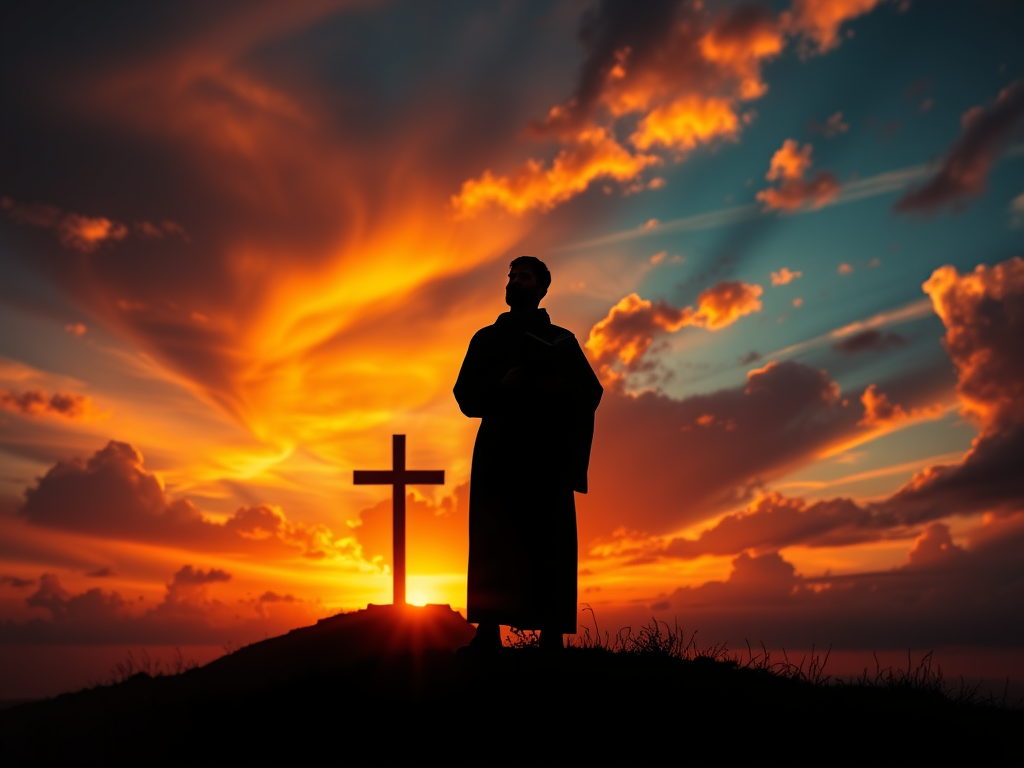
Psalm 123:1 NKJV
Unto You I lift up my eyes,
O You who dwell in the heavens.
The Upward Gaze

My Notes
Scripture Reading:
“Unto You I lift up my eyes, O You who dwell in the heavens.” — Psalm 123:1 (NKJV)
The psalmist begins with a simple yet profound act: lifting his eyes to the Lord. This upward gaze is more than a physical gesture—it is the posture of faith. His eyes are not fixed on circumstances, human strength, or earthly solutions, but on the One enthroned in heaven.
To lift our eyes is to acknowledge dependence, hope, and expectation. It is to confess that our help does not come from ourselves or from the hills, but from the God of the hills (Psalm 121:1–2). The psalmist’s gaze reminds us that the true throne is not in Jerusalem or any earthly temple, but in heaven, where God reigns in glory.
Faith requires intentionality. Our eyes naturally drift downward to problems, inward to self, or outward to worldly distractions. But the psalmist resolves to look upward, to the Lord who dwells in the heavens. This upward look represents trust in God’s power, glory, and unchanging nature. Even when we cannot see Him, we can look toward Him in hope and prayer.
The pilgrim’s journey is not ultimately toward a city or a temple, but toward God Himself. His presence is our destination, His throne our confidence, and His glory our delight.
Cross References (NKJV)
-
Psalm 121:1–2 — “I will lift up my eyes to the hills—From whence comes my help? My help comes from the LORD, Who made heaven and earth.”
-
Hebrews 12:2 — “Looking unto Jesus, the author and finisher of our faith, who for the joy that was set before Him endured the cross, despising the shame, and has sat down at the right hand of the throne of God.”
-
Colossians 3:1–2 — “If then you were raised with Christ, seek those things which are above, where Christ is, sitting at the right hand of God. Set your mind on things above, not on things on the earth.”
-
Psalm 11:4 — “The LORD is in His holy temple, The LORD’s throne is in heaven; His eyes behold, His eyelids test the sons of men.”
Meditation Questions
-
Where do my eyes naturally turn when I face challenges—toward myself, others, or the Lord?
-
How can I make a daily habit of lifting my eyes to God in prayer and faith?
-
What distractions keep me from looking upward, and how can I resist them?
-
How does remembering that God dwells in the heavens strengthen my trust in His sovereignty?
Key Takeaways
-
Lifting our eyes to God is an act of faith, dependence, and hope.
-
Our gaze must be fixed not on earthly circumstances but on the Lord who reigns in heaven.
-
Faith requires intentionality; our eyes naturally drift downward, but we must resolve to look upward.
-
The true destination of the pilgrim is not a city or temple, but God Himself.
-
Looking to the Lord brings confidence, peace, and strength in every season of life.
Prayer
Abba, I lift my eyes to You, the One who dwells in the heavens. My help, my hope, and my salvation are found in You alone. Forgive me when my eyes wander to earthly distractions or inward to self-reliance. Teach me to look upward with faith, expectation, and trust. May my gaze be fixed on Jesus, the author and finisher of my faith. Strengthen me to walk with confidence, knowing that You reign in glory and that Your throne is unshakable. I ask for this in Jesus’ name, Amen.
Proverb for Today
The Lord will not allow the righteous soul to famish, But He casts away the desire of the wicked. Proverbs 10:3 NKJV
Closing
“This Psalm (as ye see) is but short, and therefore a very fit example to show the force of prayer not to consist in many words, but in fervency of spirit. For great and weighty matters may be comprised in a few words if they proceed from the spirit and the unspeakable groanings of the heart, especially when our necessity is such as will not suffer any long prayer. Every prayer is long enough if it be fervent and proceed from a heart that understandeth the necessity of the saints.” ………Martin Luther
Bill
Posted on 12/10/2025 by Bill Stephens
Follow me on X – @billstephens_59
Follow me on Truth – @billstephens1959
Please enter your email and click subscribe to be notified whenever I submit a new post.

Summary of Commentaries:
The psalmist’s upward gaze signifies faith, dependence, and hope in God, not earthly help. Spurgeon emphasizes looking beyond hills to the God of the hills, whose exalted throne represents power and glory engaged for believers. Commentators agree that lifting the eyes expresses prayer, confidence, and expectation, even when words fail. God dwells in heaven, ruling as King and Judge, yet graciously inviting His people to seek Him. True devotion resolves to look heavenward, trusting His mercy, presence, and saving power.

Commentaries:
Charles Spurgeon
“Unto thee lift I up mine eyes.” It is good to have someone to look up to. The Psalmist looked so high that he could look no higher. Not to the hills, but to the God of the hills he looked. He believed in a personal God and knew nothing of that modern pantheism which is nothing more than atheism wearing a fig leaf. The uplifted eyes naturally and instinctively represent the state of heart which fixes desire, hope, confidence, and expectation upon the Lord. God is everywhere, and yet it is most natural to think of him as being above us, in that glory land which lies beyond the skies.
“O thou that dwellest in the heavens,” just sets forth the unsophisticated idea of a child of God in distress: God is, God is in heaven, God resides in one place, and God is evermore the same; therefore will I look to him. When we cannot look to any helper on a level with us, it is greatly wise to look above us; in fact, if we have a thousand helpers, our eyes should still be toward the Lord. The higher the Lord is, the better for our faith, since that height represents power, glory, and excellence, and these will be all engaged on our behalf. We ought to be very thankful for spiritual eyes; the blind men of this world, however much of human learning they may possess, cannot behold our God, for in heavenly matters they are devoid of sight. Yet we must use our eyes with resolution, for they will not go upward to the Lord of themselves, but they incline to look downward, or inward, or anywhere but to the Lord: let it be our firm resolve that the heavenward glance shall not be lacking. If we cannot see God, at least we will look towards him. God is in heaven as a king in his palace; he is here revealed, adored, and glorified: thence he looks down on the world and sends succors to his saints as their needs demand; hence we look up, even when our sorrow is so great that we can do no more. It is a blessed condescension on God’s part that he permits us to lift up our eyes to his glorious high throne; yea, more, that he invites and even commands us so to do. When we are looking to the Lord in hope, it is well to tell him so in prayer: the Psalmist uses his voice as well as his eye. We need not speak in prayer; a glance of the eye will do it all, for—
Prayer is the burden of a sigh,
The falling of a tear,
The upward glancing of an eye
When none but God is near.
Still, it is helpful to the heart to use the tongue, and we do well to address ourselves in words and sentences to the God who heareth his people. It is no small joy that our God is always at home: he is not on a journey, like Baal, but he dwells in the heavens. Let us think no hour of the day inopportune for waiting upon the Lord; no watch of the night too dark for us to look to him.
______________________________________________________
Enduring Word
Unto You I lift up my eyes: The psalmist declares his intention and action – to lift up his eyes to the LORD. This means that his eyes are not on his circumstances or himself, but on the LORD. (Guzik)
O You who dwell in the heavens: By remembering where God is, the psalmist grows in trust and confidence. Earth may have no mercy or help, but heaven has plenty of mercy and help.
i. We see a progression in these Psalms of Ascent, beginning with Psalm 120.
· In Psalm 120 we lament our surroundings.
· In Psalm 121 we lift our eyes to the hills of Zion.
· In Psalm 122 we delight in the house of the LORD.
· In Psalm 123 we look above the hills to the LORD in heaven. (Guzik)
ii. “The goal of the pilgrim is not Jerusalem, as important as that city was, or even the temple in Jerusalem, as important as it was, but God himself, whose true throne is not anywhere on earth but in heaven.” (Boice)
______________________________________________________
Albert Barnes
Lift I up mine eyes – In supplication and prayer. Nature prompts us to look up when we address God, as if he dwelt above us. It is the natural prompting of the heart that he must be the most exalted of all beings, dwelling above all. See Psalms 121:1.
O thou that dwellest in the heavens – Whose home – whose special home – is in heaven – above the sky. This is in accordance with the common feelings of people, and the common description of God in the Bible, though it is true also that God is everywhere. Compare Psalms 2:4; Psalms 11:4.
______________________________________________________
John Gill
Unto thee lift I up mine eyes,…. Not only the eyes of his body, this being a prayer gesture; see Matthew 14:19; but the eyes of his mind and understanding, opened by the Spirit of God; particularly the eye of faith, by which he looked for and expected help and salvation from the Lord. The phrase is expressive of holy confidence in God, and a comfortable hope of receiving good things from him; as, on the contrary, when persons are ashamed and confounded with a sense of their sins, and the aggravations of them, and of their own unworthiness and vileness; and, on account of the same, almost out of all hope, cannot lift up their eyes to heaven, or their face before God, Ezra 9:6;
O thou that dwellest in the heavens; the heaven of heavens, the third heaven, the seat of angels and glorified saints; and though the Lord is everywhere, and fills heaven and earth with his presence, and cannot be contained any where; yet here is the more visible display of his glory; here he keeps his court; this is his palace, and here his throne is prepared, and on it he sits; so some render the word here; as the Judge of the whole earth, and takes a view of all men and their actions; and, as the God of nature and providence, governs and orders all things after his own will; and, as the God of grace, sits on a throne of grace, kindly inviting and encouraging his people to come unto him: and therefore the psalmist addresses him as such; see Ecclesiastes 5:2, Matthew 6:9.
______________________________________________________
Matthew Henry
The title here given to God: O thou that dwellest in the heavens. Our Lord Jesus has taught us, in prayer, to have an eye to God as our Father in heaven; not that he is confined there, but there especially he manifests his glory, as the King in his court. Heaven is a place of prospect and a place of power; he that dwells there beholds thence all the calamities of his people and thence can send to save them. Sometimes God seems to have forsaken the earth, and the enemies of God’s people ask, Where is now your God? But then they can say with comfort, Our God is in the heavens. O thou that sittest in the heavens (so some), sittest as Judge there; for the Lord has prepared his throne in the heavens, and to that throne injured innocency may appeal.
______________________________________________________
Miscellaneous Comments
“Unto thee lift I up mine eyes,” etc. This is the sigh of the pilgrim who ascendeth and loveth, and ascendeth because he loveth. He is ascending from earth to heaven, and while he is ascending, unto whom shall he lift his eyes, but unto him that dwelleth in heaven? We ascend to heaven each time we think of God. In that ascent lies all goodness: if we would repent, we must look not on ourselves, but on him; if we would be humble, we must look not on ourselves, but on him; if we would truly love, we must look not on ourselves, but on him who dwelleth in the heavens. If we would have him turn his eyes from our sins, we must turn our eyes unto his mercy and truth.
—Plain Commentary.
“Unto THEE do I lift up mine eyes.” You feel the greatness of the contrast these words imply. Earth and heaven, dust and deity; the poor, weeping, sinful children of mortality, the holy, ever-blessed, eternal God: how wide is the interval of separation between them! But over the awful chasm, broader than ocean though it be, love and wisdom in the person of Jesus Christ have thrown a passage, by which the most sinful may repair unafraid to his presence, and find the shame and the fears of guilt exchanged for the peace of forgiveness and the hope that is full of immortality.
—Robert Nisbet.

Leave a Reply