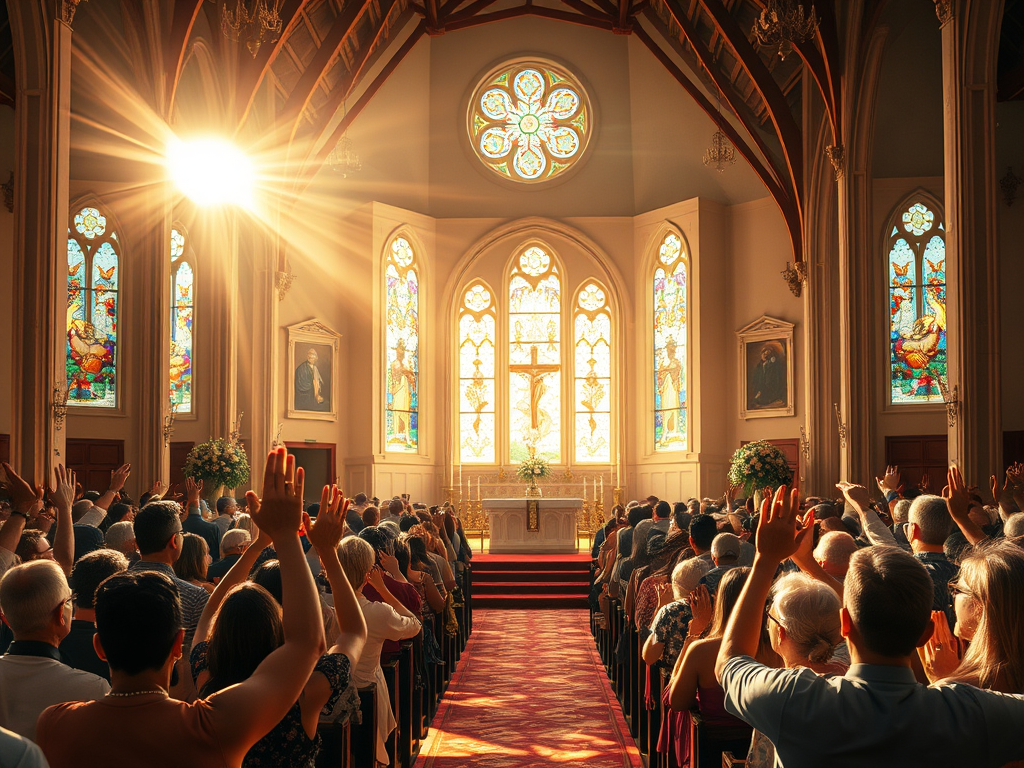
14
I will pay my vows to the Lord
Now in the presence of all His people.
My Thoughts
How many times have we come to God and prayed, “Father, if you will…….then I will….”, it’s okay to come to the Father in times of trouble and it’s okay to ask for deliverance, but we need to remember to come to Him and fulfill our part by thanksgiving. The psalmist resolves to fulfill his vows to the Lord, emphasizing the importance of public acknowledgment of God’s mercies. The content reflects on the significance of vow-making in times of distress and the moral obligation of vow-paying as a recognition of divine blessings. The commentaries below stress that such vows, often made during distress, must be honored sincerely and promptly. Public declaration of thankfulness serves not only as a personal commitment but also inspires others in their own faith journeys……..Bill
_____________________
Commentaries:
The Pulpit Commentaries
Vow-making and vow-paying.
An important duty of Christian life is keeping ever fresh and vivid the memory of God’s saving mercies to us. Constantly throughout their history, the Israelites were reminded of their deliverance from the house of bondage, and of the vows and pledges involved in that deliverance. The effect of every quickened memory should be a new examination of our vows, that we may discover what of them we are failing to pay or to keep. God does expect a return from us for all his mercies towards us. That return is put in three forms.
I. “I WILL TAKE THE CUP OF SALVATION.” It honors God for us cheerfully to accept the blessings which he sends. It may be proper to refuse gifts offered by our fellow men. It is never a true and worthy humility that hesitates to act upon God’s promises or to accept what God offers. And yet that we find beginners in the Christian life, and even experienced Christians, often do, especially when what God provides is not just “according to their mind.” Note also how the very freeness of God’s gifts makes them unacceptable to human pride. We like to have things on our conditions, and at our price.
II. “I WILL CALL UPON THE NAME OF THE LORD.” That is, in the spirit and act of thankfulness. Thankfulness should be regarded
(1) as an important Christian obligation;
(2) as an enjoined Christian duty; and
(3) as a most real help to the brightness, the joyfulness, and the steadiness of the Christian life.
The utterance of thankfulness is a public testimony of our recognized and happy dependence on God. “I have set the Lord always before me.”
III. “I WILL PAY MY VOWS UNTO THE LORD.” Give some account of Jewish vow-making in times of special thankfulness, as when recovering from a serious sickness.
1. Sincere and right-intentioned, vow-making is acceptable and pleasing to God.
2. The earnest endeavor at vow-paying is much more acceptable. Our resolves match the ancient vows, and our lives have witnessed many resolves made and few resolves carried out. Illust.; resolves in times of conversion, of success, of sickness, of trouble, of rescue from peril. Try to think what unpaid vows or resolves of yours God has on his record. Vow, but be sure to “pay your vows unto the Lord.”—R.T.
_____________________
Albert Barnes
I will pay my vows … – I will perform or execute. The word vows here refers probably to the solemn promise which he had made in his sickness – the promise to devote himself to God, should he be restored to health. Compare the notes at Isaiah 38:15, notes at Isaiah 38:20. Such promises are commonly made in sickness, and, alas! almost as commonly disregarded and forgotten on a restoration to health. Yet such vows should be sacredly observed, for
(a) They are right and proper;
(b) They are made in most solemn circumstances;
(c) They are usually sincere;
(d) They are of the nature of a covenant with God;
(e) They are made when we are in the best position to take just views of life – of this life, and of the life to come;
(f) The subsequent life would be happier and better if they were faithfully carried out.
Compare Psalms 22:25, note; Psalms 66:13-14, notes.
In the presence of all his people, publicly. The vows were made in private, on the sick bed; when alone; in the silence of the night-watches; when no eye was upon him who made them but the eye of God. There is a propriety, however, that the expression of thanksgiving should be public. Compare Isaiah 38:20. Indeed, nothing is more proper than public thanks for a restoration from sickness; and as in our public assemblies prayer is often specially offered for the sick at their own request, so it would be equally proper that, at their request, public thanks should be rendered for their recovery.
_____________________
Charles Spurgeon
“I will pay my vows unto the LORD now in the presence of all his people.” The psalmist has already stated his third resolution, to devote himself to the worship of God evermore, and here he commences the performance of that resolve. The vows which he had made in anguish, he now determines to fulfil: “I will pay my vows unto the Lord.” He does so at once, “now,” and that publicly, “in the presence of all his people.” Good resolutions cannot be carried out too speedily; vows become debts, and debts should be paid. It is well to have witnesses to the payment of just debts, and we need not be ashamed to have witnesses to the fulfilling of holy vows, for this will show that we are not ashamed of our Lord, and it may be a great benefit to those who look on and hear us publicly sounding forth the praises of our prayer hearing God. How can those do this who have never with their mouth confessed their Saviour? O secret disciples, what say you to this verse! Be encouraged to come into the light and own your Redeemer. If, indeed, you have been saved, come forward and declare it in his own appointed way.
_____________________
Enduring Word
I will pay my vows to the LORD now in the presence of all His people: The singer publicly declared – perhaps in a sacrificial ritual of gratitude at the temple’s altar – God’s greatness and faithfulness. He would complete what he had determined to do before God. (Guzik)
i. “He presently resolveth to make the only return in his power, namely, to acknowledge and declare before men the goodness of Jehovah, ascribing all the glory where it is all due.” (Horne)
ii. “This word ‘pay’ importeth that vows lawfully made are due debt; and debt, till paid, is a disquieting thing to an honest mind.” (Trapp)
iii. How moving it was for Jesus to sing these words, when He Himself was about to become that sacrifice! (Guzik)
iv. “Foxe, in his Acts and Monuments, relates the following concerning the martyr, John Philpot: He went with the sheriffs to the place of execution…coming into Smithfield, he kneeled down there, saying these words, ‘I will pay my vows in thee, O Smithfield.’” (Spurgeon)
_____________________
John Gill
I will pay my vows unto the Lord now, in the presence of all his people. Make good the resolutions and determinations he made in the strength of divine grace, in the time of his troubles; that should the Lord deliver him out of them, he would give him all the glory, and offer thanksgiving and praise to him, and now being delivered, this he declares he would do, in a public way, before all the people of God, assembled in the house of the Lord, as witnesses of it; see Psalm 66:13.
_____________________
Matthew Henry
He will make conscience of paying his vows and making good what he had promised, not only that he would offer the sacrifices of praise, which he had vowed to bring, but perform all his other engagements to God, which he had laid himself under in the day of his affliction (v. 14): I will pay my vows; and again, (v. 18), now in the presence of all his people. Note, Vows are debts that must be paid, for it is better not to vow than to vow and not pay. He will pay his vows,
[1.] Presently; he will not, like sorry debtors, delay the payment of them, or beg a day; but, “I will pay them now,” Eccl. 5:4.
[2.] Publicly; he will not huddle up his praises in a corner, but what service he has to do for God he will do it in the presence of all his people; nor for ostentation, but to show that he was not ashamed of the service of God, and that others might be invited to join with him. He will pay his vows in the courts of the tabernacle, where there was a crowd of Israelites attending, in the midst of Jerusalem, that he might bring devotion into more reputation.
_____________________
Cross References
Psalm 22:25 (KJV)
25 My praise shall be of thee in the great congregation:
I will pay my vows before them that fear him.
Nahum 1:15 (KJV)
15 Behold upon the mountains the feet of him that bringeth good tidings, that publisheth peace!
O Judah, keep thy solemn feasts, perform thy vows:
For the wicked shall no more pass through thee;
He is utterly cut off.
Jonah 2:9 (KJV)
9 But I will sacrifice unto thee with the voice of thanksgiving;
I will pay that that I have vowed.
Salvation is of the Lord.
Psalm 66:13–15 (KJV)
13 I will go into thy house with burnt offerings:
I will pay thee my vows,
14 Which my lips have uttered,
And my mouth hath spoken, when I was in trouble.
15 I will offer unto thee burnt sacrifices of fatlings,
With the incense of rams;
I will offer bullocks with goats. Selah.
Deuteronomy 23:21 (KJV)
21 When thou shalt vow a vow unto the Lord thy God, thou shalt not slack to pay it: for the Lord thy God will surely require it of thee; and it would be sin in thee.
_____________________
Geneva Bible 1560
Psalm 116:14
14 I wil paie my vowes unto the Lord, even now in the presence of all his people.
_____________________
Closing Thoughts
Enter into His gates with thanksgiving, And into His courts with praise. Be thankful to Him, and bless His name. Ps 100:4 NKJV
6 Therefore humble yourselves under the mighty hand of God, that He may exalt you in due time,
7 casting all your care upon Him, for He cares for you.
1 Peter 5:6-7

- Exploring the Beauty of Psalms: Insights and Commentaries
- Monthly Breakdown of Our Blog Content
- Psalms Commentary: Faith and Inspiration
Leave a Reply