18
But we will bless the Lord
From this time forth and forevermore.
Praise the Lord!
My Thoughts
And every creature which is in heaven and on the earth and under the earth and such as are in the sea, and all that are in them, I heard saying: “Blessing and honor and glory and power Be to Him who sits on the throne, And to the Lamb, forever and ever!” Revelation 5:13 NKJV
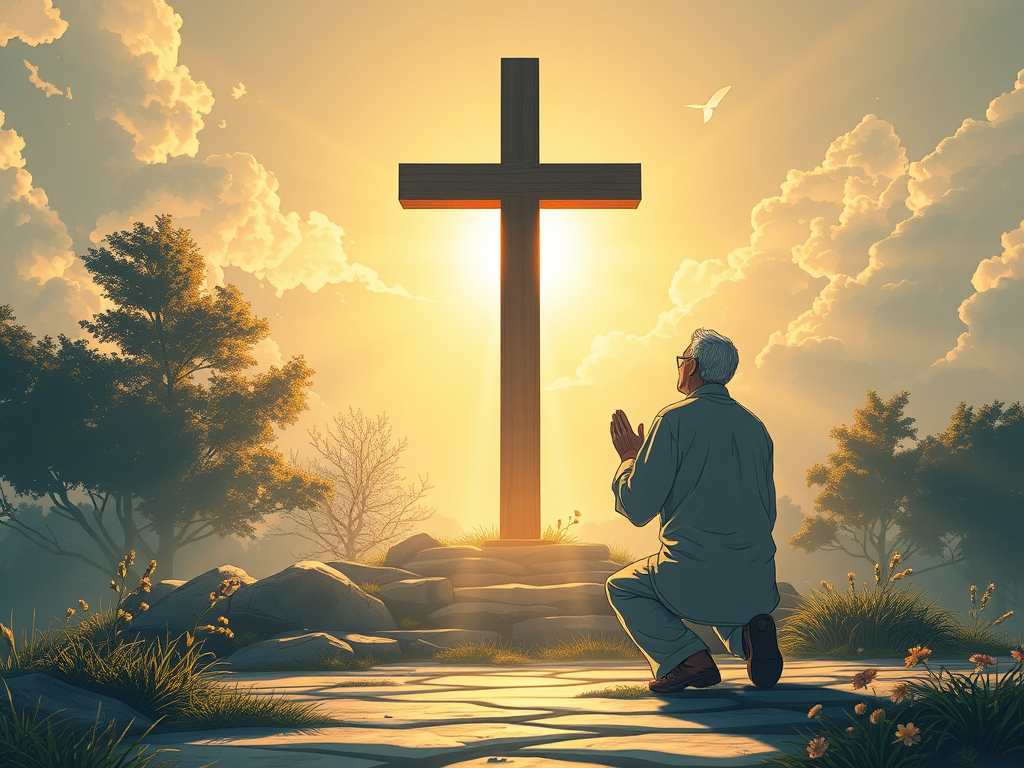
The content emphasizes the importance of praising God both in this life and beyond. Drawing from Psalm 115:18 and commentary from various theologians, it stresses that those who are alive should continually bless the Lord despite life’s challenges or eventual death. Praise is viewed as an endless service that persists even after death, extending into eternity. The messages urge believers to start their praises now, conveying gratitude for God’s past and present mercy, and encouraging a shared commitment to worship……..Bill
_______________________________
Commentaries
Charles Spurgeon
“But we will bless the LORD from this time forth and for evermore.” We who are still living will take care that the praises of God shall not fail among the sons of men. Our afflictions and depressions of spirit shall not cause us to suspend our praises; neither shall old age, and increasing infirmities damp the celestial fires, nay, nor shall even death itself cause us to cease from the delightful occupation. The spiritually dead cannot praise God, but the life within us constrains us to do so. The ungodly may abide in silence, but we will lift up our voices to the praise of Jehovah. Even though for a time he may work no miracle, and we may see no peculiar interposition of his power, yet on the strength of what he has done in ages past we will continue to laud his name “until the day break, and the shadows flee away,” when he shall once more shine forth as the sun to gladden the faces of his children. The present time is auspicious for commencing a life of praise since today he bids us hear his voice of mercy. “From this time forth” is the suggestion of wisdom, for this duty ought not to be delayed; and it is the dictate of gratitude, for there are pressing reasons for prompt thankfulness. Once begin praising God and we have entered upon an endless service. Even eternity cannot exhaust the reasons why God should be glorified.
“Praise the LORD,” or Hallelujah. Though the dead cannot, and the wicked will not, and the careless do not praise God, yet we will shout “Hallelujah” forever and ever. Amen.
_______________________________
Enduring Word
From this time forth and forevermore: Given the perceived uncertainty of praise in the life to come, the greatness of God, and the astounding blessing He has given to humanity, He is worthy to be praised forevermore. This is something to which God’s people can say Hallelujah! (Praise the LORD!)
i. From this time forth and forevermore may have the sense, in this life and the life to come. There are only two times we should praise the LORD – now and forever.
ii. If the praise is to last forevermore, then it does extend into the world to come, even when the voice of praise is no longer heard on earth. (Guzik)
iii. “And again the thought reverts to the upper room, and the Singer Whose deepest passion was ever the will of God and the glory of His name; to the One Who was soon going into the silence where no note of praise would be heard; and yet to the One Who would turn the silence into song forevermore.” (Morgan)
_______________________________
Albert Barnes
But we will bless the Lord … – While life lasts; now and ever onward. Our lives are spared; and while those lives shall be continued they shall be spent in praise. We will transmit the praise to future times; and when we are dead, the voice of praise shall be prolonged by those who come after us. It may be added here that we have now higher and clearer views of the grave and of the future world than the psalmist had, and that though it is certain that our voices of praise must be stilled by death, yet in another world we shall continue the work of praise in strains more lofty than here, and in a continuance of service that shall never end. The grave is, indeed, before us all; but so is also heaven, if we belong to those who truly fear the Lord, and who sincerely worship him through Christ Jesus.
_______________________________
John Gill
But we will bless the Lord from this time forth and for evermore,…. The Septuagint, Vulgate Latin, Ethiopic, and Arabic versions, render it, “we who are alive”; both in a corporeal and in a spiritual sense who, as long as we live, and while we have a being, will bless the Lord; being made spiritually alive, quickened by the Spirit and grace of God, and so capable of ascribing blessing, praise, and glory to him, for all the great and good things he has done; and especially when in lively frames, or in the lively exercise of grace: and that from this time; under a sense of present favors and outward mercies being renewed every day; yea, throughout the whole of life, and so to all eternity in the world above; see Isaiah 38:19.
Praise the Lord; let others do the same as we; let us join together in this work, now and hereafter.
_______________________________
Matthew Henry
Therefore it concerns us to praise him (v. 18): “But we, we that are alive, will bless the Lord; we and those that shall come after us, will do it, from this time forth and forevermore, to the end of time; we and those we shall remove to, from this time forth and to eternity. The dead praise not the Lord, therefore we will do it the more diligently.”
(1.) Others are dead, and an end is thereby put to their service, and therefore we will lay out ourselves to do so much the more for God, that we may fill up the gap. Moses my servant is dead, now, therefore, Joshua, arise.
(2.) We ourselves must shortly go to the land of silence; but, while we do live, we will bless the Lord, will improve our time and work that work of him that sent us into the world to praise him before the night comes, and because the night comes, wherein no man can work. The Lord will bless us (v. 12); he will do well for us, and therefore we will bless him, we will speak well of him. Poor returns for such receiving! Nay, we will not only do it ourselves but will engage others to do it. Praise the Lord; praise him with us; praise him in your places, as we in ours; praise him when we are gone, that he may be praised forevermore. Hallelujah.
_______________________________
Adam Clarke
But we will bless the Lord — Our fathers, who received so much from thy bounty, are dead, their tongues are silent in the grave; we are in their place, and wish to magnify thy name, for thou hast dealt bountifully with us. But grant us those farther blessings before we die which we so much need, and we will praise thee as living monuments of thy mercy, and the praise we begin now shall continue forever and ever.
The Targum, for “neither any that go down into silence,” has “nor any that descend into the house of earthly sepulture,” that is, the tomb. The Anglo-Saxon: [A.S.], neither all they that go down into hell. Nogh the dede sal loue the Lorde, ne al that lyghtes in hell. Old Psalter. The word hell among our ancestors meant originally the covered, or hidden obscure place, from helan, to cover or conceal: it now expresses only the place of endless torment.
_______________________________
The Pulpit Commentaries
But we will bless the Lord; literally, we will bless Jah—the shortened, and perhaps more emphatic, form of Jehovah. We, so long as we have any being, will sing praises unto our God (Psalms 146:2)—we will bless him, praise him, give thanks to him, from this time forth, and forevermore—not an absolute assertion of immortality, but a strong instinctive anticipation of it. Praise the Lord.
THE TRUER AND THE LARGER OUTLOOK. Coming after Christ, we can give to the “evermore” of Psalms 115:18 a meaning which goes beyond the psalmist’s thought. We think not of our departed as silent in the grave; we think of them as blessing and praising Christ in the heavens, as spending their powers in his higher service there, as taken out of, and not down into, the shadows of time, and introduced into the blessed light and unfading glories of eternity.
God must be praised now and forever—before we go down into the silence of Hades. (Psalms 115:17, Psalms 115:18.) “The Old Testament,” says Delitzsch, “knows nothing of a heavenly exclusion that praises God without intermission, consisting not merely of angels, but also of the spirits of all men who die in the faith” (but see Psalms 103:20-22).
_______________________________
Cross References
Daniel 2:20 (KJV )
20 Daniel answered and said,
Blessed be the name of God for ever and ever:
For wisdom and might are his:
Psalm 6:5 (KJV )
5 For in death there is no remembrance of thee:
In the grave who shall give thee thanks?
Isaiah 38:18–19 (KJV )
18 For the grave cannot praise thee, death can not celebrate thee:
They that go down into the pit cannot hope for thy truth.
19 The living, the living, he shall praise thee, as I do this day:
The father to the children shall make known thy truth.
Psalm 118:17 (KJV )
17 I shall not die, but live,
And declare the works of the Lord.
Revelation 5:13 (KJV )
13 And every creature which is in heaven, and on the earth, and under the earth, and such as are in the sea, and all that are in them, heard I saying, Blessing, and honour, and glory, and power, be unto him that sitteth upon the throne, and unto the Lamb for ever and ever.
_______________________________
KJV W/Strongs Bible
115:18 But we will bless 1288 8762 the LORD 3050 from this time forth and for 5704 evermore 5769. Praise 1984 8761 the LORD 3050.
_______________________________
Geneva Bible 1560
Psalm 115:18
18 But we wil praise the Lord from hence forth and for ever. Praise ye the Lord.
_______________________________
Closing Thoughts
“Do not lay up for yourselves treasures on earth, where moth and rust destroy and where thieves break in and steal; but lay up for yourselves treasures in heaven, where neither moth nor rust destroys and where thieves do not break in and steal. For where your treasure is, there your heart will be also.
Matthew 6:19-21 NKJV

- Exploring the Beauty of Psalms: Insights and Commentaries
- Monthly Breakdown of Our Blog Content
- Psalms Commentary: Faith and Inspiration
Leave a Reply