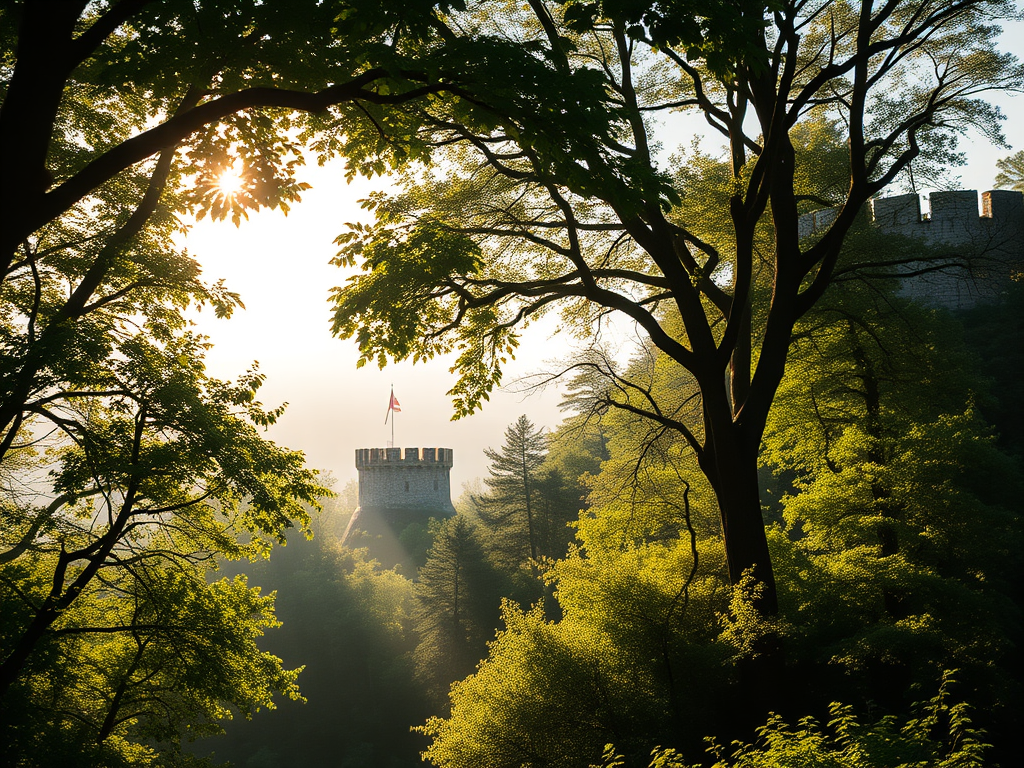
Psalm 91:1-2
1 He who dwells in the secret place of the Most High
Shall abide under the shadow of the Almighty.
2 I will say of the Lord, “He is my refuge and my fortress;
My God, in Him I will trust.”
My Thoughts:
On a personal note, this Psalm helped me get through the most difficult period in my life, especially the first two verses.
1 He who dwells in the secret place of the Most High
Shall abide under the shadow of the Almighty.
2 I will say of the Lord, “He is my refuge and my fortress;
My God, in Him I will trust.”
It was my main thought and my anchor when my wife Donna passed away, it kept coming to me and I repeated it constantly, it gave me hope and strength to keep going when the agony of losing the most important person of my life kept coming at me in waves. I dwelt in the secret place of the Most High and abided under His Shadow. He and He alone was my refuge and My fortress, and I knew that He was the only one I could trust to get me through…….Bill
Overview of Psalm 91
This psalm has no title, and therefore the author remains unknown. Because it shares some of the themes of Psalm 90, some think Moses was the author. Because it shares some of the themes and phrases of Psalm 27 and Psalm 31, some think the author was David. “Some of its language, of strongholds and shields, reminds us of David, to whom the Septuagint ascribes it; other phrases echo the Song of Moses in Deuteronomy 32, as did Psalm 90; but it is in fact anonymous and timeless, perhaps all the more accessible for that.” (Derek Kidner)
Many have noted the wonderful character of this psalm: “This psalm is one of the greatest possessions of the saints.” (G. Campbell Morgan)
“It is one of the most excellent works of this kind which has ever appeared. It is impossible to imagine anything more solid, more beautiful, more profound, or more ornamented.” (de Muis, cited in Spurgeon)
_______________
This Psalm is without a title, and we have no means of ascertaining either the name of its writer, or the date of its composition, with certainly. The Jewish doctors consider that when the author’s name is not mentioned we may assign the Psalm to the last named writer; and, if so, this is another Psalm of Moses, the man of God. Many expressions here used are similar to those of Moses in Deuteronomy, and the internal evidence, from the peculiar idioms, would point towards him as the composer. The continued lives of Joshua and Caleb, who followed the Lord fully, make remarkably apt illustrations of this Psalm, for they, as a reward for abiding in continued nearness to the Lord, lived on “amongst the dead, amid their graves.” For these reasons, it is by no means improbable that this Psalm may have been written by Moses, but we dare not dogmatize. If David’s pen was used in giving us this matchless ode, we cannot believe as some do that he commemorated the plague which devastated Jerusalem on account of his numbering the people. For him, then, to sing of himself as seeing “the reward of the wicked” would be clean contrary to his declaration, “I have sinned, but these sheep, what have they done?;” and the absence of any allusion to the sacrifice upon Zion could not be in any way accounted for, since David’s repentance would inevitably have led him to dwell upon the atoning sacrifice and the sprinkling of blood by the hyssop.
In the whole collection, there is not a more cheering Psalm, its tone is elevated and sustained throughout, faith is at its best, and speaks nobly. A German physician was wont to speak of it as the best preservative in times of cholera, and in truth, it is a heavenly medicine against plague and pest. (Spurgeon).
_______________
“This psalm describes God’s ongoing sovereign protection of His people from the ever-present dangers and terrors which surround humanity. The original setting may be that of an army about to go to battle. Most of the terrors mentioned in this psalm are left undefined, no doubt intentionally, so that no kind of danger is omitted from the application. Believers in every age can read this psalm to learn that nothing can harm a child of God unless the Lord permits it. However, in light of the many references in the Psalms to the future messianic kingdom (cf. especially Pss. 96–100), this psalm must be read as being literally fulfilled then.
Excerpt From
The MacArthur Bible Commentary
_______________
Safety of Abiding in the Presence of God
1
He who dwells in the secret place of the Most High
Shall abide under the shadow of the Almighty.
Commentaries
Enduring Word
He who dwells in the secret place of the Most High: God has a secret place for His own (Psalm 27:5, 31:20), and it is a place to live in. Those who dwell there abide under the shadow of the Almighty, knowing His protection, comfort, and care. (Guzik)
i. In Psalm 90:1, Moses spoke of God as the dwelling place of His people. The opening lines of Psalm 91 seem to take that idea further. “Moses spoke of God as the dwelling-place, the habitation, the home of man. This singer seems to accept that great idea, and then to speak of the most central chamber of the dwelling-place, referring to it as the Secret Place, and describing its complete security.” (Morgan)
ii. There are many followers of Jesus Christ who seem to know very little of the secret place of the Most High or what it is to abide under His shadow. Many seem to regard this as only a thing for mystics or the super-spiritual. Yet David, if he wrote this, was a warrior and man well acquainted with the realities of life. It is true that the life of the spirit seems to come more easily for some than for others, but there is an aspect of the secret place of the Most High that is for everyone who puts his trust in Him. (Guzik)
iii. The shadow of the Almighty: “This is an expression which implies great nearness. We must walk very close to a companion if we would have his shadow fall on us.” (Duncan, cited in Spurgeon)
v. Spurgeon (borrowing from Frances Ridley Havergal) suggested four ways the Scripture speaks of the shadow of the Almighty.
· The shadow of the rock (Isaiah 32:2).
· The shadow of the tree (Song of Solomon 2:3).
· The shadow of His wings (Psalm 63:7).
· The shadow of His hand (Isaiah 49:2).
vi. These first two verses of Psalm 91 use four wonderful titles or names for God:
· Most High: Elyon.
· Almighty: Shadday.
· The LORD: Yahweh.
· My God: Elohay.
_______________
Spurgeon
“He that dwelleth in the secret place of the most High.” The blessings here promised are not for all believers, but for those who live in close fellowship with God. Every child of God looks towards the inner sanctuary and the mercy-seat, yet all do not dwell in the most holy place; they run to it at times and enjoy occasional approaches, but they do not habitually reside in the mysterious presence. Those who through rich grace obtain unusual and continuous communion with God, so as to abide in Christ and Christ in them, become possessors of rare and special benefits, which are missed by those who follow afar off, and grieve the Holy Spirit of God. Into the secret place those only come who know the love of God in Christ Jesus, and those only dwell there to whom to live is Christ. To them the veil is rent, the mercyseat is revealed, the covering cherubs are manifest, and the awful glory of the Most High is apparent: these, like Simeon, have the Holy Ghost upon them, and like Anna they depart not from the temple; they are the courtiers of the Great King, the valiant men who keep watch around the bed of Solomon, the virgin souls who follow the Lamb whithersoever he goeth. Elect out of the elect, they have “attained unto the first three,” and shall walk with their Lord in white, for they are worthy. Sitting down in the august presence chamber where shines the mystic light of the Sheckinah, they know what it is to be raised up together, and to be made to sit together with Christ in the heavenlies, and of them it is truly said that their conversation is in heaven. Special grace like theirs brings with it special immunity. Outer court worshippers little know what belongs to the inner sanctuary, or surely they would press on until the place of nearness and divine familiarity became theirs. Those who are the Lord’s constant guests shall find that he will never suffer any to be injured within his gates; he has eaten the covenant salt with them, and is pledged for their protection.
“Shall abide under the shadow of the Almighty.” The Omnipotent Lord will shield all those who dwell with him, they shall remain under his care as guests under the protection of their host. In the most holy place the wings of the cherubim were the most conspicuous objects, and they probably suggested to the psalmist the expression here employed. Those who commune with God are safe with Him, no evil can reach them, for the outstretched wings of his power and love cover them from all harm. This protection is constant—they abide under it, and it is all sufficient, for it is the shadow of the Almighty, whose omnipotence will surely screen them from all attack. No shelter can be imagined at all comparable to the protection of Jehovah’s own shadow. The Almighty himself is where his shadow is, and hence those who dwell in his secret place are shielded by himself. What a shade in the day of noxious heat! What a refuge in the hour of deadly storm! Communion with God is safety. The more closely we cling to our Almighty Father the more confident may we be. (Spurgeon)
_______________
Barnes
He that dwelleth – Everyone that so dwells. The proposition is universal and is designed to embrace all who are in this condition. It is true of one; it is true of all. The word rendered “dwelleth” here is a participle from the verb to “sit,” and here means “sitting:” literally, “sitting in the secret place,” etc. The idea is that of calm repose; of resting; of sitting down – as one does in his dwelling.
In the secret place – On the meaning of this, see Psalms 27:5. Compare Psalms 31:20; Psalms 32:7. Abiding where God abides. The idea is that of having one’s home or residence in the most holy place in the tabernacle or the temple, and of sitting with him in that sacred place.
Of the Most High – Of God, represented as exalted above all, over all the universe.
Shall abide – Margin, as in Hebrew, “lodge.” That is his home-his resting place-where he lodges, or passes the night. He takes up his lodging there; he makes it his home.
Under the shadow of the Almighty – Under his protection, as if under his wings. Compare the notes at Psalms 17:8. This is a general statement, and is designed as an introduction to the whole psalm, or as expressing what the psalm is intended to illustrate, “the blessedness” of the man who thus dwells with God; who makes him his friend; who makes the home of God his home. (Barnes)
2
I will say of the Lord, “He is my refuge and my fortress;
My God, in Him I will trust.”
Commentaries
Enduring Word
He is my refuge and my fortress: The one who lives intimately with God knows the greatness of His protection. God Himself becomes like a mighty refuge and fortress for the believer. (Guzik)
i. My refuge: “Have you ever said definitely, ‘O Lord, thou art my refuge’? Fleeing from all others, have you sheltered in Him from the windy storm and tempest, from the harrow by day, and pestilence by night, from man and devil? You must avow it. Do not only think it, but say it.” (Meyer)
My God, in Him I will trust: This close relationship with God and all the benefits that come from it are for those who know Yahweh as God, and who truly trust in Him. As a believer receives His protection, comfort, and care, he trusts God all the more and increasingly knows Him as God. (Guzik)
i. Spurgeon suggested many different Biblical examples of people who had their own expression of the phrase My God.
· My God is the young convert’s confession (Ruth, as in Ruth 1:16).
· My God is the individual Christian’s belief (Thomas, as in John 20:28).
· My God is the declaration of the believer when opposed (Micaiah, as in 1 Kings 22:14).
· My God is the secret vow of the believer in consecration (Jacob, as in Genesis 32:28-30).
· My God is the deepest comfort to God’s children in great woe (Jesus, as in Matthew 27:46).
· My God is the celebration for the victorious believer (Miriam, as in Exodus 15:21).
_______________
Spurgeon
“I will say of the Lord, He is my refuge and my fortress.” To take up a general truth and make it our own by personal faith is the highest wisdom. It is but poor comfort to say ‘the Lord is a refuge,’ but to say he is my refuge is the essence of consolation. Those who believe should also speak—”I will say,” for such bold avowals honor God and lead others to seek the same confidence. Men are apt enough to proclaim their doubts, and even to boast of them, indeed there is a party nowadays of the most audacious pretenders to culture and thought, who glory in casting suspicion upon everything: hence it becomes the duty of all true believers to speak out and testify with calm courage to their own well-grounded reliance upon their God. Let others say what they will, be it ours to say of the Lord, “he is our refuge.” But what we say we must prove by our actions, we must fly to the Lord for shelter, and not to an arm of flesh. The bird flies away to the thicket, and the fox hastens to its hole; every creature uses its refuge in the hour of danger, and even so in all peril or fear of peril let us flee unto Jehovah, the Eternal Protector of his own. Let us, when we are secure in the Lord, rejoice that our position is unassailable, for he is our fortress as well as our refuge. No moat, portcullis, drawbridge, wall, battlement and donjon, could make us so secure as we are when the attributes of the Lord of Hosts environ us around. Behold, this day the Lord is to us instead of walls and bulwarks! Our ramparts defy the leagured hosts of hell. Foes in flesh, and foes in ghostly guise are alike balked of their prey when the Lord of Hosts stands between us and their fury, and all other evil forces are turned aside. Walls cannot keep out the pestilence, but the Lord can.
As if it were not enough to call the Lord his refuge and fortress, he adds, “My God! in him will I trust.”
Now he can say no more; “my God” means all, and more than all, that heart can conceive by way of security. It was most meet that he should say “in him will I trust,” since to deny faith to such a one were wilful wickedness and wanton insult. He who dwells in an impregnable fortress, naturally trusts in it; and shall not he who dwells in God feel himself well at ease, and repose his soul in safety? O that we more fully carried out the psalmist’s resolve! We have trusted in God, let us trust him still. He has never failed us, why then should we suspect him? To trust in man is natural to fallen nature, to trust in God should be as natural to regenerated nature. Where there is every reason and warrant for faith, we ought to place our confidence without hesitancy or wavering. Dear reader, pray for grace to say, “In Him will I trust.”

- Exploring the Beauty of Psalms: Insights and Commentaries
- Monthly Breakdown of Our Blog Content
- Psalms Commentary: Faith and Inspiration
Leave a Reply