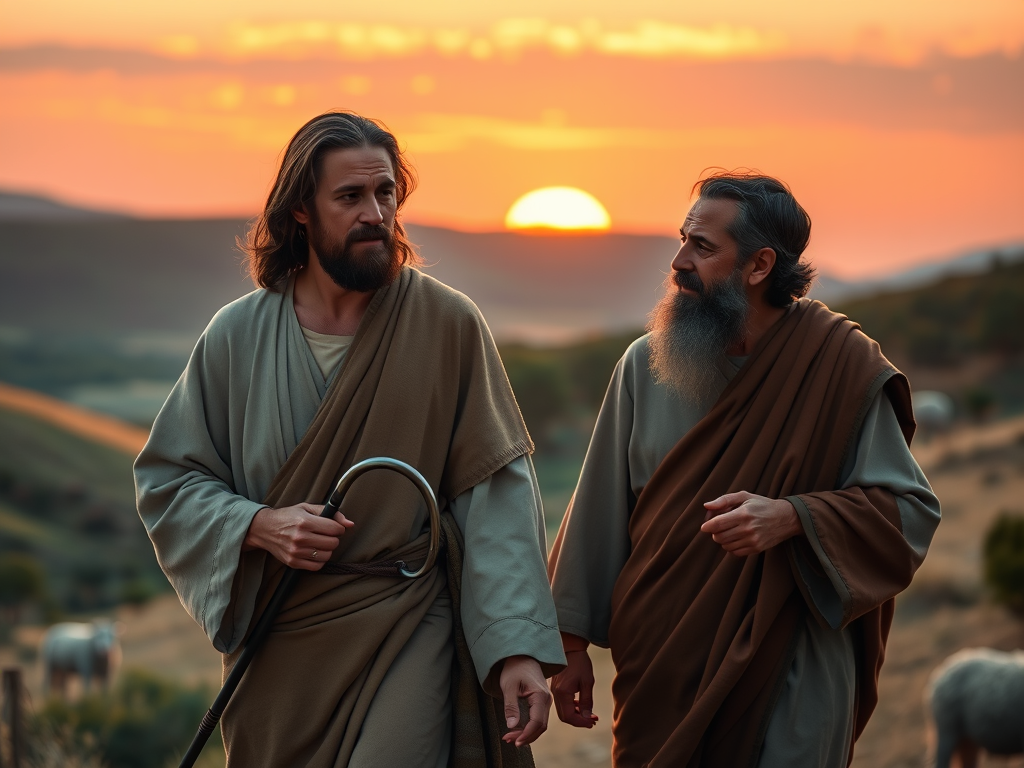
Psalm 23:4 NKJV
4
Yea, though I walk through the valley of the shadow of death,
I will fear no evil;
For You are with me;
Your rod and Your staff, they comfort me.
A Journey Through Shadows and Light

My Notes
This verse in Psalm 23 by David speaks to the seasons of life we all endure. From youth to old age, from joy to sorrow, we walk through many valleys—none more sobering than the final one. David did not sprint through the valley of the shadow of death; he walked. He walked because he was not alone. The Lord’s presence was his companion, and in that presence, fear lost its grip.
David recognized it wasn’t death itself—but the shadow of it. And shadows can only exist where there is light. The shadow in the valley is cast by light breaking through—light that comes from the Lord. Though the shadow may seem ominous, it holds no power to harm. What matters is the light shining with us, reminding us that beyond every shadow, more light awaits.
That light is divine. As many have pointed out, David walked through the valley—not into it, not trapped within it—but through it, covered and protected by the Lord.
Life on this earth will never be without struggle. Yet the necessity of walking closely with God becomes all the more clear in those struggles. When we seek Him wholeheartedly, when we bow in prayer, and when we truly grasp that He is with us, then His promise in Exodus 33:14 becomes personal: “My Presence will go with you, and I will give you rest.”
And in that presence, we find strength to say with certainty: “I will fear no evil; for You are with me.”
David reminds us that the Lord’s Rod and Staff aren’t just symbolic—they are active. They comfort, guide, and correct. They lead us in righteousness, restore those who have wandered, and shield us from enemies who seek to scatter the flock. In His presence, we are not just comforted—we are guarded, tended, and ultimately led to green pastures.
Psalm 23:4 conveys incredible comfort as it reassures believers walking through difficult times, epitomized by the “valley of the shadow of death.” This verse emphasizes the tranquility that comes from faith in God’s presence, where fear is banished by the knowledge of divine companionship and guidance. Through the commentaries below, it becomes clear that the valley symbolizes life’s struggles, yet believers, like David, can walk calmly through these challenges, knowing they are not alone. The rod and staff represent God’s protective and guiding authority, developing a sense of security amidst uncertainty. Ultimately, death is framed not as an end, but a transition to eternal life.
Bill
Commentaries:
Charles Spurgeon
“Yea, though I walk through the valley of the shadow of death, I will fear no evil: for thou art with me; thy rod and thy staff they comfort me.” This unspeakably delightful verse has been sung on many a dying bed, and has helped to make the dark valley bright times out of mind. Every word in it has a wealth of meaning. “Yea, though I walk,” as if the believer did not quicken his pace when he came to die, but still calmly walked with God. To walk indicates the steady advance of a soul which knows its road, knows its end, resolves to follow the path, feels quite safe, and is therefore perfectly calm and composed. The dying saint is not in a flurry; he does not run as though he were alarmed, nor stand still as though he would go no further; he is not confounded nor ashamed, and therefore keeps to his old pace. Observe that it is not walking in the valley, but through the valley. We go through the dark tunnel of death and emerge into the light of immortality. We do not die, we do but sleep to wake in glory. Death is not the house but the porch, not the goal but the passage to it. The dying article is called a valley. The storm breaks on the mountain, but the valley is the place of quietude, and thus full often the last days of the Christian are the most peaceful of his whole career; the mountain is bleak and bare, but the valley is rich with golden sheaves, and many a saint has reaped more joy and knowledge when he came to die than he ever knew while he lived. And, then, it is not “the valley of death,” but “the valley of the shadow of death,“ for death in its substance has been removed, and only the shadow of it remains. Someone has said that when there is a shadow, there must be light somewhere, and so there is. Death stands by the side of the highway in which we have to travel, and the light of heaven shining upon him throws a shadow across our path; let us then rejoice that there is a light beyond. Nobody is afraid of a shadow, for a shadow cannot stop a man’s pathway even for a moment. The shadow of a dog cannot bite; the shadow of a sword cannot kill; the shadow of death cannot destroy us. Let us not, therefore, be afraid. “I will fear no evil.” He does not say there shall not be any evil; he had got beyond even that high assurance, and knew that Jesus had put all evil away; but “I will fear no evil,” as if even his fears, those shadows of evil, were gone forever. The worst evils of life are those which do not exist except in our imagination. If we had no troubles but real troubles, we should not have a tenth part of our present sorrows. We feel a thousand deaths in fearing one, but the psalmist was cured of the disease of fearing. “I will fear no evil,” not even the Evil One himself; I will not dread the last enemy, I will look upon him as a conquered foe, an enemy to be destroyed, “For thou art with me.” This is the joy of the Christian! “Thou art with me.” The little child out at sea in the storm is not frightened like all the other passengers on board the vessel; it sleeps in its mother’s bosom; it is enough for it that its mother is with it; and it should be enough for the believer to know that Christ is with him. “Thou art with me; I have, in having thee, all that I can crave: I have perfect comfort and absolute security, for thou art with me.” “Thy rod and thy staff,” by which thou governest and rulest thy flock, the ensigns of thy sovereignty and of thy gracious care—”they comfort me.” I will believe that thou reignest still. The rod of Jesse shall still be over me as the sovereign succor of my soul.
Many persons profess to receive much comfort from the hope that they shall not die. Certainly, there will be some who will be “alive and remain” at the coming of the Lord, but is there so very much of advantage in such an escape from death as to make it the object of Christian desire? A wise man might prefer of the two to die, for those who shall not die, but who “shall be caught up together with the Lord in the air,” will be losers rather than gainers. They will lose that actual fellowship with Christ in the tomb, which dying saints will have, and we are expressly told that they shall have no preference beyond those who are asleep. Let us be of Paul’s mind when he said that “To die is gain,” and think of “departing to be with Christ, which is far better.” This twenty-third psalm is not worn out, and it is as sweet in a believer’s ear now as it was in David’s time, let novelty-hunters say what they will.
______________________________________________________
Enduring Word
Yea, though I walk through the valley of the shadow of death: This is the first dark note in this beautiful psalm. Previously, David wrote of green pastures and still waters and paths of righteousness. Yet when following the LORD as shepherd, one may still walk through the valley of the shadow of death. (Guzik)
i. David used this powerful phrase to speak of some kind of dark, fearful experience. It is an imprecise phrase, yet its poetry makes perfect sense.
· It is a valley, not a mountaintop or broad meadow. A valley suggests being hedged in and surrounded.
· It is a valley of the shadow of death – not facing the substance of death itself, but the shadow of death, casting its dark, fearful outline across David’s path.
· It is a valley of the shadow of death, facing what seemed to David as the ultimate defeat and evil.
ii. Notably, David recognized that under the shepherd’s leading, he may walk through the valley of the shadow of death. It isn’t his destination or dwelling place. Like the Preacher in Ecclesiastes, David might say that all of life is lived under the shadow of death, and it is the conscious presence of the LORD as shepherd that makes it bearable.
iii. This line is especially suggestive when we read this psalm with an eye toward Jesus, the Great Shepherd. We understand that a shadow is not tangible but is cast by something that is. One can rightly say that we face only the shadow of death because Jesus took the full reality of death in our place. (David Guzik)
Yea, though I walk through the valley of the shadow of death: This line from the psalm – and the psalm as a whole – has proven itself precious to many a dying saint through the ages. They have been comforted, strengthened, and warmed by the thought that the LORD would shepherd them through the valley of the shadow of death. (Guzik)
i. Near death, the saint still calmly walks – he does not need to quicken his pace in alarm or panic. Near death, the saint does not walk in the valley, but through the valley. (Guzik)
ii. “It has an inexpressibly delightful application to the dying; but it is for the living, too…. The words are not in the future tense, and therefore are not reserved for a distant moment.” (Spurgeon)
I will fear no evil: Despite every dark association with the idea of the valley of the shadow of death, David could resolutely say this because he was under the care of the LORD, his shepherd. Even in a fearful place, the presence of the shepherd banished the fear of evil.
i. We might say that the shepherd’s presence did not eliminate the presence of evil, but certainly the fear of evil. (Guzik)
For You are with me: This emphasizes that it is the presence of the shepherd that eliminated the fear of evil for the sheep. No matter his present environment, David could look to the fact of God’s shepherd-like presence and know, “You are with me” and “I will fear no evil.” (Guzik)
i. Significantly, it is at the dangerous moment pictured in the psalm that the “He” of Psalm 23:1-3 changes to “You.” The LORD as Shepherd is now in the second person. (Guzik)
Your rod and Your staff, they comfort me: The rod and the staff were instruments used by a shepherd. The idea is of a sturdy walking stick, used to gently (as much as possible) guide the sheep and protect them from potential predators. (Guzik)
i. There is some debate among commentators as to whether David had the idea of two separate instruments (the rod and the staff) or one instrument used two ways. The Hebrew word for rod (shaybet) here seems to simply mean “a stick” with a variety of applications. The Hebrew word for staff (mishaynaw) seems to speak of “a support” in the sense of a walking stick. (Guzik)
ii. Kidner notes: “The rod (a cudgel worn at the belt) and staff (to walk with, and to round up the flock) were the shepherd’s weapon and implement: the former for defence (cf. 1 Samuel 17:35), and the latter for control – since discipline is security.”
iii. Maclaren writes: “The rod and the staff seem to be two names for one instrument, which was used both to beat off predatory animals and to direct the sheep.”
iv. These instruments (or instrument) of guidance were a comfort to David. It helped him – even in the valley of the shadow of death – to know that God guided him, even through correction. It is a great comfort to know that God will correct us when we need it. (Guzik)
______________________________________________________
Albert Barnes
Yea, though I walk through the valley of the shadow of death – The meaning of this in the connection in which it occurs is this: “God will lead and guide me in the path of righteousness, even though that path lies through the darkest and most gloomy vale – through deep and dismal shades – in regions where there is no light, as if death had cast his dark and baleful shadow there. It is still the right path; it is a path of safety, and it will conduct me to bright regions beyond. In that dark and gloomy valley, though I could not guide myself, I will not be alarmed; I will not be afraid of wandering or of being lost; I will not fear any enemies there – for my Shepherd is there to guide me still.” On the word here rendered “shadow of death” – צלמות tsalmâveth – see Job 3:5, note; and Isaiah 9:2. The word occurs besides only in the following places, in all of which it is rendered “shadow of death:” Job 10:21-22; Job 12:22; Job 16:16; Job 24:17 (twice); Job 28:3; Job 34:22; Job 38:17; Psalms 44:19; Psalms 107:10, Psalms 107:14; Jeremiah 2:6; Jeremiah 13:16; Amos 5:8. The idea is that of death casting his gloomy shadow over that valley – the valley of the dead. Hence, the word is applicable to any path of gloom or sadness; any scene of trouble or sorrow; any dark and dangerous way. Thus understood, it is applicable not merely to death itself – though it embraces that – but to any or all the dark, the dangerous, and the gloomy paths which we tread in life: to ways of sadness, solitude, and sorrow. All along those paths, God will be a safe and certain guide.
I will fear no evil – Dark, cheerless, dismal as it seems, I will dread nothing. The true friend of God has nothing to fear in that dark valley. His great Shepherd will accompany him there and can lead him safely through, however dark it may appear. The true believer has nothing to fear in the most gloomy scenes of life; he has nothing to fear in the valley of death; he has nothing to fear in the grave; he has nothing to fear in the world beyond.
For thou art with me – Thou wilt be with me. Though invisible, thou wilt attend me. I shall not go alone; I shall not be alone. The psalmist felt assured that if God was with him, he had nothing to dread there. God would be his companion, his comforter, his protector, his guide. How applicable is this to death! The dying man seems to go into the dark valley alone. His friends accompany him as far as they can, and then they must give him the parting hand. They cheer him with their voice until he becomes deaf to all sounds; they cheer him with their looks until his eye becomes dim, and he can see no more; they cheer him with the fond embrace until he becomes insensible to every expression of earthly affection, and then he seems to be alone. But the dying believer is not alone. His Saviour God is with him in that valley, and will never leave him. Upon His arm he can lean, and by His presence he will be comforted, until he emerges from the gloom into the bright world beyond. All that is needful to dissipate the terrors of the valley of death is to be able to say, “Thou art with me.”
Thy rod and thy staff – It may not be easy to mark the difference between these two words, but they would seem probably to refer, the latter to the “staff” which the shepherd used in walking, and the former to the “crook” which a shepherd used for guiding his flock. The image is that of a shepherd in attendance on his flock, with a staff on which he leans with one hand; in the other hand, the “crook” or rod, which was the symbol of his office. Either of these also might be used to guard the flock or to drive off the enemies of the flock. The “crook” is said (see Rosenmuller, in loc.) to have been used to seize the legs of the sheep or goats when they were disposed to run away, and thus to keep them with the flock. “The shepherd invariably carries a rod or staff with him when he goes forth to feed his flock. It is often bent or hooked at one end, which gave rise to the shepherd’s crook in the hand of the Christian bishop. With this staff, he rules and guides the flock to their green pastures and defends them from their enemies. With it, he also corrects them when disobedient, and brings them back when wandering.” (The land and the book, vol. i., p. 305.)
They comfort me – The sight of them consoles me. They show that the Shepherd is there. As significant as his presence and his office, they impart confidence, showing that he will not leave me alone and that he will defend me.
______________________________________________________
John Gill
thy rod and thy staff they comfort me; not the rod of afflictions and chastisements, which is the sense of some Jewish as well as Christian interpreters; though these are in love, and the saints have often much consolation under them; but these are designed by the valley of the shadow of death, and cannot have a place here, but rather the rod of the word, called the rod of Christ’s strength, and the staff of the promises and the provisions of God’s house, the whole staff and stay of bread and water, which are sure unto the saints, and refresh and comfort them. The Targum interprets the rod and staff of the word and law of God; and those interpreters who explain the rod of afflictions, yet by the staff understand the law; and Jarchi expounds it, of the mercy of God in the remission of sin, in which the psalmist trusted: the allusion is to the shepherd’s crook or staff, as in other places; see Micah 7:14; which was made use of for the telling and numbering of the sheep, Leviticus 27:32; and it is no small comfort to the sheep of Christ that they have passed under his rod, who has told them, and that they are all numbered by him; not only their persons, but the very hairs of their head; and that they are under his care and protection: the shepherd with his rod, staff, or crook, directs the sheep where to go, pushes forward those that are behind, and fetches back those that go astray; as well as drives away dogs, wolves, bears, &c. that would make a prey of the flock; and of such use is the word of God, attended with the power of Christ and his Spirit; it points out the path of faith, truth, and holiness, the saints should walk in; it urges and stirs up those that are negligent to the discharge of their duty, and is the means of reclaiming backsliders, and of preserving the flock from the ravenous wolves of false teachers: in a word, the presence, power, and protection of Christ, in and by is Gospel and ordinances, are what are here intended, and which are the comfort and safety of his people, in the worst of times and cases.
______________________________________________________
Matthew Henry
See here the courage of a dying saint (v. 4): “Having had such experience of God’s goodness to me all my days, in six troubles and in seven, I will never distrust him, no, not in the last extremity; the rather because all he has done for me hitherto was not for any merit or desert of mine, but purely for his name’s sake, in pursuance of his word, in performance of his promise, and for the glory of his own attributes and relations to his people. That name, therefore, shall still be my strong tower, and shall assure me that he who has led me, and fed me, all my life long, will not leave me at last.” Here is:
(1.) Imminent danger supposed: “Though I walk through the valley of the shadow of death, that is, though I am in peril of death, though in the midst of dangers, deep as a valley, dark as a shadow, and dreadful as death itself,” or rather, “though I am under the arrests of death, have received the sentence of death within myself, and have all the reason in the world to look upon myself as a dying man, yet I am easy.” Those that are sick, those that are old, have reason to look upon themselves as in the valley of the shadow of death. Here is one word indeed which sounds terrible; it is death, which we must all count upon; there is no discharge in that war. But, even in the supposition of the distress, there are four words which lessen the terror:-It is death indeed that is before us; but,
[1.] It is but the shadow of death; there is no substantial evil in it; the shadow of a serpent will not sting, nor the shadow of a sword kill.
[2.] It is the valley of the shadow, deep indeed, and dark, and dirty; but the valleys are fruitful, and so is death itself fruitful of comforts to God’s people.
[3.] It is but a walk in this valley, a gentle, pleasant walk. The wicked are chased out of the world, and their souls are required; but the saints take a walk to another world as cheerfully as they take their leave of this.
[4.] It is a walk through it; they shall not be lost in this valley, but get safely to the mountain of spices on the other side of it.
(2.) This danger made light of and triumphed over, upon good grounds. Death is a king of terrors, but not to the sheep of Christ; they tremble at it no more than sheep do that are appointed for the slaughter. “Even in the valley of the shadow of death I will fear no evil. None of these things move me.“ Note, A child of God may meet the messengers of death and receive its summons with a holy security and serenity of mind. The sucking child may play upon the hole of this asp; and the weaned child, that, through grace, is weaned from this world, may put his hand upon this cockatrice’s den, bidding a holy defiance to death, as Paul, O death! where is thy sting? And there is ground enough for this confidence,
[1.] Because there is no evil in it to a child of God, death cannot separate us from the love of God, and therefore it can do us no real harm; it kills the body, but cannot touch the soul. Why should it be dreadful when there is nothing in it hurtful?
[2.] Because the saints have God’s gracious presence with them in their dying moments; he is then at their right hand, and therefore, why should they be moved? The good shepherd will not only conduct, but convoy, his sheep through the valley, where they are in danger of being set upon by the beasts of prey, the ravening wolves; he will not only convoy them, but comfort them when they most need comfort. His presence shall comfort them: Thou art with me. His word and Spirit shall comfort them-his rod and staff, alluding to the shepherd’s crook, or the rod under which the sheep passed when they were counted (Lev. 27:32), or the staff with which the shepherds drove away the dogs that would scatter or worry the sheep. It is a comfort to the saints, when they come to die, that God takes cognizance of them (he knows those that are his), that he will rebuke the enemy, that he will guide them with his rod and sustain them with his staff. The gospel is called the rod of Christ’s strength (Ps. 110:2), and there is enough in that to comfort the saints when they come to die, and underneath them are the everlasting arms.
______________________________________________________
Cross-References
Psalm 107:14 (KJV)
14 He brought them out of darkness and the shadow of death,
And brake their bands in sunder.
Psalm 118:6 (KJV)
6 The Lord is on my side; I will not fear:
What can man do unto me?
Matthew 28:20 (KJV)
20 Teaching them to observe all things whatsoever I have commanded you: and, lo, I am with you alway, even unto the end of the world. Amen.
Luke 1:79 (KJV)
79 To give light to them that sit in darkness and in the shadow of death,
To guide our feet into the way of peace.
______________________________________________________
Closing Thoughts
Isaiah 43:2 (KJV)
2 When thou passest through the waters, I will be with thee;
And through the rivers, they shall not overflow thee:
When thou walkest through the fire, thou shalt not be burned;
Neither shall the flame kindle upon thee.
Psalm 23 – The Lord the Shepherd of His People
1
The Lord is my shepherd;
I shall not want.
2
He makes me to lie down in green pastures;
He leads me beside the still waters.
3
He restores my soul;
He leads me in the paths of righteousness
For His name’s sake.
4
Yea, though I walk through the valley of the shadow of death,
I will fear no evil;
For You are with me;
Your rod and Your staff, they comfort me.
5
You prepare a table before me in the presence of my enemies;
You anoint my head with oil;
My cup runs over.
6
Surely goodness and mercy shall follow me
All the days of my life;
And I will dwell in the house of the Lord
Forever.

- Exploring the Beauty of Psalms: Insights and Commentaries
- Monthly Breakdown of Our Blog Content
- Psalms Commentary: Faith and Inspiration
Leave a Reply